Some US lawmakers in both major parties on Sunday questioned whether military action against Iran is the best approach for the United States as Iranian authorities face growing turmoil.
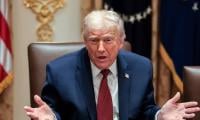
US President Donald Trump in recent days has left open the possibility of American intervention in Iran, where the biggest anti-government protests in years have led to the Revolutionary Guards blaming unrest on terrorists and vowing to safeguard the governing system.
But at least two US senators sounded notes of caution during interviews on TV networks' Sunday morning programmes.
"I don't know that bombing Iran will have the effect that is intended,” Republican Senator Rand Paul said on ABC News' "This Week" show.
Rather than undermining the regime, a military attack on Iran could rally the people against an outside enemy, Paul and Democratic Senator Mark Warner said.
Warner, appearing on "Fox News Sunday," warned that a military strike against Iran could risk uniting Iranians against the United States "in a way that the regime has not been able to."
History shows the dangers of US intervention, said Warner, who argued that the US-backed 1953 overthrow of Iran's government set in motion a chain of events that gradually led to the rise of the country's Islamic regime in the late 1970s.
The Wall Street Journal on Sunday reported that US military and diplomatic officials will brief Trump on Tuesday about options for Iran, including cyberattacks and potential military action.
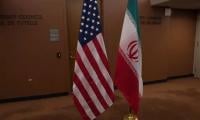
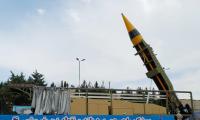
Iran has said it will target US military bases if the United States launches an attack.
The Iranian government declared three days of national mourning for "martyrs" including members of the security forces killed in two weeks of protests, state television reported on Sunday.
The government described the fight against what it has termed "riots" as an "Iranian national resistance battle against America and the Zionist regime", using the clerical leadership's term for Israel, which the Islamic republic does not recognise.
President Masoud Pezeshkian urged people to take part in a "national resistance march" of nationwide rallies on Monday to denounce the violence, which the government said was committed by "urban terrorist criminals", state television reported.
The protests, initially sparked by anger over the rising cost of living, have evolved into a movement against the theocratic system in place in Iran since the 1979 revolution. They have already lasted two weeks.
The protests have become one of the biggest challenges to the rule of supreme leader Ayatollah Ali Khamenei, 86, coming in the wake of Israel's 12-day war against the Islamic republic in June, which was backed by the United States.
Protests have swelled in recent days despite an internet blackout that has lasted more than 72 hours, according to monitor Netblocks. Activists have warned that the shutdown is limiting the flow of information and that the actual toll risks being far higher.