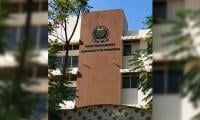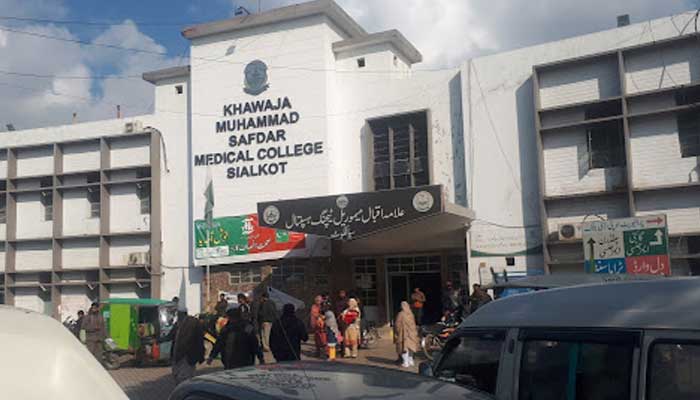
SIALKOT/ISLAMABAD: Three medical sales representatives were arrested at the Government Allama Iqbal Memorial Teaching Hospital the other day for allegedly violating hospital regulations.
The arrested individuals were identified as Zaheer Ahmed Baig of Gujrat, Shahid Iqbal of Hajipura, Sialkot, and Muhammad Asif of Gujranwala.
According to officials, a team of senior Health Department officers from Lahore was visiting the hospital when they noticed the presence of medical sales representatives in the hospital premises, which is prohibited under the rules. The officials ordered immediate action, and the Rangpura police arrested the sales representatives on the complaint of Arslan Javed. However, a local court ordered their release on bail.
Those taken into custody include a general manager and other senior management officials belonging to pharmaceutical companies. The pharmaceutical industry leaders have described the action as unprecedented and disproportionate.
The Punjab Health Department has imposed a complete ban on the entry of medical representatives of private pharmaceutical companies into public hospitals and has circulated a directive to all medical superintendents. The instructions require hospital administrations to initiate criminal proceedings and disciplinary action against doctors found facilitating company representatives. The department has warned that it would treat any failure to ensure full compliance of the instruction as misconduct.
Punjab health department officials maintain that the ban is intended to prevent undue influence on drug prescribing practices, eliminate conflicts of interest, and shield patients from commercial pressures within public hospitals. They argue that repeated warnings were ignored, leaving the department with no option but to enforce the policy strictly.
However, the method of enforcement, particularly the use of police action and criminal charges against senior industry professionals, has drawn widespread criticism from across the pharmaceutical sector and the pharmacy community.
In a joint reaction, industry representatives termed the action excessive and counterproductive, stressing that pharmaceutical professionals should not be treated as criminals.
A senior official of the Pakistan Pharmaceutical Manufacturers Association (PPMA) said the crackdown ignored the long-standing contribution of the local pharmaceutical industry to public healthcare.
He pointed out that pharmaceutical companies supply medicines to government hospitals at highly subsidised rates, often far below open-market prices, to ensure continuity of treatment for poor patients.
The PPMA official added that for decades, pharmaceutical companies have also helped upgrade facilities at public sector hospitals by supporting repairs, maintenance, and the provision of medical equipment and basic amenities that were not adequately funded by the government. “Instead of engagement and structured regulation, the industry is being met with handcuffs,” he remarked.
“The issue is not regulation,” a senior industry official said. “The issue is whether criminalisation and public humiliation are the right tools to fix structural weaknesses.”
Current and former PPMA officials, including former Chairman Tauqeer-ul-Haq, said their organisation would not only send formal letters to Chief Minister Maryam Nawaz and other government officials, but also pursue all available legal and constitutional avenues to challenge the move.