In debates on economic recovery, fiscal consolidation and climate vulnerability, Pakistan continues to overlook one of its most valuable productive assets: nature.
Forests, wetlands, soils, rangelands and coastal ecosystems are still treated as environmental concerns rather than as economic infrastructure. Yet these systems underpin agricultural output, regulate water supply, reduce disaster risk and sustain livelihoods. For Pakistan, biodiversity is not a luxury but a macroeconomic necessity. The real challenge is financing ecosystems as strategic national assets, apart from conservation.
Biodiversity financing refers to the systematic mobilisation of public, private and international capital to protect and sustainably manage ecosystems while generating measurable economic returns. Unlike traditional conservation funding, which is often project-based and donor-driven, biodiversity financing integrates natural capital into fiscal policy, development planning and financial markets.
Pakistan’s economic profile illustrates the scale of this dependence. With GDP estimated at approximately $340 billion in FY2024–25, the country remains structurally tied to climate and resource-sensitive sectors. Agriculture contributes around 24 per cent of GDP, employs over one-third of the labour force and anchors export-oriented industries such as textiles, rice and leather. These sectors rely directly on ecosystem services, such as fertile soils, predictable water flows, pollination and climate regulation. When these services degrade, productivity declines, supply chains destabilise and inflationary pressures intensify, translating environmental loss into macroeconomic risk.
The Indus Basin irrigation system, among the largest in the world, exemplifies how ecological health and economic output are intertwined. Its performance depends on upstream forests that regulate runoff, wetlands that absorb excess flows and stable glacial cycles that sustain river discharge. Deforestation and land degradation in these catchments increase sedimentation, water variability and infrastructure maintenance costs.
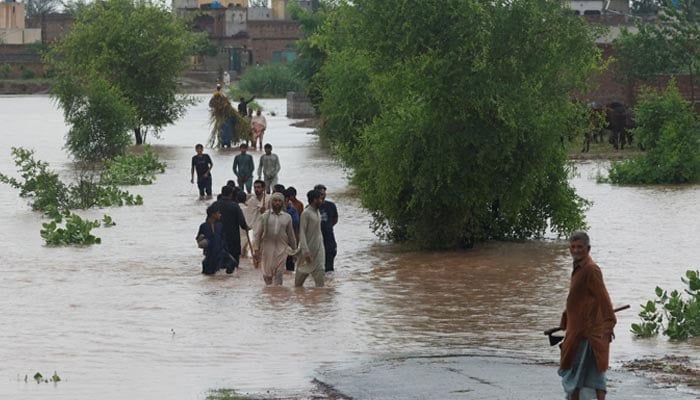
The economic consequences are not hypothetical. The 2022 floods caused damages and losses exceeding $30 billion, disrupting agricultural growth, widening the fiscal deficit and reducing Pakistan’s GDP growth trajectory. These losses highlighted a critical lesson: rebuilding damaged infrastructure is far more expensive than maintaining the ecosystems that prevent such disasters.
Globally, development thinking has shifted towards recognising nature as an economic asset rather than a constraint. The UN framework on sustainable development emphasises that poverty reduction, food security and climate adaptation are unattainable without functioning ecosystems.
Several developing countries offer instructive examples of how biodiversity financing can support growth while strengthening resilience. Costa Rica pioneered Payment For Ecosystem Services (PES) programmes financed through environmental levies, enabling forest regeneration while building a globally competitive ecotourism sector that now contributes significantly to national income. Bangladesh has demonstrated that restoring coastal mangroves can serve as natural storm barriers, reducing cyclone damage and protecting agricultural productivity.
These cases show that nature-based investments are not merely ecological interventions; they are fiscally prudent development strategies. For Pakistan, adopting such an approach requires rethinking how capital is mobilised. Public budgets alone cannot meet the scale of investment needed to restore degraded landscapes, strengthen watersheds and protect coastal zones. Innovative financial instruments must therefore play a central role. Green and blue bonds can channel institutional capital toward reforestation, sustainable irrigation modernisation and marine ecosystem restoration.
Blended finance, combining concessional funding with private investment, can reduce perceived risks and unlock new markets in climate-smart agriculture and sustainable forestry. Payment for Ecosystem Services (PES) models can incentivise upstream communities to preserve water sources that sustain downstream urban and industrial economies.
Significant international financing windows already exist. Facilities such as the Global Environment Facility (GEF) and the Green Climate Fund (GCF) collectively deploy billions of dollars toward nature-based solutions. However, accessing these resources requires robust project pipelines, credible environmental data and institutional coordination areas where Pakistan must strengthen technical and financial governance.
Equally important is embedding biodiversity considerations into domestic economic policy. Three reforms are particularly critical. First, Pakistan should adopt natural capital accounting to measure how ecosystem services contribute to GDP and how their degradation represents depreciation of national wealth. Incorporating such metrics into national accounts would allow policymakers to evaluate trade-offs between short-term exploitation and long-term economic stability.
Second, environmentally distortionary subsidies, especially those encouraging inefficient water use or unsustainable agricultural practices, should be gradually redirected towards regenerative agriculture, watershed restoration, and efficient irrigation technologies. This shift would improve productivity while easing fiscal stress.
Third, financial regulators can integrate environmental risk into prudential frameworks, encouraging banks to assess climate and biodiversity exposure in lending decisions. Such measures would steer capital towards resilient sectors and reduce systemic vulnerabilities linked to environmental shocks.
Pakistan does not require entirely new institutions to operationalise biodiversity financing. Rather, it needs stronger alignment among federal economic ministries, provincial governments responsible for land and natural resources, financial institutions capable of designing sustainability-linked instruments and research bodies that can generate reliable valuation data.
Coordinated action can transform fragmented environmental initiatives into a coherent national investment strategy. Framing biodiversity as an environmental obligation misses the larger economic reality. Pakistan’s growth model, anchored in agriculture, water security and climate-sensitive infrastructure, cannot be sustained without investing in the ecosystems that support it. Nature is not external to the economy; it is one of its primary factors of production.
The policy choice is therefore straightforward: continue treating biodiversity as a cost centre or recognise it as infrastructure that underpins sustainable growth. At a time of fiscal constraint, rising climate risk and constrained development financing, investing in natural capital may be the most economically rational decision Pakistan can make, not only to protect the environment, but to secure long-term macroeconomic stability and resilience.
The writer works on climate finance, carbon markets and sustainable development across disaster risk reduction and climate change.