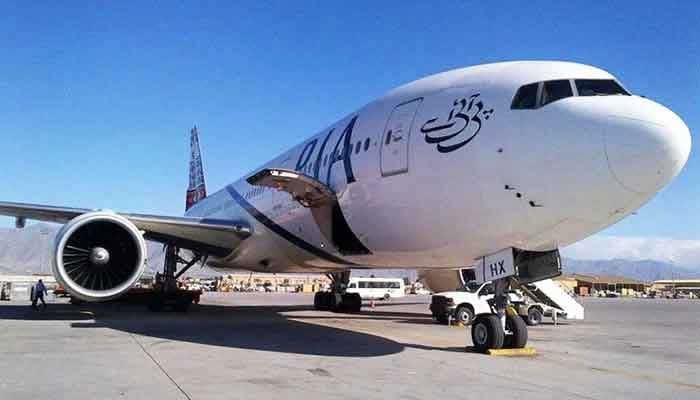
People find it shocking that state-owned enterprises (SOEs) go into losses. It was reported that 25 government entities posted a loss of Rs832 billion in 2025.
Despite such a huge loss, the government seems to dillydally about privatisation. Although every government laments that people shun paying taxes, eligible taxpayers also avoid parting with their hard-earned money when they witness how mercilessly government organisations waste public funds. It seems that serious financial issues are rarely discussed in the official quarters.
The nation deserves to be grateful to the IMF, which forced Islamabad to offload loss-making state organisations such as PIA. Would we have continued to sustain the SOEs’ losses if the government not pressured by the IMF to get rid of the loss-makers? Taxpayers deserve to get a satisfactory answer from the government. There’s a long list of state organisations that suffer huge losses. Reportedly, the National Highway Authority tops the list, followed by the Railways and various DISCOs. And the losses run into the hundreds of billions, with a poor nation whose nearly 33 per cent of the population find it hard to meet their daily food requirements.
While the discussion about PIA’s privatisation has been ongoing for many months, the Pakistan Steel Mills hasn’t been discussed much. The present state of the PSM should shock the taxpayers, as the PSM has been out of commission since 2015, but its employees received their salaries regularly. There’s a long list of DISCOs too that incur losses regularly, but these white elephants continue to remain state organisations.
Loss-making government organisations are often quoted, but the over-staffed government itself is conveniently ignored. It was one of the leading businessmen, Mian Muhammad Mansha, a great proponent of privatisation of state-run organisations, who claimed that a large portion of the government workforce had little work to do. To summarise, he argued that ‘the government could still function, perhaps even better, if a significant portion – often referred to as around two-thirds in his discussions about inefficient staff – was removed or if state-owned entities were privatised’.
We need to understand the difference between productive and unproductive jobs. Productive jobs mean the workforce or officials earn their living by putting in hard work and achieving positive results, while unproductive jobs mean nothing more than living in palatial houses, travelling in luxury vehicles from home to office and earning hefty TA/DA when gallivanting around their so-called areas of responsibility.
It’s worth mentioning how Bangladesh’s newly elected Prime Minister Tarique Rahman has set a new record of austerity at the national level. To cut costs, only private vehicles would be used to perform official duties. Even the prime minister will pay the cost of his driver and other expenses. The size of the official convoy would be reduced from 13-14 vehicles to four only. Police protocols would be reduced to the bare minimum, unlike our case of ‘route laga hai’, even for mid-level officers. The use of helicopters would be strictly restricted. The Bangladeshi premier has vowed to ensure the implementation of his instructions. The protocols he announced to run his government are worth following for poor nations in the region.
In his weekly column, Dr Farrukh Saleem wrote that Pakistanis were eating less to keep their lights on. Even household share of food had fallen from 43 per cent to 37 per cent, and utility bills had increased from 15 per cent to 25 per cent, according to him. Poverty rate has hit 29 per cent, which is the highest so far, but it’s not as shocking as when compared with the rich class of society and its lifestyle. The difference between the rich and the poor of the population is drastically painful and shocking for the sensitive segment of society.
On the other hand, there’s no limit to lavish spending. Mohsin Naqvi, while heading the Punjab caretaker government, sanctioned assistant commissioners to ride in double-cabin vehicles to perform their official duties. When the country faced economic challenges, the upper layers of the bureaucracy were allowed to use even more luxurious vehicles according to their ranks and status. Another prestigious class of society enjoys the privilege of having official security guards even after the retirement of its royal members. To chide the poor and hungry, the government of Punjab has purchased a new plane worth ten billion for its official use.
The writer is a freelance columnist based in Lahore. He can be reached at: [email protected]