The most sobering assessment of Pakistan’s current predicament does not come from a political opponent or a domestic critic but from an international conflict monitor with no stake in Islamabad’s internal debates. The International Crisis Group’s latest report describes Pakistan as the country most adversely affected by the Taliban’s return to power in Afghanistan in 2021.
It points to a fragile ceasefire along the western frontier, warns that further Pakistani strikes are likely if militant violence continues, and underlines how sharply relations between Islamabad and Kabul have deteriorated. At the centre of this breakdown is the Afghan Taliban’s refusal to act decisively against the TTP. The report’s warning is stark: what appears for now as an uneasy calm is better understood as a pause before the next round of escalation. This diagnosis is significant because it reveals a deeper truth we have long resisted.
The insecurity the country faces today is not an aberration produced by a hostile neighbourhood or a fickle international order. It is the cumulative outcome of a series of policy choices stretching back decades, each taken in the belief that short-term control could substitute for long-term political settlement. Our tragedy is not that we misread one moment in Afghanistan; it is that we have repeatedly misunderstood the relationship between power, legitimacy and violence – both at home and beyond borders.
The harsh treatment of Bacha Khan and the non-violent Pashtun movement he led signalled an enduring preference for coercion over accommodation. Instead of integrating Pashtun political aspirations into a constitutional and federal framework, the state cast them as suspect and disloyal. When dissent is defined as treachery, politics is reduced to policing. That mindset would later resurface in East Pakistan, and after 1971, in Balochistan.
Zulfikar Ali Bhutto inherited this suspicion and centralisation and, despite his populist rhetoric, reinforced it at critical moments. The banning of the National Awami Party and the use of military force in Balochistan during the 1970s were watershed decisions that deepened alienation rather than restoring authority. Political disagreements were again treated as security threats, and the centre’s authority was asserted through arms rather than compromise. These actions did lasting damage to the federal idea.
More consequential still was Bhutto’s experimentation with Afghan Islamist actors in the mid-1970s. In an effort to counter Kabul’s hostility and its refusal to accept the Durand Line as a settled border, we began offering sanctuary and support to Afghan militants. What was initially framed as a defensive hedge against Afghan interference quietly crossed a threshold. This shift did not yet carry the scale it would later acquire, but it introduced a dangerous assumption into our strategic thinking: that non-state armed groups could be nurtured, steered and discarded at will.
That assumption hardened into doctrine under General Ziaul Haq. The Soviet invasion of Afghanistan transformed Pakistan into the main staging ground for a global jihad, funded by Western intelligence agencies and ideologically reinforced by Gulf allies. In purely strategic terms, the policy appeared successful. The Soviet Union withdrew, and Pakistan was celebrated as a frontline state that had helped change the course of the cold war. Yet the internal consequences were barely acknowledged. Weapons flooded society, drug trafficking expanded, sectarian ideologies gained ground and militancy became normalised as a legitimate form of political expression.
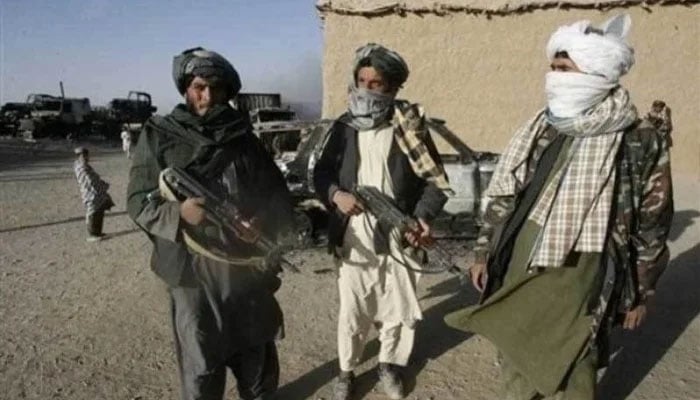
The state absorbed the infrastructure of jihad but made little effort to dismantle it once the war ended. When the Soviet war concluded, Pakistan faced a choice: demobilise the militant ecosystem it had hosted or redirect it. It chose the latter. During the chaotic Afghan civil war of the early 1990s, we continued to seek influence through proxies, culminating in support for the Taliban. The Taliban’s capture of Kabul in 1996 was greeted in Pakistan as a strategic breakthrough. Recognition of the regime was justified as realism, a way to ensure stability in Afghanistan and secure Pakistan’s western flank. In truth, it was another wager on ideology over institution.
The Taliban’s worldview was fundamentally incompatible with regional stability, yet we once again assumed we could manage a movement defined by absolutism. The illusion that militant clients could be controlled collapsed spectacularly after September 2001. Under General Musharraf, Pakistan joined the US-led war in Afghanistan and publicly abandoned its support for the Taliban. Privately, however, the legacy of earlier policies proved difficult to unwind. Accusations that Pakistan was playing a double game became a defining feature of its relationship with Washington and Kabul. Whether entirely fair or not, this perception eroded trust and left Pakistan isolated at key diplomatic moments.
Internally, the costs were devastating: suicide bombings, insurgency in the tribal areas, massive displacement and the deaths of tens of thousands of civilians and security personnel. Yet even this trauma did not fully dislodge the underlying belief that militancy could be selectively managed. That belief resurfaced most clearly after the Taliban’s return to power in 2021. As American forces withdrew and Kabul fell, a mood of triumphalism briefly surfaced in Pakistan’s public discourse. The Taliban’s victory was interpreted by some as vindication of Pakistan’s long-held assumptions about Afghanistan. Others, including this columnist, warned that such optimism was misplaced.
The Taliban, I argued, would prioritise their ideological and political survival, not Pakistan’s security concerns. The events of the past five years have borne out those warnings with uncomfortable clarity. Since 2022, militant violence inside Pakistan has surged, particularly in Khyber Pakhtunkhwa and Balochistan. Security personnel have been killed in numbers not seen in years, and attacks attributed to the TTP have become more frequent and more lethal. International monitors and UN reporting have repeatedly suggested that the TTP operates with relative freedom from Afghan territory, a claim the Taliban deny while insisting Pakistan’s violence is an internal matter.
This denial has become the central fault line in bilateral relations. Pakistan’s response has oscillated between diplomacy and force, reflecting both frustration and the absence of good options. Cross-border airstrikes have marked a significant escalation. Afghanistan has retaliated, and border skirmishes have periodically shut down major crossings such as Torkham and Chaman, disrupting trade and civilian movement. Each incident deepens mistrust and narrows the space for dialogue. The International Crisis Group’s warning that Islamabad may strike again if violence persists is therefore not speculative.
At the same time, Pakistan has pursued policies that further strain relations, particularly the large-scale deportation of Afghan refugees. While framed domestically as a security imperative, these expulsions have added humanitarian pressure on Afghanistan and intensified resentment in Kabul. They have also done little to address Pakistan’s core security challenge. What distinguishes the current phase from earlier crises is that Pakistan’s leverage over Afghanistan is no longer assured. Kabul has expanded alternative trade routes through Iran and Central Asia, reducing its dependence on Pakistani transit.
This erosion of economic leverage makes coercive tools, such as border closures, less effective, while their political costs remain high. Pakistan thus finds itself in a paradox of its own making: more willing than ever to use force, but less able to shape outcomes through non-military means. The continuity across these decades is striking. From the suppression of early nationalist movements to the cultivation of proxies, we have consistently treated politics as a security problem and security as a matter of force.
The result is a country perpetually managing blowback from yesterday’s policies while laying the groundwork for tomorrow’s instability. The International Crisis Group’s report should therefore be read not simply as a warning about Pakistan-Afghanistan relations but as a mirror held up to our strategic culture. The report lists multiple conflicts likely to define the coming year, yet Pakistan’s predicament stands out because it is so clearly self-generated. Geography may be fixed, but policy is not. Pakistan cannot choose its neighbours, but it can choose whether to engage them through law, diplomacy and economic integration or through force, suspicion and proxies.
The writer is dean of the faculty of liberal arts at a private university in Karachi. He tweets/posts @NaazirMahmood and can be reached at: [email protected]