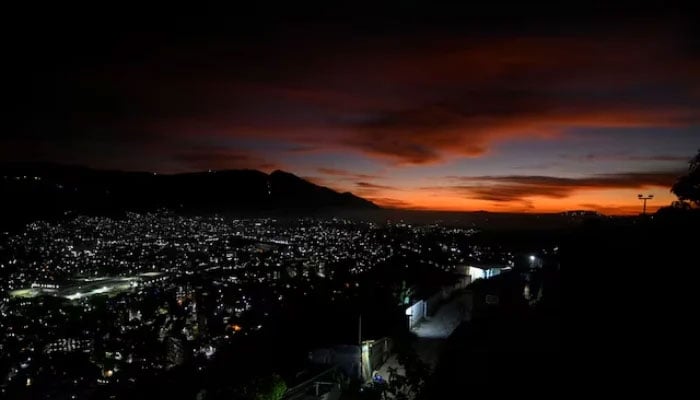
As the new year begins, the most significant international development has emerged from Venezuela, one of Latin America’s most prominent countries. A large section of Latin America, including Brazil, Mexico, Colombia, Uruguay, Chile and Cuba, has taken the position that US action in Venezuela represents a violation of national sovereignty. These countries argue that such actions contradict the UN Charter and lead the entire region towards instability and chaos.
However, at the same time, some Latin American countries such as Argentina have publicly praised the US covert operation, terming it as “a decisive step forward” in the region that could “open a new chapter” for protection of human rights and strengthening democracy.
What makes the Venezuelan crisis more complicated is that this ideological division extends beyond official government statements. Within Latin American media, some describe US involvement as another episode in a long history of foreign intervention and injustice, while others see it as a golden opportunity to free the region from authoritarian rule. The crisis has also raised concerns among other anti-US governments across the world.
Historically, Latin America has been shaped by continuous foreign intervention, internal political turmoil and ideological conflicts from the colonial era to the cold war and even today in the 21st century. During the cold war, socialist governments influenced by the Soviet Union cultivated strong nationalist sentiments, deliberately distancing themselves from the neighboring superpower, the US.
Relations between the Soviet Union and Latin America extended beyond diplomacy to focus on military, defence and strategic cooperation. Following the collapse of the Soviet Union, Moscow continued this engagement, particularly through the sale of arms and air defence systems.
With the introduction of Russian-made air defence systems, claims emerged that Latin America’s defence capabilities had become invincible. In this regard, Venezuela emerged as Russia’s largest defence partner in Latin America, purchasing weapons worth billions of dollars. These included S-300 and Buk air defense systems, Su-30 fighter jets, armored vehicles and tanks, along with Russian technical assistance aimed at strengthening national defence.
However, during a high-level military operation in Caracas, Russian-made air defence systems failed to intercept US aircraft. International defence analysts suggest that the Russian-supplied air system in Venezuela did not become operational.
This controversy is not just limited to Venezuela. Questions regarding the performance of Russian air defence systems have previously surfaced in the Middle East also. During the Al-Assad tenure, despite heavy Russian military presence in Syria, foreign airstrikes had occurred without facing any effective resistance. In Iran, Russian-installed defence systems failed to prevent attacks on sensitive nuclear facilities.
Nearly eight years ago, India, the world’s largest buyer of Russian air defence systems, purchased the S-400 system for approximately $5.43 billion, labeling it a national security necessity. At the time, New Delhi believed these systems would make its airspace impenetrable against both Pakistan and China.
In my view, no defence system can perform effectively without superior intelligence, advanced command-and-control infrastructure, and a comprehensive air strategy. Above all, success depends on the professionalism, training and resolve of the personnel operating these systems. This reality was demonstrated during the Pakistan–India aerial engagements last May, when Pakistan’s armed forces successfully downed Rafale aircraft once considered invincible.
Undoubtedly, the Venezuelan crisis has sparked serious debate about the real-world performance of air defense around the globe. The critical questions remain: can Latin American countries continue to confront the US relying primarily on one kind of defence? And after Venezuela, could another country face a similar destiny?
The writer is a member of the National Assembly and patron-in-chief of the Pakistan Hindu Council.
He tweets/posts @RVankwani