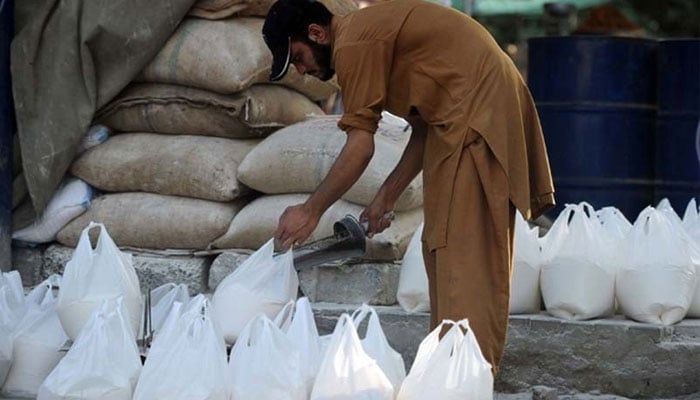
On the morning of January 6, 2026, the government of Pakistan announced plans to deregulate the sugar sector, handing over the reins of a heavily regulated sector to free-market forces. In this momentous step, zone restrictions, price controls, support prices, trade quotas and export bans would all be removed.
This is a welcome step towards stabilising the sugar industry, which has long been plagued by incompetence, corruption, cartelisation and hoarding. Over the years, the government has repeatedly intervened in the sugar sector, ranging from imposing high import duties to introducing export quotas, to manage the crisis.
Under the new deregulation framework, farmers will gain full autonomy over which sugarcane varieties they cultivate, where they cultivate them, and whom they sell them to. Moreover, by abolishing the minimum support price and allowing prices to be determined by demand and supply, the policy removes long-standing distortions that encouraged overproduction and the misallocation of land and water. On the industrial side, lifting export bans, quotas and subsidies, along with allowing the establishment of new mills and the import, refining and re-export of raw sugar, shall introduce competition and improve capacity utilisation.
Crucially, by stepping back from price-setting and trade controls, the state is shifting risk and decision-making back to the market, creating incentives for efficiency, diversification and land and water management. While safeguards such as restricting the sowing of low-yield varieties remain in place, the overall reform marks a decisive move away from politically driven interventions towards a more competitive and fiscally sustainable sugar economy.
Australia’s experience offers a relevant precedent for Pakistan’s sugar sector reforms. Following years of crisis under heavy regulation, Australia fully deregulated its sugar industry in 2006, removing price controls, compulsory marketing and trade restrictions. The reform compelled the sector to respond to market signals rather than to political intervention, shifting risk from the state to producers and thereby improving efficiency and competitiveness.
While adjustment costs were inevitable, the industry emerged more export-oriented, fiscally sustainable, and less dependent on government support. This case shows that decisive deregulation, when undertaken in later years and in spirit, can correct deep-seated distortions rather than help perpetuate them.
This policy shift is not only beneficial for the sugar industry but also for the agricultural sector as a whole. For years, due to government interventions and coercion, growing sugarcane has become a cash crop for farmers. The minimum support price has increased from Rs 180 to as high as Rs 400/40KGs since 2013, motivating farmers to grow more sugarcane and encouraging them to abandon other crops such as cotton, pulses and oilseeds. These three crops are worth highlighting because their abandonment is costing the country precious water, land and labour, along with significant revenue losses.
Over the years, the cropped area under sugarcane has expanded at the expense of cotton in southern Punjab. Farmers were often paid above the minimum support price, further tilting incentives towards sugarcane and away from cotton. This shift has intensified pressure on the country’s scarce resources. As a result, Pakistan’s cotton industry has plunged into crisis, with production dropping from a record 15 million bales to just 5.5 million bales, placing an estimated $905.91 million burden on the country’s foreign exchange reserves. Moreover, in FY2025, approximately $4.24 billion was spent on imports of textile products, further highlighting the economic costs of declining domestic cotton production.
Pulses are another sore point in Pakistan’s agricultural landscape. Despite being a staple of the Pakistani diet, pulse production has declined by 16.6 per cent, resulting in $918 million in import costs. The country has a highly suitable agricultural climate and fertile land in regions such as Rahim Yar Khan and Bhakkar. Oilseed crops are another neglected category, costing Pakistan $3 billion to $4 billion annually in imports, while over 85 per cent of domestic consumption is met through imports. This is largely a consequence of policy support being concentrated on sugarcane and wheat.
The deregulation of the sugar industry will not only reallocate farmers’ interests toward these crops but also redirect cash flows previously devoted to sugar subsidies toward improving productivity growth in these crops through investment in research, irrigation efficiency, and post-harvest infrastructure.
The long-standing water dispute between Punjab and Sindh is also increasingly shaped by cropping choices rather than absolute scarcity. Sugarcane – one of Pakistan’s most water-intensive crops – continued to expand not because of market demand, but due to price controls and policy protection that encourage overproduction in water-stressed regions.
Deregulating the sugar sector would weaken these distortions by allowing prices to reflect true costs, discouraging excessive cane cultivation, and reducing pressure on shared water resources. By shifting incentives away from politically protected, water-intensive crops, sugar deregulation can help ease inter-provincial water tensions while aligning agricultural production with Pakistan’s hydrological realities.
Thus, deregulating the sugar sector will benefit the sugar industry alone but will also have far-reaching effects: it can encourage crop diversification and reduce water stress.
Because Pakistan’s sugar industry is plagued by multiple issues, including cartelization, hoarding, and corruption, it may hinder Pakistan from realising the full benefits of deregulation. Therefore, while deregulation may be the answer to Pakistan’s recurring sugar crises, it will benefit consumers only if the government ensures that hoarding, corruption, and cartelisation are also effectively addressed. Through a phased-out policy framework.
India and Thailand offer good examples, closer to home, of how carefully sequenced sugar-sector deregulation is the answer to the problems the sector faces in Pakistan. Both countries gradually moved towards deregulation. Thailand’s gradual reforms boosted competitiveness and reduced costly market distortions. India achieved this by liberalising sales and trade while retaining cane price controls and state oversight. These cases suggest that smart and context-driven deregulation can shape a vibrant sugar sector without undermining food security, which Pakistan cannot afford to ignore.
While the deregulation of the sugar industry promises to free the sector from erratic policy interventions, its benefits extend far beyond the sector itself. By improving crop diversification, reducing water stress, and easing the provincial water crisis, the reforms have the potential to strengthen agriculture as a whole. These outcomes, however, hinge on a well-planned and carefully implemented transition.
The writer is associated with the Sustainable Development Policy Institute (SDPI), Islamabad. The views expressed by her are her own and do not necessarily reflect the organisation’s official stance.