The naked American aggression against Venezuela has created an outcry across the Global South, while states in the Global North have reacted cautiously, describing it as contrary to international law but avoiding outright condemnation.
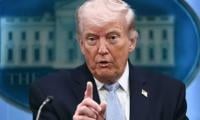
Washington has accused President Nicolas Maduro of narco-terrorism, taking the Venezuelan president and his wife into custody and announcing plans to prosecute them in an American court. Venezuela has condemned the abduction of its president and the country’s leadership has indicated that it will maintain a defiant stance.
The American action has triggered debate about President Donald Trump's aims and objectives, as well as its broader implications. Trump has accused Venezuela of sending criminals to the US and exporting narcotics, but many view these assertions with scepticism, arguing that the most powerful man in the world has orchestrated this operation to seize Venezuela’s vast oil reserves, believed to be the largest in the world. Trump’s own statements appear to suggest that the operation was conducted to enable the plundering of Venezuelan oil and the exploitation of its natural resources.
The American president has claimed that the objective is to stop drug shipments to the US, which he says cause tens of thousands of deaths each year. However, he has not substantiated this claim. For example, US reports from Congress, the Drug Enforcement Administration and other open and official sources reveal that the overwhelming majority, about 74 per cent, of cocaine trafficked into the US from South America comes via the Pacific route.
These drugs are transported not in speedboats but in shipping containers and aircraft. Another 16 per cent moves through the ‘Western Caribbean Vector’, the Caribbean coast of Colombia. Only about eight per cent passes through the ‘Caribbean Corridor’ off the Venezuelan coast. Moreover, Venezuela is not a producer of cocaine, which is mainly produced in Colombia, Ecuador, Peru and Bolivia. Trump has also attempted to portray Venezuela as a major route for fentanyl entering the US from China, but there is no concrete evidence to support this claim. Fentanyl largely enters the US via Mexico.
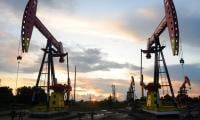
It is therefore clear that drugs are not the primary issue. It appears that Washington has ulterior motives, most notably related to oil and resource exploitation. Venezuelan oil reserves are estimated at 300 billion barrels, surpassing those of Saudi Arabia. Other estimates suggest that Venezuela’s crude reserves account for about 17 per cent of the world’s total. When Hugo Chavez, the populist former president, came to power in 1999, Venezuela produced about 3.5 million barrels of oil per day, making it one of the world’s top ten crude producers at the time.
American oil companies that could potentially benefit include Exxon Mobil, the largest US oil company, and the Texas-based ConocoPhillips, both of which were active in Venezuela before Chavez nationalised the industry. Only Chevron, the second-largest US oil company, has continued operating in the country. Around 80 per cent of Venezuela’s crude exports are shipped via supertankers to China, the world’s largest oil importer, largely as repayment for loans extended to Venezuela during the Chavez era.
Countering China’s growing influence in Latin America appears to be the second objective of this aggression. China is Venezuela’s largest lender, and while the exact scale of financial support is uncertain, estimates suggest that Beijing provided about $105 billion in loans and other financial commitments to Venezuela between 2007 and 2016. China has been securing Venezuelan oil at discounted rates, whereas under American control the same oil would likely be sold at market prices, dealing a blow to Beijing.
China’s presence is not limited to Venezuela. Its influence across Latin America has expanded dramatically over the past 26 years. Trade between China and Latin America and the Caribbean stood at just $12 billion in 2000 and has now exceeded $500 billion. China is now South America’s largest trading partner and the second largest partner for Latin America and the Caribbean as a whole, after the United States.
Beijing has also emerged as a major source of foreign direct investment and a significant sovereign creditor, providing more than $141 billion in loans to countries in Latin America and the Caribbean between 2005 and 2021. These investments have primarily targeted raw materials such as copper, iron ore, soybeans, and oil, as well as strategic sectors including energy, infrastructure and telecommunications. More than 20 countries in the region have joined China’s Belt and Road Initiative.
Venezuela has been one of China’s closest partners in the region. Maduro’s detention will send a clear message that Chinese influence will not be tolerated in what Washington considers its backyard, a region it has dominated since the Monroe Doctrine. Critics argue that the US is attempting to reassert its regional dominance by reviving Monroe-era thinking that treats Latin America and the Caribbean as subordinate to American interests. This may constitute the third motive behind the action.
Some critics also believe that wars and military interventions have long served as tools for American presidents to divert attention from domestic political troubles. They argue that when US leaders face scandals, they often resort to foreign aggression as a distraction. For example, Bill Clinton launched missile strikes against Afghanistan and Sudan during the Monica Lewinsky scandal. From this perspective, the Venezuela operation may also be intended to divert attention from the Jeffrey Epstein affair, which has had implications for Trump’s political standing and credibility.
What are the likely consequences of this aggression? It has undoubtedly sent a chilling message to governments in the region that might contemplate defying Trump. The action, and particularly the humiliating treatment of Maduro, will have alarmed anti-American governments worldwide. It will now be far more difficult for developing countries to antagonise an occupant of the Oval Office whose erratic behaviour unsettles not only adversaries but allies as well.
The move is especially troubling for countries such as Iran, Canada and Denmark. Trump has already threatened severe consequences if Iran pursues nuclear weapons. He has also expressed interest in annexing Greenland and has controversially suggested that Canada should become the 51st state of the US. European countries are similarly uneasy about the Republican leader’s intentions. While they have refrained from condemning his actions in Venezuela, it remains unclear whether they would adopt the same restraint if Washington were to undertake similar action in Greenland.
This episode risks normalising unilateralism as the dominant rule of international conduct. It opens the door to anarchy and may encourage states to overthrow leaders they consider unfriendly. Many in Europe fear that the West will lose its moral authority to oppose China if Beijing were to pursue reunification with Taiwan by force. Others worry that the US has effectively legitimised the behaviour of authoritarian leaders.
The writer is a freelance journalist who can be reached at: [email protected]