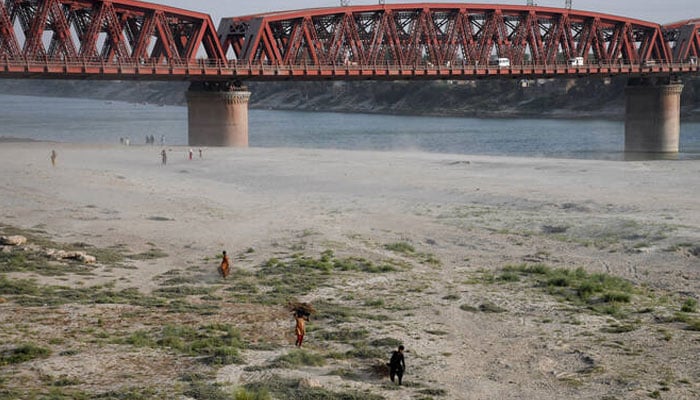
Pakistan’s persistent water crisis is deepening with each passing year. Among the provinces hardest hit is Sindh, whose water woes have created profound consequences for agriculture, ecology, health and the economy.
Amid the growing discourse on sustainable water management, one project that deserves urgent attention – particularly from the people and leadership of Sindh – is the proposed Soan Dam and the associated Indus-Soan Link Canal.
Contrary to the misconception that dams in the north only benefit Punjab or Khyber Pakhtunkhwa, the reality is that the Soan Dam, strategically located in the Potohar Plateau, could offer multiple, long-lasting benefits to Sindh. From flood control and year-round water supply to Delta regeneration and ecological preservation, this project could help address the root causes of Sindh’s water vulnerability. Here’s why Sindh must become one of the strongest proponents of this initiative. Sindh’s agriculture and population centres are heavily dependent on the Indus River system. However, the current water supply is seasonal, often constrained by upstream demand and inadequate infrastructure.
This could serve as a supplementary water source for Sindh, especially during the dry Kharif season. Crucially, it would stabilise flows, enabling consistent irrigation across Sindh’s millions of acres of farmland and ensuring a reliable drinking water supply for urban and rural populations currently facing alarming shortages.
Floods are a recurring disaster in Pakistan, with Sindh often bearing the brunt due to its downstream location. During the monsoon season, unregulated surges from northern catchments can cause massive flooding in Sindh, displacing communities, destroying crops and overwhelming flood protection systems. The Soan Dam would capture excess floodwater upstream, reducing the burden on the Indus downstream. Controlled releases could manage peak flows and avoid sudden flood pulses. This system would function as a buffer, providing Sindh with a protective upstream shield against extreme flooding.
The once-thriving Indus River Delta – the lifeblood of southern Sindh – is dying due to reduced freshwater and silt flows. A lack of flow throughout the year is causing seawater intrusion, mangrove destruction, farmland loss, and biodiversity decline. By increasing water releases from the Soan Dam into the Indus, freshwater discharges to the Delta could be increased, especially during critical low-flow months. Rejuvenating the Delta would protect agricultural land from salinity, support unique species such as the Indus blind dolphin, and restore livelihoods for over 100,000 fishermen whose catch has declined due to collapsing ecosystems.
Pakistan’s energy crisis is directly linked to its reliance on imported fossil fuels and on expensive thermal generation. Dams provide cheap, renewable, and indigenous electricity, with no recurring fuel costs. Soan Dam will have 6 to 8 times the water storage capacity of Tarbela. Its strategic location enables it to generate steady hydroelectric power for the national grid. This would reduce dependence on Independent Power Producers (IPPs), whose contracts are financially strangling the government and whose electricity is often unaffordable for the poor. Sindh, like all provinces, stands to benefit from a cheaper, more stable national power supply, which would reduce industrial costs and improve energy access in underdeveloped areas.
The fishermen of Sindh, especially in Thatta, Sujawal and Badin, are among the most climate-vulnerable communities in Pakistan. Reduced river and silt flows have pushed saline water far inland, decimating freshwater fish stocks and turning productive land barren. The Indus blind dolphin, one of the world’s rarest freshwater cetaceans, is also threatened by shrinking water levels and pollution. By augmenting flows through the Indus via the Soan Dam, fish populations and the dolphins’ habitat could recover. A stable aquatic environment supports breeding cycles, improves water quality and ensures ecological continuity. For Sindh, this means economic, cultural and biodiversity preservation.
Tarbela Dam, Pakistan’s largest storage reservoir, is rapidly losing its capacity due to silt accumulation from the upper Indus. This reduces water availability for Sindh during critical months. The Soan Dam/Soan-Indus Link could help mitigate this issue by providing a parallel channel and offloading some hydraulic pressure from the Tarbela system. Additionally, strategic management of water flow could flush silt deposits downstream during high-flow periods, restoring some of the lost storage. This would increase Tarbela’s lifespan, allowing more water to be stored in winter and released during Sindh’s summer demand.
Water issues in Pakistan are often framed in adversarial terms, pitting Punjab against Sindh. But the Soan Dam and the Indus-Soan Link Canal are a national solution, not a provincial one. Located in the north, but designed to add water into the Indus system – not take away from it – this project bypasses the traditional disputes over canal headworks, allocations, and water theft. Sindh could champion this as a model of cooperative federalism, where new water resources are created, rather than merely redistributed. This would help build trust between provinces and encourage similar out-of-the-box thinking in future projects like rainwater harvesting, small dams and aquifer recharge.
An important point to keep in mind is that underground water in most of Sindh is saline, making it unsuitable for drinking and agriculture. Second, most cities in Pakistan lack sewage treatment plants, and even when they are available, most are inoperable. As per government reports only eight per cent of the sewage water is treated. Therefore, all cities near rivers and canals dump their raw sewage in them. All major cities in Sindh are forced to use the polluted water from the rivers and canals. The situation gets worse during the dry season when water levels in the river and canals are low, and pollution levels in the water are high.
The people of Sindh are rightly concerned about their water future. But the solution does not lie in resisting all upstream development, especially when it can benefit them. The Soan Dam and Indus-Soan Link Canal offer a unique opportunity to improve Sindh’s water security, revive its ecology, protect its farmers and fishermen and build national resilience.
In an era of climate change and worsening hydrological volatility, relying solely on natural river flows is no longer viable. Sindh should demand, not resist, infrastructure that adds water to the system, controls floods, restores the Delta and ensures year-round supply. The Soan project, if pursued with transparency and collaboration, could be a game-changer for Sindh and for Pakistan as a whole.
The writer is a freelance contributor.