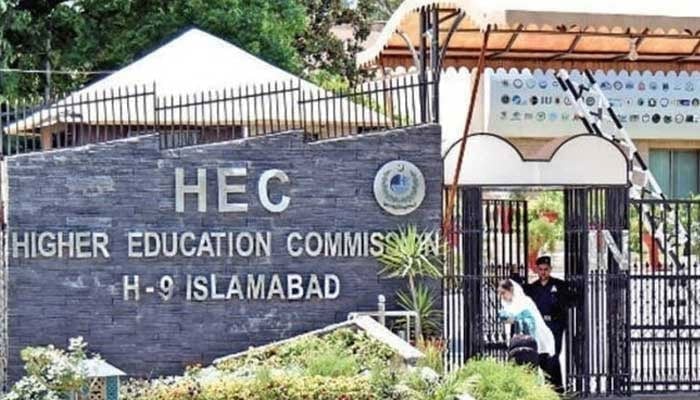
After the passage of the much-hyped 27th Amendment by parliament, the next constitutional amendment is expected to address several long-awaited issues between the federation and its provinces, such as the NFC Award and higher education.
The funding of the federal Higher Education Commission of Pakistan – the sole regulator and facilitator of higher education institutions across the country – has remained stagnant for about six years. Provinces such as Sindh and Punjab have begun contributing to their chartered universities, whereas Khyber Pakhtunkhwa, Azad Jammu & Kashmir, Gilgit-Baltistan and Balochistan have yet to contribute significantly to their universities.
This funding gap is widening with each passing year. It is high time the mandate of federal and provincial HECs, including their funding formulae, was finalised by the government, and that 2026 brought clarity and prosperity for higher education institutions across the country.
Against this backdrop, let us briefly review some of the activities undertaken by the federal HEC during 2025 to gain a clearer view of the state of higher education affairs in the country.
In 2025, Pakistan’s higher education sector reflected a year of consolidation rather than headline-driven expansion. Building on the reforms initiated, the focus apparently remained on aligning skills, ensuring curriculum relevance, strengthening digital infrastructure and enhancing international academic engagement. Yet, as in previous years, the effectiveness of these initiatives depended less on policy announcements and more on how universities translated them into practice.
A major development during the year was the implementation of mandatory internships and industry-relevant certifications for all undergraduate degree programmes. The Undergraduate Education Policy (UGEP) aims to ensure that graduates leave universities with some workplace exposure and recognised professional skills. While the intent is widely appreciated, its success now rests largely with universities, many of which continue to struggle with meaningful industry linkages. In several institutions, internships risk becoming procedural requirements rather than structured learning experiences, highlighting the need for stronger institutional capacity and oversight at the university level rather than additional directives.
Curriculum reform also remained a high priority. Revised curricula for disciplines such as pharmacy, food sciences, nutrition and computing signalled a continued effort to align academic content with market needs and international standards. Consultations with industry, particularly in the IT sector, indicated that final-year projects should be restructured into industry placements better to serve the country’s estimated 75,000 annual IT graduates.
However, curriculum reform alone cannot compensate for outdated teaching practices and limited laboratory or research facilities in some universities, where resource constraints and slow internal governance processes continue to limit the impact of otherwise well-designed programmes.
Digital transformation progressed steadily during 2025, with the expansion of national platforms, learning management systems, data centres and high-speed connectivity across higher education institutions. Millions of students now have access to improved digital infrastructure, reducing long-standing disparities between urban and peripheral campuses.
Yet, uneven adoption at the institutional level remains a concern. While some universities actively integrated digital tools into teaching, assessment, and administration, others treated them as add-ons rather than core academic instruments, reflecting variations in leadership priorities and institutional readiness.
International academic mobility remained a relative success story. Pakistani students once again secured the highest number of Erasmus Mundus scholarships globally, while bilateral programmes with countries such as Hungary, Sri Lanka and Afghanistan further expanded. The Pakistan-Bangladesh Knowledge Corridor was also launched. These achievements underscore the competitiveness of Pakistani students and the effectiveness of scholarship facilitation mechanisms. At the same time, universities at home must do more to capitalise on this exposure by strengthening reintegration pathways for returning scholars and translating international experience into improved teaching and research cultures.
Faculty development and governance training received sustained attention, particularly through structured programmes for early-career academics, senior administrators and public-sector education managers. Led by the National Academy of Higher Education (NAHE) – the training wing of HEC – several capacity-building initiatives, including overseas training for STEM faculty, leadership and governance training and collaborations with national training institutions, reinforced the importance of professionalising higher education faculty and management.
The success of programmes such as the Women Empowerment and Mentoring Program (WEMP) and faculty and management development programmes was widely publicised by participating universities and through the Faculty Leadership and Management Excellence (FLAME 2025) event as well. However, without parallel reforms in university teaching, governance structures, and financial autonomy, such training risks having limited long-term institutional impact.
Reaffirming the broader societal role of higher education institutions beyond academics, the HEC ensured that universities increasingly engaged with social and civic issues throughout the year, including health awareness campaigns, youth participation in sports, and community service. Still, the continuity of such efforts often depends on short-term projects rather than being embedded in university strategies, underscoring the need for stronger institutional planning.
Overall, 2025 was a year in which higher education policies matured, but implementation gaps became more visible. The challenge ahead lies less in designing new reforms and more in addressing structural weaknesses within universities and ensuring sustained public investment in the sector.
As Pakistan enters 2026, the real test will be whether institutions can internalise these reforms and whether government funding priorities reflect the central role higher education is expected to play in national development – an issue that remains unresolved despite repeated policy commitments.
The writer is a Tsinghua alum and a gold medalist in public policy. He can be reached at: [email protected]