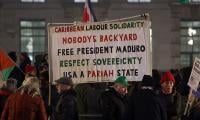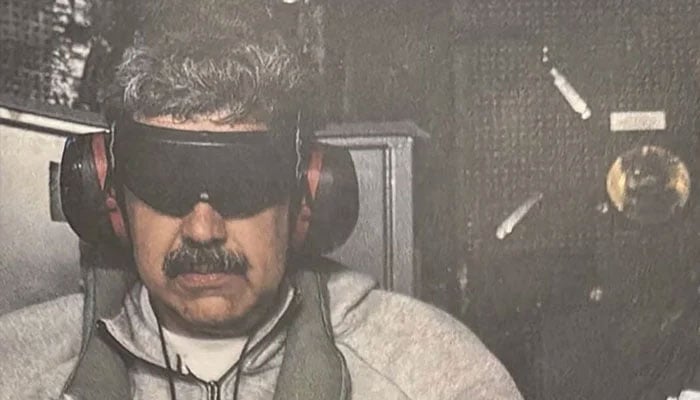
The writing for Venezuelan President Nicolas Maduro was probably on the wall when his rival Maria Corina Machado, the individual the self-appointed custodians of principles like global norms and international law have crowned the ‘leader of the Venezuelan opposition’, was rewarded with the Nobel Peace Prize last October. In the eyes of many, this was a way of recognising her as the ‘legitimate’ ruler of a sovereign nation that already had an internationally recognised president. How does that work? It works when one understands that we live in a world where ‘legitimacy’ is decided by who holds power and no one holds more power than the US and its president. This was followed by several months of US naval and air forces massing around Venezuela, ostensibly to counter drug trafficking but, for some reason, seizing its oil tankers. However, even the most cynical and critical observers of the US could not have predicted just how blatantly the empire would exercise its powers on January 3. What we saw was a country being bombed unprovoked and its sovereign head of state and his wife simply being kidnapped and flown to the US to stand trial for alleged narco-terrorism. But these charges are the smallest of fig leaves. One only has to look as far as what US President Trump and the rest of his cabinet have been saying in the aftermath. Oil and the fact that Venezuela has a lot of it are clearly the biggest things on their mind.
Unlike Iraq, one did not need lots of independent investigations to get to the truth this time. The US has implicitly admitted that it kidnapped a head of state simply because it wants greater control over his country’s natural resources. Then there is the fact that other states like Cuba, Colombia and even Mexico, a close trading partner of the US, also now appear to be in the firing line. Are the leaders of these countries all narco-terrorists as well? The US has often been denigrated as trying to act like the world’s police. However, now, it does not even appear to be shying away from this characterisation. The way Maduro has been dealt with sends a clear signal to every country not totally in line with the US that the same could happen to them. After all, what can they do to stop the world’s strongest military from kidnapping them in the middle of the night? The sense of injustice is also only compounded by the mealy-mouthed reactions that have come from the rest of the West. The EU’s high representative for foreign affairs and security policy said that the bloc was ‘closely monitoring’ the situation while reaffirming its view that Maduro is somehow an illegitimate leader and calling for a ‘peaceful transition’.
‘Closely monitoring’ here sounds a lot like ‘well…this is above our heads’. And when ‘peaceful transition’ is uttered after a president has been kidnapped, one may as well say ‘sorry, but big brother has already decided for us’. So, who is next on the chopping block of the world’s self-appointed sheriff? Many troubling signs point squarely at Iran, with Trump recently suggesting the US might intervene amidst the protests there. Regardless of where the axe falls, by now it should be clear to all that this is a world ruled by the axe. Who it falls on is not a matter of law but of who wields the axe.