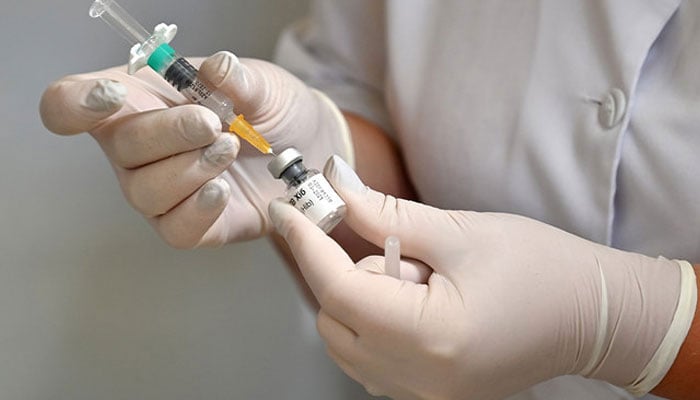
For decades, Pakistan’s economy has been exposed to repeated shocks because of its dependence on imported essentials. The sharp depreciation of the rupee has turned this structural weakness into a daily hardship, pushing even basic necessities – including medicines – beyond the reach of many households. In this context, the proposal to establish a National Vaccine Alliance under the country’s first National Vaccine Policy deserves serious attention. The contradiction is stark. Pakistan administers up to 150 million vaccine doses annually, yet produces none of them at scale. During the Covid-19 pandemic, the country had no option but to rely on donor partners to initiate its vaccination drive. While the rollout was handled efficiently, the episode exposed a fundamental vulnerability: without domestic manufacturing capacity, public health security remains hostage to external goodwill, geopolitics and supply-chain disruptions. The draft policy’s central idea – a National Vaccine Alliance to catalyse local manufacturing – is therefore a step in the right direction. Crucially, it does not romanticise vaccine production but recognises the real barriers that have kept private investors away: high capital costs, complex regulatory pathways and the absence of sovereign procurement guarantees. By proposing long-term contracts of up to 10 years, buy-back commitments and phased technology transfer, the policy attempts to de-risk investment and create a predictable market. If implemented with integrity, this framework could finally lay the foundations of a domestic vaccine ecosystem.
Yet ambition alone will not deliver results. Vaccine production is a technically demanding and ethically sensitive enterprise. Clinical trials are an unavoidable part of the process, and the state must ensure that ethical standards are non-negotiable. Informed consent cannot be treated as a formality. Volunteers must participate voluntarily, with a complete understanding of the risks, and be fairly compensated for their contributions. Any perception of exploitation would not only be morally indefeasible but also erode public trust. The policy also confronts an uncomfortable reality: Pakistan’s starting point is weak. The National Institute of Health has infrastructure largely confined to small-scale fill-and-finish operations and would require major upgrades to support end-to-end manufacturing. Similarly, Dow University of Health Sciences and Amson Vaccines and Pharma represent potential nodes in a future network, but not yet a comprehensive solution. Only one private facility currently produces a narrow range of vaccines, such as tetanus toxoid and hepatitis B, and it lacks WHO prequalification, severely limiting its market access. This gap is worrying when one considers that around 40 different vaccines are administered in Pakistan, all of them imported, some even from India. Given the volatility of relations with the neighbouring country, such dependence routinely places the healthcare system in an awkward and risky.
The urgency of reform is heightened by a shifting global landscape. Last year (2025) has been described as a year of aid withdrawals, with many countries scaling back humanitarian funding. Pakistan can no longer assume that external assistance will cushion its health budget. Breaking away from aid dependence is now a fiscal and moral imperative. Local vaccine production offers tangible benefits. It can lower costs by reducing import bills, stabilise supply chains and enable the government to plan immunisation programmes without external uncertainty. More importantly, it signals a shift towards self-reliance in a sector where delay costs lives. The National Vaccine Alliance is a promising blueprint. The challenge now lies in execution – transparent regulation, sustained investment and uncompromising ethical standards.