Pakistan’s politics saw a surprising turn in 2022 when a no-confidence motion against a sitting prime minister triggered unrest and chaos across the country. In May 2023, the anger led to protests at sensitive locations with open calls to mutiny. This set the stage for subsequent governments, highlighting the severity of the challenges officials may face in governance. On top of this, the resurgence of terror activities in Khyber Pakhtunkhwa (KP) made matters worse. It was perhaps this upside-down situation that lends credence to a hybrid system. Lately, the Pakistan Institute of Legislative Development and Transparency (Pildat) released its Assessment of the Quality of Democracy in Pakistan 2025, finding that while democratic institutions remain intact in form, their functioning has become increasingly constrained by a security-driven governance paradigm.
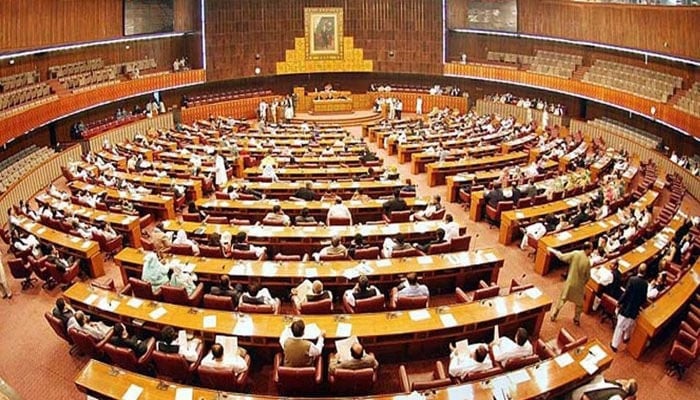
The Pakistan-India conflict in May 2025, tensions with Afghanistan, ongoing insurgencies and political polarisation reinforced a shift towards a security-centric state, a trend endorsed by the civilian government. This was reflected in constitutional changes, restructuring military command and elevating the army chief to the rank of field marshal. The report notes a weakening of parliamentary oversight and representativeness following the passage of the 27th Amendment with limited debate, prolonged vacancies in opposition leadership positions and low attendance by senior parliamentary leaders. A Supreme Court ruling on reserved seats and subsequent by-elections gave government allies a near two-thirds majority, while the disqualification of opposition leaders created institutional gaps. Pildat also observed that opposition parties’ own actions, including boycotts and disengagement from parliamentary processes, further undermined effective legislative scrutiny. To be fair, some not-so-popular measures did play a major role in bringing some stability to the country. Less political noise and exaggeration also allowed institutions to make key economic decisions. These gains, however, should not be used to justify a less democratic structure.
Democracy in Pakistan has always struggled to find its space here. Opposition is usually orchestrated by those with invested interests; half-truths are promoted on social media to distort people’s trust and create deep divisions with society. In such an environment, institutions weaken not only because of external pressures, but also because political actors fail to deliver. So many gains that were made in past years have been undone by several constitutional amendments. The challenge ahead is not limited to preserving democratic structures in form, but to restoring their substance. A less democracy-driven state may deliver short-term stability, but without credible parliamentary oversight, genuine political competition and responsible opposition, it risks entrenching governance by exception rather than consent. How and when Pakistan should play a role in foreign situations, for example, should reflect the sentiments of the people and that can only be possible if rigorous debates are conducted in parliament. Pakistan’s democratic future will ultimately depend on whether its political leadership can reclaim its lost glory and gain people’s trust.