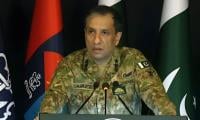
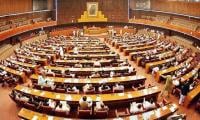
Pakistan’s Foreign Office is justified in dismissing the recent remarks of Indian External Affairs Minister S Jaishankar as “irresponsible assertions”. The statement issued on Saturday, though carefully worded, was clearly a response to comments attributed to the Indian minister in which he once again invoked the familiar trope of “bad neighbours” while asserting India’s claimed right to defend itself against terrorism. Such rhetoric is neither new nor constructive, but its timing makes it especially revealing. Only days earlier, Jaishankar had publicly shaken hands with National Assembly Speaker Ayaz Sadiq in the Bangladesh parliament. The gesture prompted cautious optimism in some quarters and deep scepticism in others. In a region where symbolism matters, that brief interaction was read as a possible signal of India’s willingness to step back from maximalist postures and re-engage with Pakistan. The subsequent verbal escalation has therefore created confusion, if not outright distrust, about New Delhi’s true intentions.
Regional analysts increasingly view Jaishankar’s remarks as less about policy substance and more about balancing domestic and international narratives. Any overture towards Pakistan, however minor, tends to attract fierce criticism within India’s hyper-nationalised political environment. Under Prime Minister Narendra Modi, foreign policy has often been framed for domestic consumption, with assertiveness substituting for diplomacy. The result has been a pattern of contradictory signalling: gestures that hint at dialogue, followed almost immediately by statements that reaffirm hostility. The deterioration in Indo-Pak relations did not occur overnight. It has been a steady downward slide, particularly since August 2019, when India unilaterally revoked Article 370, stripping Indian-occupied Kashmir of its special status. That decision shut the door on dialogue and entrenched a crisis that continues to fester. Since then, nearly every regional development has been viewed through a securitised lens, leaving little room for diplomacy.
The crisis following last year’s Pahalgam incident marked a dangerous escalation. Despite the absence of credible evidence linking Pakistan to the attack, India opted for military action, pushing the region to the brink of war. The outcome was sobering for New Delhi. Not only did it fail to achieve strategic objectives, but the episode also exposed the limits of coercive tactics. Far from isolating Pakistan, India found itself struggling to mobilise meaningful international support for its claims. The May 2025 confrontation further dented India’s carefully cultivated image as an emerging regional hegemon. For years, Western capitals – particularly the US – had invested in India as a counterweight to China. Yet the conflict showed that India’s military and diplomatic capacity to impose outcomes even in its immediate neighbourhood is far from assured. This reassessment has been subtle but unmistakable, reflected in a cooler, more transactional Western approach towards New Delhi.
At the same time, India’s relations with its neighbours have frayed. Bangladesh’s growing unease, Nepal’s resistance to Indian pressure and Sri Lanka’s recalibration of ties all point to the costs of a neighbourhood policy driven more by dominance than partnership. India’s contradictory approach to Afghanistan – once shunning the Taliban, now engaging them largely to spite Pakistan – has also yielded little of substance, highlighting the absence of a coherent regional strategy. It is in this context that India’s apparent reconsideration of Pakistan policy must be understood. Normalisation is a strategic necessity for New Delhi. Without functional ties between the two largest states in South Asia, the region will remain hostage to crises, miscalculations and missed economic opportunities. Pakistan has repeatedly stated that it seeks peace with India based on dialogue, mutual respect and sovereign equality. That position has not changed. Nor has Pakistan wavered on its principled stance on Occupied Kashmir. India now faces a choice. It can continue to rely on rhetoric, propaganda and selective outrage, deepening its diplomatic isolation. Or it can acknowledge that stability with Pakistan is indispensable for regional peace, economic integration and its own credibility as a responsible power.