Pakistan has long carried a particular reputation. In foreign commentary, it was often reduced to a single idea: an Islamic country uneasy with difference, with its social fabric assumed to be brittle and its tolerance conditional. The image persisted not because it was always accurate, but because it was easy.
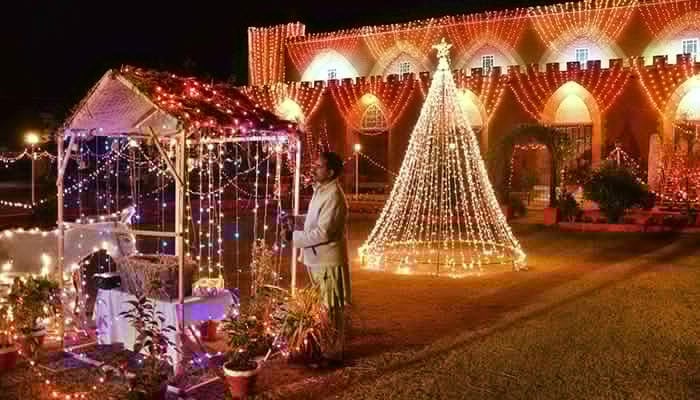
By the end of 2025, that image looked increasingly out of step with what was visible on the ground. Across Pakistan, Christmas was marked openly. Churches were decorated, markets sold lights and trees, schools acknowledged the holiday and Christian families celebrated without being asked to justify their presence. Security was visible, but so was normalcy. The significance lay not in spectacle, but in ordinariness. A religious minority practising its faith publicly, without fear or apology.
That contrast sharpens when viewed against developments elsewhere over the same period.
In India, Christmas celebrations were disrupted in multiple states. School events were halted, decorations vandalised and accusations of forced conversion used as a pretext for intimidation. These incidents unfolded alongside a broader pattern of violence and harassment directed at religious minorities, particularly Muslims, documented by civil-society groups and reflected in criminal cases and investigative reporting.
The killing of a young student from India’s northeast, reportedly attacked after being racially profiled as ‘Chinese’, exposed the same instinct at work in another form. Difference was treated as suspicion, and suspicion licensed violence.
This is not a story about national virtue or moral comparison. Pakistan has its own history of sectarian violence, exclusion and institutional failure. That history cannot be wished away. But it does invite a question worth asking honestly: how did a country long portrayed as a symbol of religious intolerance arrive at a moment where coexistence, however imperfect, looks more practised than performed?
Part of the answer lies in how Islam itself is understood in public life. Faith is not measured by identity or volume, but by conduct. Pakistan once struggled with that distinction. Religion was politicised, moral authority reduced to slogans, and difference framed as weakness. The consequences were damaging and long-lasting. Yet over recent years, there has been a visible recalibration.
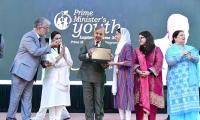
Across civil and military leadership, the emphasis has shifted towards cohesion over coercion, restraint over spectacle. Protection of minorities has increasingly been framed not as a concession to modern sensibilities, but as a responsibility grounded in Islamic ethics and constitutional obligation.
This shift has not eliminated prejudice or risk. It has, however, changed the signal. When leadership treats pluralism as a stabilising force rather than a threat, the space for vigilantism narrows. When restraint is modelled from the top, intimidation becomes harder to justify at the bottom.
What makes this moment instructive is not that Pakistan has solved intolerance, but that it has begun to separate faith from fear. Islam, practised with confidence, does not require constant policing of others to affirm itself. It does not need mobs, moral enforcers or manufactured outrage. It relies instead on restraint, justice and the assurance that belief is strong enough to coexist with difference.
The wider lesson extends beyond South Asia. In 2025, intolerance was not confined to any one country or religion. Across the globe, identity increasingly became a shortcut for blame. Political anger was redirected toward communities rather than institutions. Once that line is crossed, democracies erode through normalisation and selective enforcement.
Pakistan knows this trajectory well enough to recognise it elsewhere. As 2026 begins, the moment calls for reflection rather than satisfaction. Pluralism is sustained by behaviour and enforcement, by refusing to let fear define belonging, not by slogans or photo ops. These choices are rarely dramatic and almost never headline-grabbing. They appear in whether a school event is protected rather than disrupted, whether a place of worship is treated as ordinary rather than provocative, and whether the state responds consistently rather than selectively.
The caricature Pakistan once bore is not gone forever. It can return if tolerance is treated as an image rather than a discipline. But the contrast visible at the close of 2025 suggests something worth noting: countries burdened by reputation and history can still change direction.
For Pakistan, that shift carries responsibility as much as recognition. Improvement invites scrutiny. The real test is not whether minorities are protected during moments of attention, but whether that protection holds when no one is watching. Normalcy, after all, is harder to sustain than symbolism.
The distance between caricature and contrast is not fixed. It is maintained through restraint, choice and the discipline to enforce standards evenly. That discipline remains uneven and at times fragile. But its presence, however incomplete, is real. In a world where intolerance increasingly masquerades as conviction, it may be Pakistan’s most underappreciated shift – and one worth preserving as the new year begins.
The writer is a non-resident fellow at the Consortium for Asia Pacific & Eurasian Studies. He tweets/posts @umarwrites