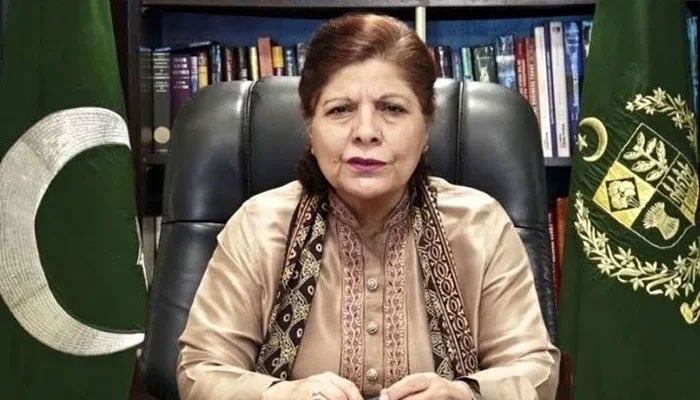
Dr Shamshad Akhtar, who died last week at the age of 71, belonged to a rare class of economists whose authority rested not on self-promotion but on trust.
Over four decades, she moved between Pakistan’s most demanding public offices and the upper ranks of the international system, often returning home when circumstances were hardest and expectations lowest. She did so quietly, with a sense of duty that rarely announced itself.
Her public career was formidable. She served as Pakistan’s first woman governor of the State Bank of Pakistan, twice as caretaker finance minister, as vice-president of the World Bank, as a senior leader at the Asian Development Bank and as executive secretary of the United Nations Economic and Social Commission for Asia and the Pacific. Yet those who worked closely with her recall less the titles than the habits: preparation, directness and an insistence that policy be anchored in evidence rather than assertion.
At home, Dr Akhtar’s most visible role was as governor of the State Bank from 2006 to 2009. She took charge during a period of rising global instability and domestic inflation. Her approach was cautious and institutional. She strengthened banking supervision, improved monetary operations and defended the principle that central banks must be insulated from short-term political pressures. These choices may not have attracted much applause, but they reflected her view that credibility is built incrementally and lost quickly.
She was later called upon to serve during political transitions. As caretaker finance minister in 2018, and again in 2023-24, she inherited fragile macroeconomic conditions and little room for error. On both occasions, she performed exceptionally well. In 2018, she prepared a roadmap for Pakistan’s macroeconomic stability and, after the 2018 general elections, handed it over to her office for the next elected finance minister’s (future) engagements with the IMF.
During her second term as caretaker finance minister, she sought to accomplish what she wanted her successors to do after the 2018 elections: implement the macroeconomic stability agenda without political interference. Her second term proved decisive. With reserves depleted and confidence evaporating, she oversaw the implementation of Pakistan’s IMF Stand-By Arrangement, leading negotiations with Fund staff on programme reviews and the release of subsequent tranches. Her stewardship stabilised expectations and restored a measure of order to Pakistan’s finances. More importantly, it created the conditions for the subsequent Extended Fund Facility, under which the economy has since steadied. Though interim in name, her leadership shaped outcomes that extended well beyond the caretaker period.
Internationally, Dr Akhtar was equally respected. At the World Bank, she rose to serve as vice-president for the Middle East and North Africa, overseeing engagement in some of the world’s most politically complex economies. Earlier, at the Asian Development Bank, she worked on governance, finance and trade across Southeast Asia. Colleagues recall meetings that were demanding but clarifying. She asked few questions – but the right ones.
Her most influential multilateral role came at the UN. From 2014 to 2018, she served as executive secretary of the UN Economic and Social Commission for Asia and the Pacific, which covers a region that accounts for much of global growth and vulnerability. Her tenure coincided with the adoption of the Sustainable Development Goals and the UNFCCC’s Paris Agreement. She worked hard to ensure that the two were treated not as aspirational language but as operational guides. She urged governments to align macroeconomic policy with inclusion, climate resilience and social protection, arguing that growth divorced from these anchors would not endure. Under her leadership, UNESCAP sharpened its analytical focus on financing for development, disaster risk reduction and regional cooperation.
In later years, she continued to shape Pakistan’s financial architecture. As chair of the Pakistan Stock Exchange, she oversaw reforms that improved transparency and governance. She was closely involved in ending fragmentation in the country’s capital markets by merging the Karachi, Lahore and Islamabad stock exchanges into a single national exchange. The consolidation reduced inefficiencies and signalled a more modern regulatory posture. It was characteristic of her approach: structural, patient and focused on long-term confidence rather than short-term optics.
Despite her international stature, Dr Akhtar remained closely connected to Pakistan’s policy community. She was a strong supporter of the Sustainable Development Policy Institute and consistently attended our conferences and consultations. Even two days before her death, she was in Islamabad to address our Data for Development Festival. She spent the day in discussion with researchers and policymakers and joined me for lunch at the SDPI’s office.
It was one of her many visits over the years, but it was unique in substance. She spoke about the political economy of reforms and why certain policies succeeded or failed in Pakistan. She praised Arif Habib for his positive support for unifying Pakistan's three stock exchanges and also discussed the think tank that one of his caretaker cabinet members plans to establish in Islamabad. At my request, she agreed to join the SDPI as senior adviser emeritus, providing guidance and intellectual support to an organisation she believed was strengthening public debate.
That visit also offered insight into the quieter choices that shaped her later life. She spoke fondly of her mother, who had passed away only weeks earlier. Years before, while she was serving in Bangkok as head of UNESCAP, her father urged her to return home as her mother’s health declined. She did so without hesitation, stepping away from an international post at the height of her career. Soon after, she was asked to serve as caretaker finance minister in 2018.
After Covid-19, her father passed away. She devoted herself to caring for her mother while balancing family responsibilities with public duty. When she was again requested to serve in government during the caretaker setup, she accepted with the same sense of obligation, neither advertising the sacrifice nor seeking credit for it.
Many of us who worked with her remember her as a demanding but generous mentor. She had little patience for weak analysis, inflated claims or policy theatre. She valued clarity, preparation and institutional memory. Yet she was also attentive to younger colleagues, particularly women aiming to join professions still shaped by hierarchy. She did not foreground her own barriers or achievements. She preferred to clear paths quietly for others.
Dr Akhtar was awarded Pakistan’s highest civil honour, the Nishan-e-Imtiaz. Such recognition reflected her public standing, but not the full measure of her contribution. More enduring was the confidence she inspired in the institutions she led, whether a central bank under strain, a finance ministry in transition, or a multilateral body balancing competing national interests.
Her passing removes from Pakistan’s public life a figure of uncommon steadiness. She believed that economic policy is ultimately about trust, that institutions outlast individuals, and that authority is most effective when exercised without spectacle.
She will be remembered for her national and international public service, and for a life in which professional authority and personal responsibility were carefully balanced. May Allah bless her soul.
The writer heads SDPI, chairs the board of the National Disaster Risk Management Fund, and serves on the ADBI’s Advisory Board. He posts on LinkedIn @Abidsuleri