As a people, the Swiss are known for two things: neutrality and national pride. Ethnically heterogeneous, the people of Switzerland are held together by the love of the country and its national symbols. For decades, one such symbol was the national carrier, Swissair.
The fortunes of the airline began to decline in the late 1990s and the Swiss government had to pump in heaps of money to keep the carrier afloat. But the rot continued. Anyone who travelled by Swissair around that time would recall that its operations were marred by delay and missing baggage. Finally, in 2005, the airline was acquired by the German national carrier Lufthansa – a potent national symbol of Switzerland – thereby becoming a subsidiary of a German company.
A few years later, in another famous case of cross-border acquisition, the Finland-based cellular phone giant Nokia was sold to US-based Microsoft. In 2022, after years of bailout, Air India, the country’s national carrier, was privatised.
The point to note is that selling or privatising national assets isn’t an affront to national honour. If a state-owned enterprise (SOE) is incurring persistent losses, it should be offloaded. The same goes for the recent privatisation of the national carrier.
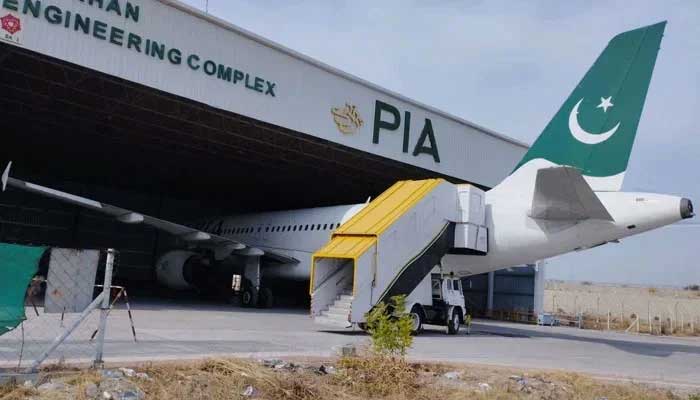
PIA was launched in 1946 as Orient Airways by a group of Muslim entrepreneurs. After the creation of Pakistan, it was nationalised and renamed Pakistan International Airlines. In 1955, PIA went international and, in a few years, became a prestigious national symbol. In 1964, it earned the distinction of being the first foreign airline from a non-communist country to fly into China. In the 1980s, PIA helped launch Emirates, which is currently one of the busiest airlines in the world. PIA was also the first airline to buy Boeing’s flagship 777 (the 200LR variant) aircraft in 2004.
A glorious past in no way guarantees a bright future. After a brilliant takeoff and expansion, the national carrier began to be buffeted by several headwinds. These included a lack of professional management, political interference in the form of using the organisation as a job generator, frequent strikes by PIA staff causing flight delays or cancellations, increasing competition from Middle Eastern airlines, safety issues leading to restrictions imposed by several European countries on and off, an ageing fleet and, above all, declining customer confidence.
The operational losses continued piling. According to PIA’s Annual Report 2023, between 2018 and 2023, the airline suffered cumulative losses of Rs397 billion. By 2023, PIA’s current liabilities had exceeded Rs483 billion, up from Rs289 billion in 2018. The long-term debt almost doubled during this period from Rs151 billion to Rs296 billion. As of December 31, 2023, PIA’s total assets sat at about Rs160 billion or $556.5 million, while its liabilities totalled Rs850 billion or $3 billion.
PIA’s privatisation remained on the table since the early 1990s when the government offloaded about eight per cent of its shares. After years of failed attempts, it has finally been sold to a consortium for Rs135 billion, representing a 75 per cent stake; 92.5 per cent of the winning bid amounting to about Rs125 billion will be reinvested into PIA. The remaining sum of Rs10 billion would go to the government, which will also retain the 25 per cent shares of the carrier, valuing Rs45 billion.
The new owners of PIA have expressed interest in acquiring the government’s 25 per cent stake. The consortium is required to pay two-thirds of the purchase price within three months of the transaction, while the remaining one-third is payable within a year.
The criticism of PIA’s privatisation rests on two grounds: ideological or nationalistic and pragmatic or financial. One view is that PIA, as a major national asset and the country’s global brand, should have remained in state or public ownership, regardless of the substantial losses it incurred. As a frontline political leader remarked a few years ago, the sale of mega SOEs is like selling one’s mother’s jewellery.
A related argument is that privatising SOEs, such as PIA, is never a good option, because they are a symbol of public power that should never be placed in the hands of ‘rent-seeking’ capitalists. Instead, the government should restructure them to minimise their losses. At any rate, profitable or loss-making, SOEs should stay with the government.
The other set of arguments doesn’t oppose privatisation in principle but maintains that PIA’s privatisation has been badly negotiated by the government. The national carrier, the argument goes, has been auctioned for only Rs10 billion, much less its worth, given the number of tangible and intangible assets that the organisation owns both inside and outside the country.
PIA’s intangible assets include landing rights for some 78 destinations and access to more than 170 airport slots. Its tangible assets include a fleet of 33 aircraft (out of which only 18 are currently operational), offices inside and outside Pakistan, the Roosevelt Hotel in New York, the Scribe Hotel in Paris and the Airport Hotel in Karachi.
In order to sell it, PIA was split in 2024 into two entities: a holding company and the operating airline. The holding company retained PIA’s tangible assets other than the aircraft and also carried its liabilities; while the operating airline retained the aircraft, the routes, and the landing rights. Such reorganisation was necessary, as no private sector entity would buy an organisation carrying $3 billion in liabilities.
Contrary to claims circulating on social media, PIA’s privatisation involves the sale of the operating airline's assets only; those of the holding company remain with the government. The public exchequer will get Rs55 billion (10 billion in cash and 45 billion in equity) from the sale of the operating airline. Yes, the government could have chosen to receive Rs180 billion (135 billion+45 billion) but that would have defeated one of the purposes of the sale: to revive the airline. The sum of Rs125 billion that the government has chosen to forego will be injected into PIA.
The government’s other purpose in selling the airline was to reduce its debt and liabilities. The longer the government delayed the sale, the greater would be the addition to such obligations. The burden on taxpayers will be heavier, as they have long borne PIA’s losses. PIA’s current liabilities stand at Rs650 billion, which still will take years to dispose of. Hence, the taxpayers will continue to defray the airline’s past losses. They, however, will not be required to finance the airline’s future losses should they occur. This makes the sale of PIA a good deal for the state and the people.
But there’s one reality check: In case PIA’s new owners are unable to turn it into a profitable organisation and then ask the government to subsidise it, much like Air India recently, what would be the authorities’ response? Would they let PIA shut down or give it a shot in the arm, maybe not one time but from time to time, which it did when it was an SOE? Only time will answer this question.
The writer is an Islamabad-based columnist. He tweets/posts @hussainhzaidi and can be reached at: [email protected]