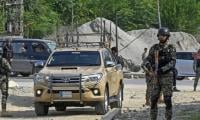
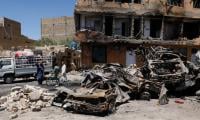
This year (2025) stands out as one of the most consequential and contradictory years in Pakistan’s recent history. It was a year in which the state demonstrated formidable military and diplomatic capacity abroad, while at home its political, judicial and economic structures remained deeply strained. The defining moment of 2025 was undoubtedly the military confrontation with India in May. The crisis was triggered by a terrorist attack in Pahalgam in Indian Illegally Occupied Jammu and Kashmir in April. In the absence of evidence, India swiftly blamed Pakistan. On May 6-7, India carried out missile, air and drone strikes on multiple locations inside Pakistan. The response from Pakistan was decisive. At least seven Indian Air Force jets, including Rafale aircraft, were shot down. Further Indian drone incursions followed in the early hours of May 10. Pakistan’s counterstrike, Operation Bunyan-um-Marsoos, targeted multiple Indian military facilities, bases and weapons depots. The escalation ended only with the US brokering a ceasefire.
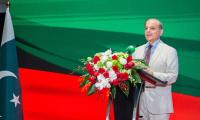
The aftermath reshaped Pakistan’s external relations. In June, COAS-CDF Field Marshal General Syed Asim Munir was invited to the White House, signalling a clear reset in ties with the US after years of strain. Washington’s designation of the BLA and the Majid Brigade as global terrorist organisations further underlined this shift. Pakistan also signed a defence pact with Saudi Arabia. Tensions flared again on the western front, with the Afghan Taliban regime continuing to resist acting against the TTP. Yet even as Pakistan projected strength beyond its borders, the internal political landscape remained locked in confrontation. The PML-N government appeared increasingly comfortable within the hybrid power arrangement and the judiciary suffered perhaps its most damaging blow with the passage of the 27th Amendment. The same amendment reshaped the military command structure, resulting in COAS Gen Asim Munir assuming the newly created role of chief of defence forces. In another unprecedented development, former ISI chief Lt-Gen (r) Faiz Hameed was sentenced to 14 years’ rigorous imprisonment in December on multiple charges.
For the PTI, 2025 has been relentless. The Supreme Court ruled in June that the party was not entitled to reserved seats for women and minorities. The ECP de-notified several senior PTI lawmakers, following convictions related to the May 9 riots. Internal fractures deepened within the PTI. Imran Khan removed Ali Amin Gandapur as chief minister of Khyber Pakhtunkhwa, replacing him with Sohail Afridi. Imran’s restricted jail meetings, a combative message delivered through his sister and a sharply worded ISPR press conference labelling him a national security concern all pointed to a shrinking political space for the party. Once again, the year ended with calls for dialogue.
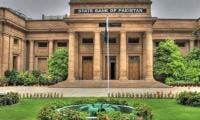
Economically, 2025 was a year of stabilisation without relief. Pakistan pulled back from the brink of default and earned cautious upgrades from Moody’s, S&P and Fitch. IMF programme compliance restored macroeconomic order and calmed external accounts, but the social cost of earlier inflationary shocks continued to weigh heavily on households. The State Bank’s cumulative rate cuts since 2024 reflected improving indicators, including signs of recovery in large-scale manufacturing. The partial privatisation of PIA stood out as one of the year’s most politically significant economic decisions. At the same time, the government’s push to introduce cryptocurrencies drew criticism. Improved relations with the US and Gulf partners helped shore up confidence, but exports remained narrow and investment anaemic. Away from politics and economics, 2025 offered glimpses of quiet resilience. While the men’s cricket team disappointed at home in the Champions Trophy and lost the Asia Cup final to India, other athletes excelled. The hockey team reached the final of the FIH Nations Cup and returned to the Pro League. Arshad Nadeem claimed gold at the Asian Athletics Championships and the Islamic Solidarity Games. Squash player Noor Zaman, mountaineer Sirbaz Khan and the triumphant under-19 cricket team all reminded the country that progress often happens beyond the spotlight. Taken together, 2025 was a year of sharp contrasts. As the year ends, the central challenge remains unchanged: power without consensus usually only wins in the short term.