On December 8 this year, the IMF Executive Board completed the second review of Pakistan’s economic reform programme, under which Pakistan was cleared to receive a loan of about $1 billion under the Extended Fund Facility (EFF) and about $200 million under the Resilience and Sustainability Facility (RSF).
Pakistan’s GDP growth exceeded expectations, while inflation remained moderate. Pakistan was on track to meet eight of the IMF’s 13 structural benchmarks.
While this progress is commendable, we cannot ignore that Pakistan missed the ongoing structural benchmark for reducing tax exemptions. The report explicitly mentioned that Pakistan failed to meet the structural benchmarks due to exemptions applied to sugar imports. The official review report states that this has been addressed via the authorities’ commitment to deregulate the sugar sector.
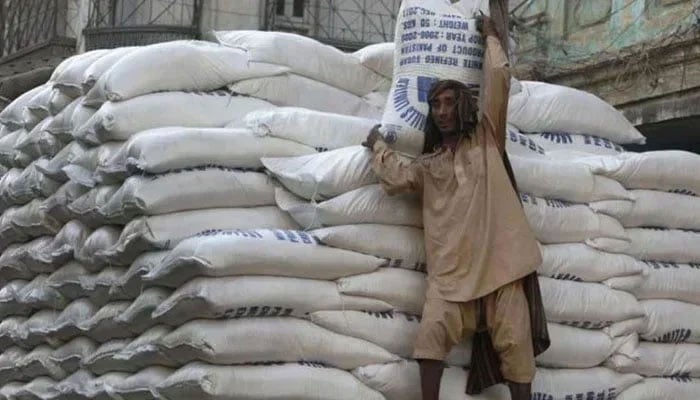
However, this highlights a systemic lapse in our sugar industry. In 2025, the country experienced another sugar crisis, with prices reaching an all-time high. To curb rising prices, import duties on sugar were waived. Pakistan justified the tax exemption by citing lower yields and a decline in sucrose content during the 2024/25 crop season, which resulted in a projected supply shortfall for FY26 Q2 and prompted the import of 300,000 metric tons of sugar through the public sector. However, the import of 300,000 metric tons of sugar is also cited as the primary reason for the price increase from Rs138 to Rs196 per kg during the year.
To avoid this predicament in the future, the Ministry of Finance and the State Bank of Pakistan have proposed deregulating the sugar industry. In this regard, a national sugar policy is being prepared in consultation with the provinces and will be finalised by the end of March. The policy would focus on eliminating restrictions on the cultivation of sugarcane in designated zones, followed by government disengagement from the sale and use of sugarcane and the establishment of new sugar mills. Proposals also include reducing import duties, liberalising exports and removing all price controls, including the ex-mill price.
The real question is whether these regulations would make a difference in how the sugar industry operates in Pakistan.
Over the years, Pakistan’s sugar industry has faced persistent failures due to systemic collapses, climate shocks and lacklustre policies. Given Pakistan’s current sugar sector landscape, the proposed regulations may be counterproductive.
Pakistan’s sugar industry is highly concentrated, with a few sugar mills accounting for a large share of the total market, thereby reducing competition within the sector. This concentration is exacerbated when sugar mills act in a coordinated manner to manipulate sugar stocks and prices, as highlighted in inquiry reports by the Pakistan Competition Commission.
Many of these mills are also vertically integrated, meaning they control more than just sugar production. They procure cane directly from farmers because the mills are located near sugarcane fields. This creates effective monopsonistic power for the region's mills, particularly given the perishable nature of sugarcane, which enables them to exert pricing power over farmers. Mills also act in a coordinated manner through associations like the Pakistan Sugar Mills Association (PSMA), which exerts additional coordinated pressure on pricing and policy fronts. Through PSMA, mills coordinate collective market behaviour by setting crushing dates, stock levels and export quotas, thereby affecting market supply and prices.
Pakistan’s sugar industry also exhibits an overlap between economic and political power, which influences policy decisions, as highlighted by the Sugar Inquiry Commission's report. This poses a significant hurdle, as the market does not operate on competitive principles but rather on policy-mediated rents.
Thus, while Pakistan formally prohibits cartel behaviour under competition law, enforcement remains weak. Investigations into price-fixing and hoarding rarely translate into sustained penalties. In August 2021, the Competition Commission of Pakistan (CCP) imposed penalties totalling Rs44 billion on sugar mills and the PSMA. However, due to overlap in economic and political power, the recovery of penalties has been hindered by 127 pending cases across various courts. This gap empowers dominant firms, allowing anti-competitive practices to persist with minimal risk.
In such a concentrated market, deregulation may not automatically lead to efficiency or lower prices. Instead, removing price controls and trade restrictions without first addressing concentration and cartel power risks granting dominant players greater freedom to coordinate prices and control supply. In Pakistan’s sugar industry, deregulation under current conditions could therefore exacerbate price volatility and consumer welfare losses rather than resolve them.
Therefore, it may be an appropriate time to consider an alternate route: shifting decisively towards importing sugar. Domestic sugar production is characterised by mismanagement and inefficiencies, and despite a succession of policy interventions, the industry remains in the grip of recurrent crises. Rather than stabilising the market, these interventions have repeatedly led to shortages, price spikes and fiscal costs borne by consumers and the state.
At the same time, the Pakistan sugar industry has failed to establish itself as a viable export sector. Despite being one of the top producers of sugarcane, Pakistan’s per-hectare yields remain well below international benchmarks. Moreover, when coupled with systemic failures and intensifying climate shocks, this productivity gap severely undermines competitiveness in global markets. According to PACRA, Pakistan’s share in global sugar production declined from around 3.8 per cent in MY23 to around 3.6 per cent in MY24, reflecting an approximate 5.0 per cent year-on-year decrease.
This loss of competitiveness is further reinforced by global price trends. International sugar prices declined nearly 33 per cent, highlighting a stark contrast between softening international prices and Pakistan’s rising domestic prices. This makes Pakistan’s sugar less competitive in international markets, rendering its exports economically unviable and exposing the structural inefficiencies of the sector.
Thus, in light of the current state of the sugar industry, a strategic pivot would be to shift investment away from an inefficient, distortion-ridden sugar sector toward crops and industries central to Pakistan’s long-term economic success, such as cotton and the textile value chain. In Pakistan, sugarcane is increasingly cultivated at the expense of cotton cultivation. Cotton’s acreage declined 22 per cent in just one year, while the area under sugarcane cultivation rose by 4.0 per cent. This shift is placing significant pressure on Pakistan’s scarce water resources.
Research by PIDE shows cotton production is about four times more water-efficient than sugarcane production. Cotton is also economically more viable: each litre of water used in the cotton system generates 2.3 times higher net returns than sugarcane. In addition, each litre of water used in raw cotton production generates 3.8 times higher revenue than sugarcane at the second stage of the value chain.
Hence, shifting to sugar imports should be the core of Pakistan’s sugar policy. This would allow scarce land and water resources to be reallocated towards the cotton and textile industry. This would not only ease recurrent sugar crises but also align agricultural policy more closely with Pakistan’s comparative advantages and export-led growth potential.
The writer is associated with the Sustainable Development Policy Institute (SDPI), Islamabad. The views expressed by her are her own and do not necessarily reflect the organisation’s official stance.