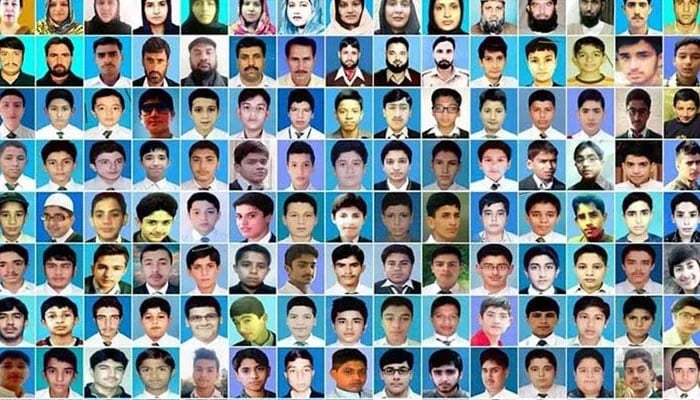
Today marks the 11th anniversary of the Army Public School tragedy in Peshawar, where nearly 150 innocent students and teachers were martyred after six terrorists stormed the school. The brutality of that December morning shook Pakistan, leaving scars that time has not healed and lessons that cannot be allowed to fade. In the immediate aftermath of the massacre, something rare happened in this country: a near-unanimous national resolve to confront terrorism. Political rivals set aside differences, the state spoke with one voice and the National Action Plan (NAP) emerged as a framework to dismantle militant networks. For a few years, that consensus delivered results and terrorism was pushed back. That unity, however, has since frayed and the consequences are now visible. Terrorism has made a troubling comeback, even as the nation stands divided and politically polarised. Confusion about who the enemy is and how to confront it has returned. Yet the APS tragedy taught us two fundamental truths that remain as relevant today as they were in 2014. First, the proper and consistent implementation of the National Action Plan is non-negotiable. Second, there must be an unambiguous, unified stand by civilians and security forces to avoid division or mixed messaging about our common enemy. Terrorists are terrorists, regardless of political affiliation, expediency or rhetoric.
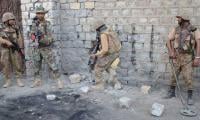
The security forces continue to pay a heavy price in this fight. Not a day passes without news of an attack or an operation. Only this week, a Pakistan Army soldier was martyred and seven terrorists were killed in an intelligence-based operation in Dera Ismail Khan. Externally, the return of the TTP since the fall of Kabul in 2021 has become a major source of instability. The Afghan Taliban regime’s continued harbouring and facilitation of the TTP and the BLA demonstrates a troubling disregard for international norms and regional security. Pakistan has repeatedly raised these concerns at international and regional forums, including the recent meeting of the Special Representatives of Afghanistan’s Neighbouring Countries Plus Russia in Iran, where Islamabad urged Kabul to rid its soil of all militant groups. The Afghan Taliban’s decision to skip the meeting, despite being invited, speaks volumes. While external pressure on the Taliban must continue, Pakistan cannot afford to ignore its own internal weaknesses. On the domestic front, the lack of cohesion in counterterrorism policy is glaring. The disconnect between the centre and the Khyber Pakhtunkhwa government has undermined effectiveness and created space for militants to exploit.
The memory of APS should remind us that when faced with an existential threat, unity is possible. Terrorism thrives in chaos, confusion and political infighting. The responsibility for rebuilding consensus lies squarely with the major political forces, particularly the PML-N and the PTI. Counterterrorism cannot be reduced to a point-scoring exercise or hostage to electoral calculations. Eleven years after APS, have we truly learned the lessons this tragedy left behind?