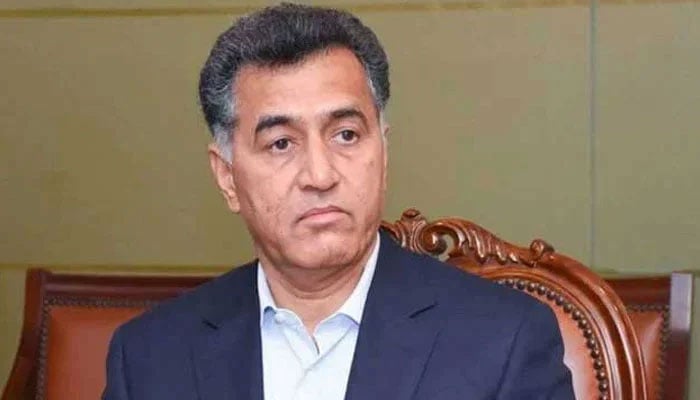
Regardless of the ifs and buts and what-ifs, the 14-year sentence handed down to former ISI chief Lt-Gen (r) Faiz Hameed should be seen as a rare and unsettling moment in Pakistan’s civil-military and political history. A former spymaster being convicted under the Pakistan Army Act and the Official Secrets Act is no routine affair and is sure to raise the inevitable uncomfortable questions about individual conduct and the blurred boundaries between power, politics and accountability. According to reports, one of the charges against Faiz related to the unauthorised retention of classified documents after retirement. Another concerned his continued engagement in political activity and interactions with politicians long after leaving office. Faiz was reportedly warned more than once about his post-retirement conduct but chose not to step back. The inquiry that followed, and the sentence that has now been awarded, suggest that the military leadership eventually decided that the line had been crossed too often and too publicly to be ignored. Unsurprisingly, the government has seized on the verdict with enthusiasm. Defence Minister Khawaja Asif has accused Faiz Hameed of colluding with PTI founder Imran Khan to victimise political opponents and of running what he called the ‘PTI project’ from behind the scenes. Others have described the sentence as historic and as proof that accountability applies equally to all, including those in uniform.
The PTI’s response has been strikingly muted, something that can’t really come as much of a surprise to anyone. Party leaders have insisted that the trial and conviction are an internal matter for the military and do not warrant comment. This restraint is less an expression of principle than of caution. The final paragraph of the ISPR statement announcing Faiz’s sentence referred to his alleged role in fomenting political agitation and instability “in cahoots with political elements” and noted that these matters were being dealt with separately. Few have missed the implication. The shadow of May 9 still looms large and the PTI knows it remains vulnerable. Ministers have been less discreet, declaring – without naming names – that the politics of those who crossed red lines has come to an end. The message is clear: this is not just about one retired general but about a broader reckoning with a political experiment that is seen to perhaps have gone much too far.
Yet for all the noise, a central problem remains. Military trials are conducted behind closed doors and court martial proceedings rarely produce public records. Allegations of Faiz’s involvement in post-retirement political engineering and in the events of May 9 have circulated for months. If there is credible evidence to support these claims, it should be placed before the public, at least in outline. One thing though is for sure: a 14-year sentence for a former ISI chief sends a powerful signal to all – political and uniformed: political adventurism is a no-no, even after retirement. Beyond that, however, it is unlikely to establish a wider precedent unless it is followed by greater institutional clarity about the limits of power and the rules that govern those who wield it. For the PTI, the moment should have called for hard reflection. Confrontation and agitation have yielded diminishing returns. The party’s leadership remains incarcerated, its space continues to shrink and its supporters are exhausted. Dialogue, however unpalatable it may seem, is the only viable way forward. Unfortunately, the PTI seems to prefer its politics of Twitter flexes and vibes more. The fact is that Pakistan has seen enough of politics by warning and innuendo. If the Faiz case is to mean anything beyond symbolism, it should prompt a broader move away from confrontation and towards dialogue.