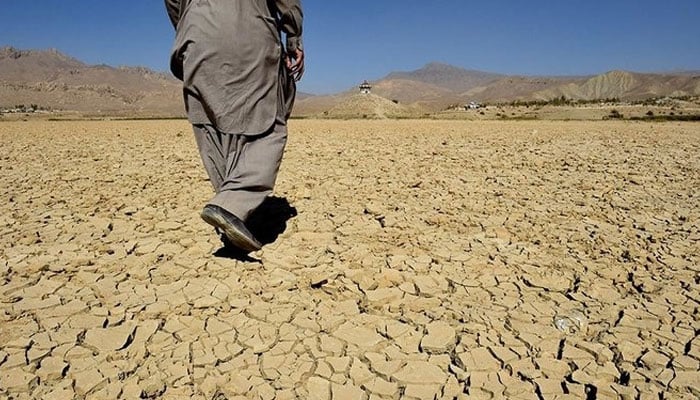
While most of the climate-related headlines in recent months have been focusing on the problem of too much water (floods), the country’s largest province is actually suffering from the opposite problem. Two weeks ago, the Pakistan Meteorological Department (PMD) issued a drought advisory for 11 districts in western and southwestern Balochistan, including Quetta, warning that prolonged dry conditions and a worsening rainfall deficit could intensify drought impacts in the coming weeks. The advisory shows that some areas in Balochistan have experienced a 100 per cent cumulative departure from normal rainfall levels between May and November this year. The number of consecutive dry days has also increased significantly in a province already known for its arid climate, with the town of Jiwani in Gwadar District recording 314 consecutive dry days. Considering these patterns and the seasonal forecast for December 2025 to February 2026, the affected regions are expected to experience below-normal rainfall and above-normal temperatures, which will likely exacerbate drought conditions across western and southwestern Balochistan. Surprisingly, the PMD advisory also notes that a rainfall system is likely to affect parts of Balochistan later this month, which may offer some relief.
This is Pakistan in the age of global warming. If the country is not drowning in water, it is wondering if it will ever see it again. It does not help that so many districts are experiencing drought-like conditions at the same time that alarm over the country’s water scarcity and development issues is increasing. The Asian Development Bank’s Asian Water Development Outlook report, released last Monday (December 8), has revealed that more than 80 per cent of Pakistan’s population lacks access to safe drinking water, and estimated that the country needs $35 to $42 billion over the next decade for overall governance of the water sector. The country made some progress towards this target with a $400 million injection for a new safe water, sanitation and hygiene services project from the World Bank. However, sporadic projects like this are not new. What is missing is consistent, long-term financing for the water sector, and that still seems unlikely. What is far more likely is that the water infrastructure remains underdeveloped and wasteful, water governance remains fractured, water tables and the Indus River System continue to buckle under the pressure of rising demand and the majority remains without access to clean drinking water. As such, the nation is well on track to have a per capita water availability of 1100 cubic metres by 2030. However, data presented to the National Assembly on the same day the ADB report was released shows that Pakistan had already fallen well below the 1100 cubic metres per person mark two years earlier.
This far direr analysis posits that the country will have only 795 cubic metres of water per person by 2030. The math behind the country’s transition from a water-stressed to a water-scarce country is simple: the population keeps rising, the world keeps warming and the water infrastructure either stays the same or does not adapt fast enough. Demand grows while supplies dwindle and, if things do not change, over the coming decades, Pakistanis may well have to think about paying for water the same way they do about paying for fuel. To avoid this dystopian outcome, the ADB report recommends establishing a federal, autonomous water authority responsible for regulating water quality, improving service standards, and attracting investment in water-sector development. However, such a move is likely to become entangled in the ongoing centre-provinces-local governments dispute, as with most other institutional reforms in Pakistan. The controversy surrounding the proposed Kalabagh Dam is a good example of how water issues can become a great divider in Pakistan. But while the country’s various entities fight it out over who gets how much of the water pie, the pie itself keeps shrinking.