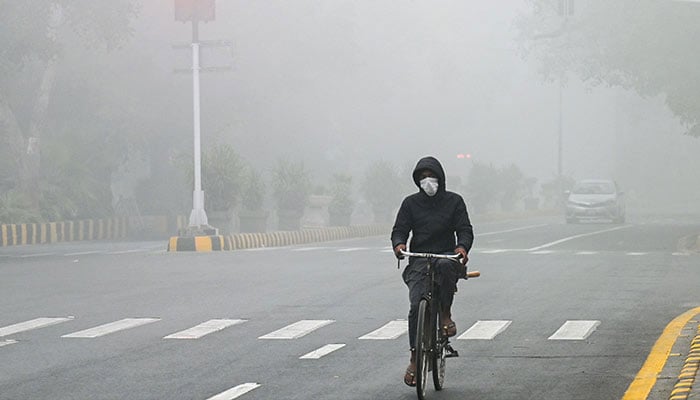
Cities, like living organisms, change with time. Lahore’s transformation over the past two decades has been dramatic. Once a relatively sedate provincial capital, it is now a congested, round-the-clock metropolis, its roads clogged with traffic and its economy pulling in industry, investment and opportunity from across the country. But this growth has come at a steep and increasingly deadly price. Each winter, Lahore disappears under a thick blanket of smog, turning what should be a seasonal inconvenience into a public health emergency. For years, successive governments have found it convenient to blame this crisis on factors beyond their control, most notably pollution drifting in from across the border. That narrative has now been decisively challenged. A new report by the Pakistan Air Quality Initiative (PAQI), ‘Unveiling Pakistan’s Air Pollution’, makes clear that Pakistan’s smog problem is overwhelmingly home-grown. Using satellite imagery, chemical transport modelling and a real-time monitoring network, the study presents the country’s first comprehensive, multi-sector emissions inventory. Its findings are alarming: toxic air reduces the average Pakistani’s life expectancy by nearly four years.
The human cost is staggering. In a separate Senate meeting last week, Senator Sherry Rehman noted that while earlier estimates put pollution-related deaths at around 128,000 annually, updated data suggests the true figure may be closer to 256,000 deaths every year. The economic damage is just as severe. Air pollution is estimated to cost Pakistan $22 billion annually – roughly 6.5 per cent of GDP – a burden the country can ill afford at a time of chronic fiscal stress. None of this should come as a surprise. Environmental experts have been warning about deteriorating air quality for years. What is disappointing is the persistent lack of urgency shown by both federal and provincial governments. Laws and regulations exist, but enforcement remains weak and often symbolic. The PAQI report identifies transport, industry and brick kilns as the main drivers of particulate pollution in Lahore. In Karachi, industry accounts for nearly half of PM2.5 emissions, while transport dominates in Islamabad and Rawalpindi. Peshawar, hemmed in by valley geography and heavy transit trade, suffers the highest per-capita exposure. Across urban Pakistan, poor pedestrian infrastructure and the absence of reliable public transport have fuelled an unchecked rise in private vehicles.
Against this backdrop, the Punjab government’s swift dismissal of the report’s findings is unhelpful. Ignoring scientific evidence will not make the problem disappear. If anything, it delays solutions and deepens public mistrust. Instead of shooting the messenger, governments should engage independent researchers, strengthen monitoring systems and act on what the data clearly shows. If Pakistan’s cities are to remain livable, rhetoric must give way to action. Existing environmental laws must be enforced, cleaner transport and industrial practices incentivised and urban planning rethought with public health at its core. Expanding air quality monitoring through public-private partnerships is an urgent priority and has been advised by almost everyone who is serious about tackling this issue. Pakistan cannot continue to absorb the human and economic losses caused by polluted air. We can’t start thinking of clean air as a luxury.