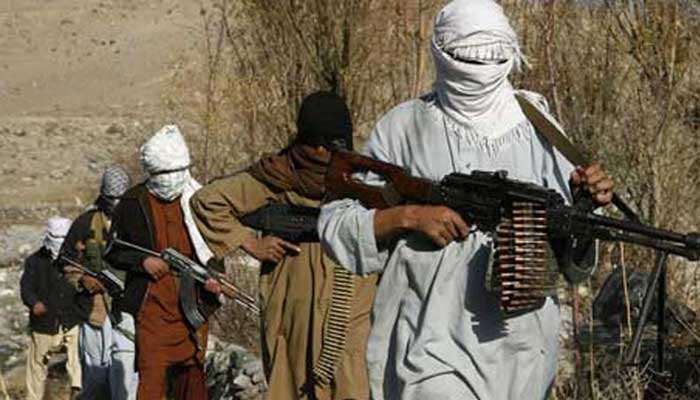
Prime Minister Shehbaz Sharif’s warning that the international community must pressure the Afghan Taliban to honour their commitments is neither new nor rhetorical. It comes at a moment when Pakistan is once again confronted with a familiar but now far more entrenched threat emerging from across the border. For Pakistan, this 'new' phase feels like the continuation of an old tragedy that Kabul’s rulers refuse to end. Tensions between the two countries have steadily escalated over the past year, fuelled by continued terror attacks inside Pakistan and by Kabul’s refusal to restrain the groups operating freely from Afghan soil. The rupture grew sharper in October when Afghan Taliban forces, backed by affiliated militants, launched an unprovoked attack on Pakistani border posts. Precision strikes by Pakistan followed, and a ceasefire was reached only at Kabul’s request. Yet even this coercive diplomacy has failed to nudge the Taliban regime towards meaningful action against the TTP and the BLA, both of which continue to enjoy safe havens across the border.
This obstinacy persists despite rounds of dialogue hosted by Qatar, Turkiye and later Saudi Arabia. Islamabad has long argued that the Afghan Taliban are hand-in-glove with terrorist proxies, many backed by India, that target Pakistan. Afghan inaction has done little to dispel this accusation and the Afghan Taliban's reluctance even to acknowledge, let alone dismantle, these sanctuaries lays bare a fundamental contradiction at the heart of Taliban governance: they demand recognition as a responsible state actor while enabling non-state militants to wage war on their neighbours. There has been one symbolic gesture of reconsideration. A notable meeting of Afghan scholars at Kabul University recently passed a resolution declaring that Afghan soil must not be used to harm other nations. Pakistan welcomed this voice of reason. But symbolism is not a substitute for state action. What Islamabad seeks are written, verifiable assurances that Afghan territory will not be allowed to host groups launching attacks inside Pakistan. Meanwhile, the human cost mounts. This week, an explosion at a madrassa in North Waziristan killed two children and injured eight others. From Wana to Peshawar to Islamabad, the orchestration of violence continues, with TTP leaders directing attacks from Afghan hideouts. To pretend this is anything other than exported terrorism is to ignore the obvious.
Islamabad has warned that it will take all necessary defensive measures if Kabul continues to turn a blind eye. This warning aligns with growing regional anxiety. Afghanistan has once again become a sanctuary for transnational militancy, affecting not just Pakistan but China, Iran, Russia and the Central Asian States. The head of the UN Security Council’s Daesh and Al-Qaeda Sanctions Committee recently validated Pakistan’s position that Afghan territory is being used to stage terrorist attacks, emphasising that the TTP poses a serious threat to regional security. Only last month, three Chinese workers were killed in Tajikistan in an attack launched from Afghanistan. A chorus of concern is now evident: Pakistan, China, Iran and Russia have jointly expressed alarm over the presence of ISIL, Al-Qaeda, the Eastern Turkestan Islamic Movement, Jaish-ul-Adl, the TTP and the BLA inside Afghanistan. Two recent reports – by the Pakistan Institute for Conflict and Security Studies (PICS) and the Centre for Research and Security Studies (CRSS) – present grim statistics. Terror attacks have surged dramatically since the Taliban takeover. The world cannot continue to pretend that this is a bilateral dispute between Islamabad and Kabul. If global actors want stability in this region and a functional Afghan state, they must use every diplomatic and economic lever available to pressure Kabul into compliance with its obligations. The fact is that a regime that wants legitimacy must behave like one.