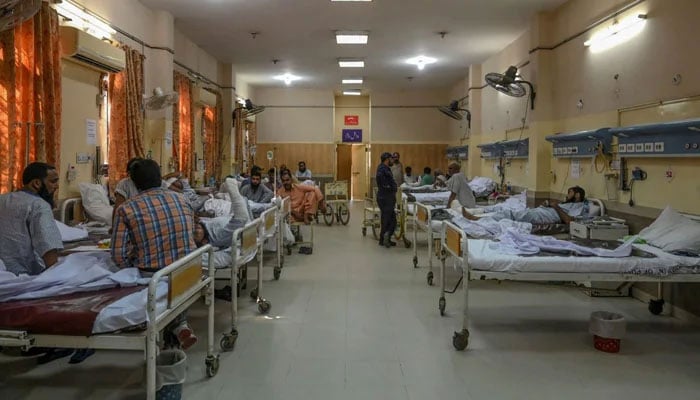
Today marks the annual International Universal Health Coverage (UHC) Day, aiming to raise awareness of the need for strong and resilient health systems and universal health coverage. As per the UN, UHC means everyone, everywhere, can access the health services they need without risk of financial hardship. This remains a rather lofty goal, even for the most developed countries. The steep costs associated with healthcare are one of the major problems, with the theme for this year’s UHC Day being ‘Unaffordable health costs? We’re sick of it!’. This is a sentiment that many in Pakistan will be able to relate to, with a serious medical ailment or emergency often acting as a death sentence. Those unlucky enough to suffer from chronic illnesses often struggle to keep with the payments that regular or constant treatment requires. The concept of health insurance is still quite distant for the vast majority of people, including some of the relatively affluent and educated. But Pakistan’s health problems go far deeper than an inability to afford health insurance. It is estimated that over 50 per cent of Pakistanis do not have access to basic primary health services and around 42 per cent lack access to any kind of health coverage.
While some policy steps have been taken to address this problem, such as the health cards in Khyber Pakhtunkhwa and Punjab and the Sehat Sahulat Programme at the federal level, the federal government still only spends around 1.0 per cent of GDP on health care. This is far less than the minimum 5.0 per cent of GDP recommended by health experts and does not indicate that the nation is on track to achieve universal health coverage any time soon. That being said, while progress in expanding healthcare might be slow, it is not as though there has been no progress at all. The health card initiatives have been an important access point for lower-income individuals and the Sindh government earmarked earmarked Rs381.83 billion for the health sector in its latest budget. Earlier this week, the Punjab chief minister was briefed on the Cancer and Cardiac Surgery Special Card Project and the Cancer Patients Card initiative. According to reports, every patient will be able to avail treatment facilities of up to Rs1 million through this initiative.
While this is an important step forward, the fact remains that the treatment for anything cardiac or cancer related in Pakistan is likely to easily exceed Rs1 million. As such, charity, as opposed to government policy, still remains the main gateway for Pakistan’s poor when it comes to healthcare. And while the nation should be proud of the amount of work its charities have been able to do in this field, this is no substitute for universal health coverage. The problem here is: how does a government that struggles to keep the lights on and is heavily in debt pay for expensive health treatment for a population of over 240 million? Achieving this goal will require going beyond simply subsidising healthcare and looking into why a basic human right is so prohibitively expensive that it ends up excluding a majority of the country.