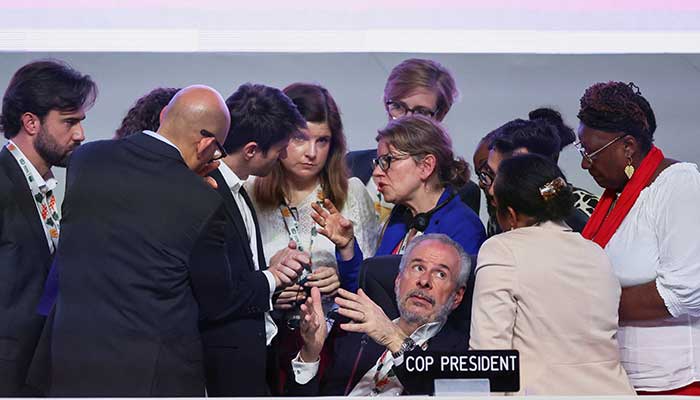
Staying true to the pattern of recent COPs, COP30 in Belem was also packaged as the moment the world would finally turn the climate corner, but in the end, it proved to be yet another merry-go-round.
The COP commenced with intense and convoluted deliberations, labyrinthine diplomatic manoeuvring, and grand promises that, as always, fell apart when it was time to deliver. For many climate-vulnerable countries, especially across the Global South, it felt like deja vu – same script, same characters, same disenchantments. That made it yet another COP claiming to be historic while quietly dodging the real battles.
If anything, COP30 put a stamp on the belief that the annual global climate conference is nothing more than a rendezvous for customary COP delegates and a mega business gala for the hosts.
Nothing exposed this paradox more than the fossil fuel debates during the past three COPs – UAE, Azerbaijan and Belem. Once again, major emitters tiptoed around the heart of the crisis. A clear, time-bound global fossil fuel phase-out, something climate vulnerable nations urgently demanded, was nowhere to be found. Instead, the final text resorted to soft language like “orderly transition”, a classic diplomatic trick to say something without actually saying anything. It was a scene straight out of a cat-and-mouse game, with the Global North insisting on “flexibility”, while the Global South wrestled with the rising climate chaos that flexibility conveniently ignores.
As the melodrama began on November 11, the seasoned negotiators strutted in with their typical, dramatic, confident language about deeper mitigation, expanded adaptation finance and meaningful operationalisation of the Loss & Damage Fund. But as the days dragged on, their fire fizzled out and the outcomes slowly got watered down, perfectly in line with their COPs script – with text language diluted phrases, hedged positions and voluntary commitments that sound impressive on paper but have the weight of cotton candy.
The conference, touted as the ‘Implementation COP’, turned out to be one that failed to chart clear implementation pathways. The so-called global climate diplomats and negotiators seem caught between soaring rhetoric and timid action, leaving vulnerable countries to pick up the pieces.
Even the areas much trumpeted as progress emerged as half-baked. For instance, adaptation finance was only “encouraged”, not guaranteed, in the final text. Although doubling of funds was mentioned, it was not tied to clear timelines or binding responsibilities. As we all know, without enforceable mechanisms, these pledges frankly remain mere peanuts.
Similarly, the Loss & Damage Fund, once again, became a political football. What should have been a functional, automatic support system for countries hit by climate disasters turned into vague promises, discretionary donor pledges, and procedural fog without real money, which is predictable, accessible and grant-based. Unfortunately, the FRLD risks becoming another symbolic trophy sitting on the shelf while communities drown, burn, or starve.
These recurring COP failures raise a fundamental question: Does global climate diplomacy still command trust? The answer, judging by COP30, is slipping. Vulnerable nations demanded acta-non-verba - actions, not words – but what they received were softened texts carefully engineered not to upset powerful economies. The historic polluters continued sidestepping historical responsibility, preferring ‘voluntary contributions’ over obligations.
Regrettably, this crisis of credibility falls heaviest on nations like Pakistan – a country which is a striking illustration of that imbalance. Despite contributing less than 1 per cent to global emissions, Pakistan is pummeled by some of the harshest climate impacts, including devastating floods one after another, accelerating glacial melt, recurring droughts, escalating heatwaves and rapidly diminishing water reserves.
For us, a failed COP, without solid assurance of adequate adaptation financing, is not a minor setback but a direct hit to the country’s ability to withstand future shocks. The consequences are awfully nightmarish; more families uprooted by climate-induced migrations, more harvests wiped out, more children forced out of school by climate-induced crises, and countless communities left vulnerable when the next disaster arrives.
The 2022 floods cost Pakistan over $30 billion in damages, yet the international support system remained painfully sluggish, inconsistent and overly reliant on loans. COP30 could have fixed this by establishing automatic, trigger-based Loss & Damage (L&D) financing for extreme climate events. Instead, the operational details were left vague, leaving the most vulnerable nations once again stuck in the climate poverty trap, forcing them to borrow more money they don’t have to repair damage they didn’t cause. This is where the failure of COP30 becomes more than a diplomatic failure; it becomes a matter of injustice, inequity and nonexistence.
However, the implications stretch beyond finance. The weak outcomes reduce the Global South’s leverage in global climate negotiations, especially as it increasingly sees the COP process as a broken record- replaying grand promises but rarely delivering. Meanwhile, Pakistan’s climate hotspots – from the thirsty deserts of Balochistan to the shrinking deltas of Sindh, the mountains of Gilgit-Baltistan, and the flash-flood-prone communities of Khyber Pakhtunkhwa – continue to inch toward an irreversible crisis. Climate diplomacy may speak in numbers and paragraphs, but climate injustice speaks in lived suffering.
One is not playing down the significance altogether. Even with a plethora of shortcomings, the COPs still matter, as they offer the rarest hope and the sole opportunity for the world to discuss climate issues and potential solutions. But if the process is to survive as a credible instrument of climate governance, future COPs must avoid becoming another merry-go-round that looks busy but goes nowhere. If climate diplomacy keeps playing it safe, dodging urgency and leaving the most vulnerable to fend for themselves, the world will keep sliding toward catastrophe while negotiators pat themselves on the back for ‘balanced outcomes’.
What the world needed from Belem COP was boldness and solid steps. But what it got was business as usual and the gap between what science demands and what politics delivers widening into a chasm. Paradoxically, climate-vulnerable countries, such as Pakistan, are being asked to leap across that chasm without a safety net.
In the end, unless global diplomacy grows a spine, COP30 will be remembered not as a turning point, but as yet another missed beat, another polite failure wrapped in diplomatic glitter. And for millions across the Global South, that failure is not just disappointing but deadly and a felonious neglect on the part of the leaders of developed nations.
The writer is a climate governance expert. He can be reached at: [email protected]