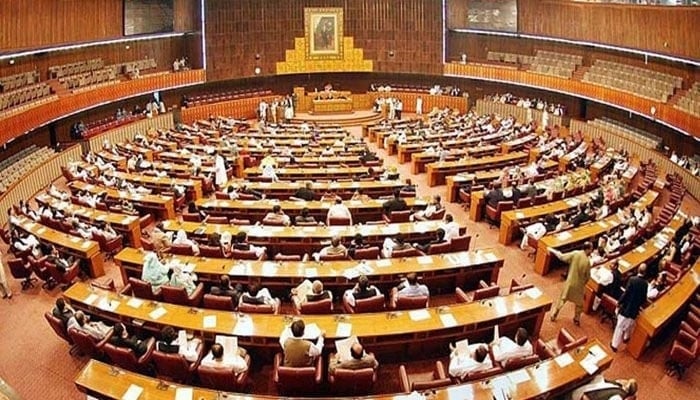
With the 27th Amendment now a reality, a 28th Amendment also seems to be in the offing. Some, most notably the MQM-P in Karachi, see this as an opportunity to finally empower local governments in Pakistan. While weak local governance is a familiar gripe among Karachi’s people and their representatives, the party is calling this a national-level reform. And the country’s largest province might well agree with them, with the Punjab Assembly proposing that parliament expand and amend Article 140-A of the constitution, the clause in the 18th Amendment that made it mandatory for provinces to establish local governments and devolve political, administrative and financial authority. Specifically, the proposal asks for the federal government to create a separate constitutional chapter for local governments and calls for autonomy, fixed tenures and mandatory local elections within 90-120 days after dissolution of local bodies. But why do all of these steps, which seem obvious for any province constitutionally mandated to establish and empower local governments, have to be spelled out over a decade after the 18th Amendment?
Sadly, the country’s provincial governments have failed to live up to the requirements of Article 140-A. A Fafen policy brief released this month, ‘Devolution in Practice: Ensuring Effective and Accountable Local Governments in Pakistan’, points out how, since the passage of the 18th Amendment successive provincial governments in all provinces have used tenure disruptions, frequent changes in local government authority and structures and financial controls to undermine local governments. Unsurprisingly, the Punjab Assembly’s unanimous resolution also seeks to prevent premature suspension of local bodies. To some extent, the way the provinces have ridden roughshod over local bodies is effectively a betrayal of the spirit of the very amendment that empowered provincial governments in the first place. The 18th Amendment was seen by many as a means to bring power and policy closer to the people, where it would, ideally, be more impactful and accountable. Empowering local governments ought to be seen as the next key step in this direction and attempts by provinces to treat them the way they themselves were for so long treated by the federal government is unacceptable. But delays can happen for other reasons too. Islamabad is now holding local elections over four years later than it was supposed to because of a dispute about whether union council secretaries could conduct local elections. The ECP has found that they, in fact, cannot.
This includes prohibiting provincial governments from arbitrarily removing elected representatives or disrupting their tenures, recognising that local governments are not mere administrative instruments to be wielded by the provinces and that local bodies should also have financial autonomy. The last of these crucial benchmarks is arguably the most important. Without the power to levy taxes and spend them as local priorities dictate, the third tier of governance is powerless. And that would be a fair description of what they are right now. With the third tier missing, governance in Pakistan resembles a rickshaw without one of its wheels. It simply does not work, at least not very well, and often requires external help to hold it up and push it along (foreign loans). If money, expertise and manpower continue to elude the tier of governance that is closest to the people, it is hard to see this country making much progress.