While most eyes have been fixed on Pakistan’s tireless efforts to bring the US-Iran war to an end, anxiously hoping for an end to a conflict that has inflicted a good deal of economic pain on the people, the security challenges within the country’s own borders continue to fester. The monthly security assessment released by the Pakistan Institute for Conflict and Security Studies (PICSS) shows that Pakistan’s security situation deteriorated sharply during May 2026, after two consecutive months of improvement. The latest findings suggest that militant groups regained momentum during May after a brief period of relative decline, particularly in Khyber Pakhtunkhwa and Balochistan, with the country witnessing 128 militant attacks during May compared to 101 attacks in April, representing a 27 per cent increase. The increase in attacks also resulted in an increase in casualties, with 71 civilians, 68 security forces personnel and six members of peace committees being martyred, while 147 civilians, 35 security forces personnel and three peace committee members were injured. Compared to April, civilian casualties reportedly rose by 92 per cent while security force fatalities rose by 143 per cent. While March and April witnessed just one suicide attack each, six took place in May alone.
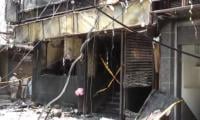
The most shocking of these was likely the horrific suicide attack on a train near Quetta’s Chaman Phatak, which claimed at least 14 lives. That the train was carrying hundreds of civilians and soldiers returning home for Eid only illustrates the depths to which terror groups are willing to sink and their hatred not just for the state but ordinary Pakistanis. While security forces also hit back during the month, killing 270 militants and arresting 15 others, the surge in militancy shows that Pakistan’s domestic security challenges remain quite formidable. The ongoing regional volatility and its economic consequences only add another layer to the terror problem. If anything, the May surge seems almost designed to exert pressure on Pakistan at a moment where it is caught in the midst and urgently trying to defuse a regional crisis. That many of the terror groups Pakistan confronts are covertly backed by India only lends credence to this line of thinking. Then there is also the Afghan Taliban regime that needs to be considered.
It is no coincidence that the country’s terror attacks are largely concentrated in the western provinces. These are the regions closest to Afghanistan and easily reachable by militants who, by all appearances, continue to enjoy refuge across the western border. However, it is not as though there have not been shortcomings at home either. The police, the country’s front line against terror, arguably remain the force least equipped to combat it. It also does not help that one of the provinces most affected by the terror surge, KP, has a rift with the federal government that shows no signs of ending. When KP and the centre should be on one page, trying to figure out how to end the terror scourge, they seem to be spending more time at odds. Then there is Balochistan, where long-running, legitimate socioeconomic grievances continue to go ignored. While the security forces have done a good job of combating militancy and bringing it down from where it was in the previous decade, force alone will not untie the terror knot.