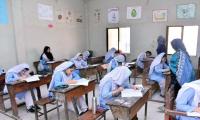
As Gilgit-Baltistan heads to the polls on June 7, folks have finally remembered the region beyond its tourism. The presence of top political leaders should give an idea of the importance of these elections. Yet beyond the campaign rallies and political slogans lies a more fundamental question: will the election address the longstanding aspirations and grievances of the people of GB, or merely reproduce the familiar cycle of promises and disappointments? Historically, elections in GB have often reflected political realities in Islamabad. The party ruling at the centre has traditionally enjoyed significant advantages, ranging from stronger organisational structures and greater access to resources to the perception of administrative backing. This pattern has led many observers to view the current contest primarily as a battle between the PML-N and the PPP. However, dismissing the PTI’s prospects would be premature. Despite being unable to contest as a registered party and relying largely on independent candidates, the party’s support base appears far from extinguished. The growing role of Gen-Z voters and social media may also introduce an element of unpredictability.
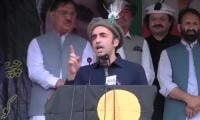
The election campaign itself has highlighted three interconnected issues that will ultimately determine not only the outcome of the vote but also the future trajectory of the region: constitutional rights and representation, development and governance, and the integrity of the electoral process. The PPP has sought to centre the debate on constitutional rights. Bilawal has repeatedly argued that the people of GB deserve greater political empowerment and constitutional clarity. The demand for a clearly defined constitutional status, greater political rights, judicial independence and reduced federal interference remains one of the most persistent issues in the region’s political discourse. The PML-N, meanwhile, has focused on development. Nawaz Sharif has highlighted infrastructure, energy and connectivity projects initiated during his previous tenure that were left incomplete after his removal from office in 2018. This message speaks directly to the everyday concerns of many residents. Electricity shortages, unemployment, inadequate healthcare services, poor infrastructure and limited economic opportunities continue to affect the quality of life in the region. While constitutional debates are important, citizens also expect improvements in governance and public services.
The PTI’s campaign, on the other hand, has concentrated on the issue of political fairness. Barrister Gohar has accused authorities of creating obstacles for the PTI’s campaign by restricting the movement of party leaders and limiting political activity. Whether one agrees with the PTI’s claims or not, the broader principle remains undeniable: democratic legitimacy depends upon the ability of all political forces to compete freely and fairly. If voters believe that any party has been prevented from presenting its case, confidence in the electoral process inevitably suffers. These three narratives may appear different, but they are deeply interconnected. Constitutional rights cannot be fully realised without representative institutions. Development cannot be sustained without accountable governance. And neither can be achieved without a credible electoral process that reflects the will of the people. Gilgit-Baltistan occupies a uniquely important place in Pakistan’s national landscape. It is strategically significant, geographically sensitive and central to major economic and connectivity initiatives. It is also a region where unresolved political questions can create vulnerabilities that hostile actors may seek to exploit. For this reason alone, the concerns of its people deserve serious attention rather than periodic acknowledgement during election campaigns. Regardless of which party forms the next government, Islamabad must move beyond temporary political engagement and pursue meaningful dialogue with the elected representatives of Gilgit-Baltistan. The people deserve more than promises made during election season.