The Middle East today stands at the edge of another dangerous threshold. The escalating hostilities between Iran and Israel are no longer confined to tactical exchanges or proxy manoeuvrings – they have crossed into the realm of direct confrontation. But beyond the immediate theatre of war, a deeper, more consequential crisis looms: the crisis of Muslim leadership and the absence of a coherent collective response.
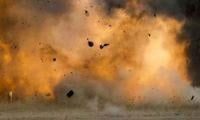
This is not a conflict of borders alone; it is a mirror held up to the Muslim world, reflecting decades of unresolved divisions, compromised sovereignties and rhetorical unity that often collapses under the weight of realpolitik. The fires raging over Tehran and Tel Aviv symbolise a broader ignition – a long-brewing contest between principle and expediency, regional ambition and pan-Islamic solidarity, and ultimately, between the silence of states and the anguish of their people.
At such a juncture, the world once again turns toward Pakistan – not merely as a stakeholder in regional stability but as the only Muslim-majority state that possesses nuclear deterrence, conventional strength and a historically grounded but forward-looking worldview. In a region gripped by uncertainty, Pakistan represents both continuity and the potential for principled recalibration.
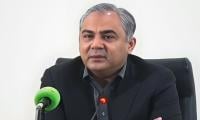
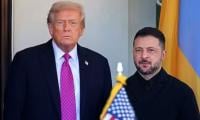
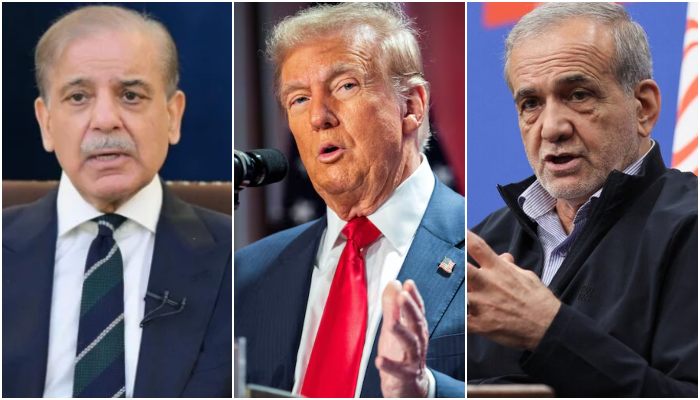
This moment of strategic gravity coincides with a significant shift in Pakistan’s global posture. The recent visit of COAS Field General Asim Munir to the White House and his engagement with US President Donald Trump was more than diplomatic theatre. It was a symbolic and substantive acknowledgement of Pakistan’s renewed relevance. Trump’s commendation of Pakistan’s regional maturity, its restraint in the face of provocation, and its capacity to serve as a voice of reason amidst unfolding chaos sent a clear message: Pakistan is not a mere observer of events; it is poised to shape them.
This message gains even greater resonance in the wake of Pakistan’s calibrated handling of recent provocations by India. Through measured deterrence, strategic communication and international engagement, Pakistan not only preserved its national dignity but reasserted its capacity to act with strength – without abandoning the higher ground of responsibility. It is this balance between resolve and restraint that now places Pakistan in a unique position to lead by moral example and strategic vision.
In the face of intensifying Iran-Israel hostilities, Pakistan must resist the seduction of emotional impulse. The gravest mistake would be interpreting the situation through a purely sectarian or ideological lens. The need of the hour is not posturing, but positioning. Pakistan must articulate a principled doctrine of engagement: one that is rooted in the UN Charter, aligned with international law, and animated by the timeless values of justice, sovereignty and human dignity.
Such a doctrine does not require Pakistan to take sides. Rather, it calls for Pakistan to take a stand for peace, dialogue and the integrity of the region’s people, who are too often made collateral to the ambitions of states. Pakistan’s unique strength lies in its ability to speak with all sides – Tehran and Riyadh, Doha and Ankara, Washington and Beijing – without being hostage to any. This independence is a strategic imperative.
Importantly, this role must be exercised with discretion and discipline. Pakistan must not allow its engagement to be perceived as interference in the internal or commercial affairs of other states. What Pakistan can offer is not direction, but dialogue; not domination, but mediation. Leadership, in this context, is less about the projection of power and more about the stewardship of trust.
For decades, institutions like the Organisation of Islamic Cooperation (OIC) have fallen short of their founding ideals. Their communiques have become predictable, their mechanisms inert. Yet they endure – not because they are effective, but because the alternative is absence. Pakistan must now seek to transform this inertia into relevance. It can do so not by abandoning these platforms, but by revitalising them – infusing them with intellectual credibility, actionable frameworks and a shared strategic purpose.
This is an opportunity to forge a new architecture of Muslim engagement. The time has come for a pragmatic regional order based on the principles of coexistence, mutual respect, and economic interdependence. Trade and sovereignty are not adversaries. Interests and ethics can coexist when guided by vision, humility and the willingness to listen.
It is easy in such moments to defer to inertia, to wait for others to act, or to merely join the chorus of condemnation. But history is not made by the echo but by the voice. Pakistan must now be that voice – not for adventurism, not for supremacy, but for sanity. For a Middle East caught between fire and fracture, the entry of a credible, neutral and wise actor is a necessity.
This is a test of Pakistan’s foreign policy doctrine, its strategic maturity and its moral imagination. It is a moment that demands poise, not provocation; discretion, not dogma. If Pakistan seizes it with clarity and courage, it may not only reshape its own future, but also restore faith in the possibility of a Muslim world that leads not by force, but by foresight. Pakistan must rise quietly, but unmistakably. Not to claim space in the annals of history, but to create it.
The writer is a political economist, public policy commentator, and advocate for principled leadership and regional cooperation across the Muslim world.