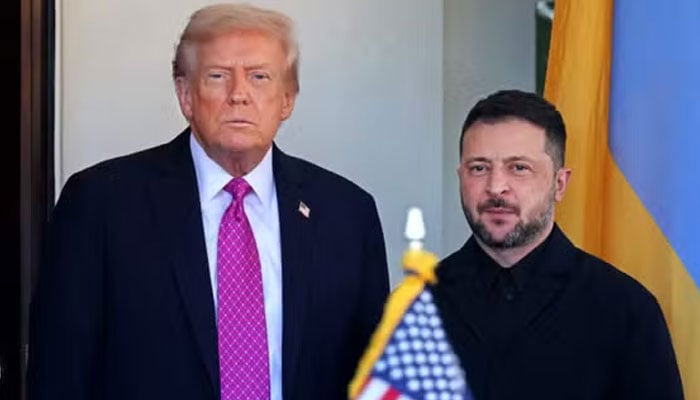
Ever since Donald Trump declared that he could end the war in Ukraine “within 24 hours”, much of the world has been waiting to see whether he could force Moscow and Kyiv into a settlement. Millions of views and scrolls, miles of news feeds and mountains of forecasts have been burned on that question.
Trump fed this expectation by insisting that Ukrainian President Volodymyr Zelenskyy was running out of options and would eventually have to accept his deal. In reality, the opposite is true. It is Trump who has no leverage. He can threaten Nicolas Maduro with potential military action in or around Venezuela, but he has no influence over Vladimir Putin. Any sanctions harsh enough to damage Russia would also hit the wider Western economy, and there is not a single leader in the West willing to saw off the branch they are sitting on.
Armed intervention is even more implausible. From the first days of the full-scale invasion, NATO decided to support Ukraine with weapons and training while avoiding steps that could trigger a direct NATO–Russia war. That position has not changed.
As a result, Ukraine has been left in a position where, with or without sufficient support from its allies, it is in effect fighting Russia alone. All talk of peace or a ceasefire has proved to be a bluff, a way for Vladimir Putin to buy time and regroup. Putin’s strategy relies on outlasting not only Ukraine’s army but also the patience and political unity of its allies. The United States has now circulated a revised version of its peace framework, softening some of the most contentious points after consultations with Kyiv and several European governments. Yet the Kremlin continues to demand major territorial concessions and the withdrawal of Ukrainian forces. Without this, Russia says it will not halt its advance. Ukraine, for its part, maintains that it will not surrender territory.
Once it became clear that the diplomatic track offered no breakthrough, the United States all but halted arms deliveries to Ukraine. Officials blamed the federal government shutdown, although the real cause was unlikely to be a shortage of movers at the Pentagon. Either way, American military assistance has dwindled to a trickle, consisting mostly of supplies approved under the Biden administration. At his confirmation hearing before the Senate Armed Services Committee, Defense Secretary-designate Austin Dahmer said: “I’m not aware of any pause in [US military] aid to Ukraine.” It sounded less like a serious assessment and more like an admission of ignorance. Every Ukrainian soldier can feel the consequences of the sharp reduction in American weapons. Every resident of Kyiv and other cities can feel the shortage of air defence systems.
Europe has not filled the gap. The European Union’s defence industry and joint-procurement schemes have produced many promises but little real money. A few billion euros have been formally committed and far less has been delivered. Member states prefer to rearm themselves first and Ukraine second, although their own programmes are moving slowly.
Excerpted: ‘Ukraine is running out of men, money and time’. Courtesy: Aljazeera.com