Forbes has thrown the spotlight on Punjab’s Suthra Punjab waste system, a single, digitised network built and rolled out in just eight months to serve around 130 million people, processing roughly 50,000 tons of rubbish a day and turning it into electricity, employment and emissions cuts.
Confronting a deepening waste crisis, Punjab’s leadership chose a deliberately bold path: instead of testing small pilots and scaling up slowly, it pushed for an immediate, province-wide rollout of the new system.
That decision came after years in which the problem had been left to worsen, with urban areas relying on patchy, unreliable collection and vast rural stretches receiving no formal service at all. An estimated 70 million rural residents in some 25,000 villages had no formal waste collection service, and only a fraction of the urban population had partial service.
Rubbish piled up in streets and fields, drains clogged with debris, and riverbanks became informal dumping grounds, turning waste into an environmental emergency.
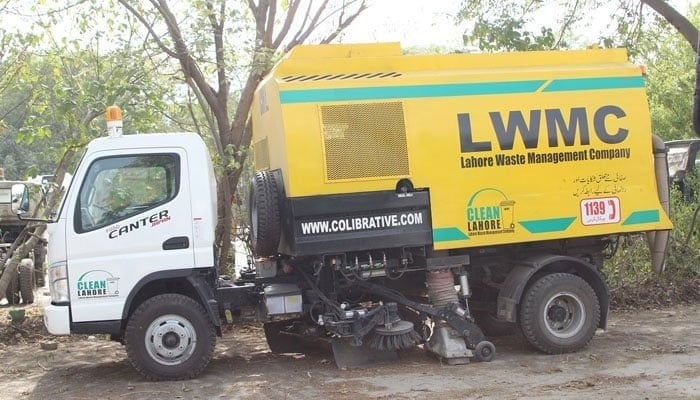
The turning point came when the government asked whether a model that had worked in Lahore could be expanded. "When the new government came in, the Chief Secretary asked me: 'You've done well in Lahore – can we develop a cleanliness system for the entire province?'" recalled Babar Sahib Din, CEO of the Lahore Waste Management Company (LWMC), speaking to Forbes.
That question led to Suthra Punjab ("Clean Punjab"), a mission to provide dependable waste services to every city and village. With political backing, Sahib Din and his team were asked to design a unified system and roll it out across more than 200,000 square kilometres in months, not years.
A single provincial waste authority built around LWMC was given oversight from cities to remote villages. "This is rare in our part of the world, where infrastructure gaps between urban and rural areas are huge. For the first time, rural areas were receiving service at the same level as cities," he said.
Today, Suthra Punjab handles about 50,000 tons of waste every day. What distinguishes it from past clean-up efforts is the degree to which the system is digitised and monitored.
"We have developed the world's largest, fully digitised waste management system under a unified governance structure. It serves 130 million people and converts 50,000 tons of daily waste into electricity and other usable products," said Sahib Din.
Trucks and bins are fitted with tracking technology that feeds real-time data into a central control room. Routes are optimised daily, disposal at landfills is logged automatically, and dashboards track contractor performance.
Payments to private firms are tied directly to this data, so missed routes or inefficient operations are automatically flagged and penalised, reducing room for manipulation and "ghost" payments that dogged the previous system.
Financing rests on a three-tier structure blending public funding, modest user fees and income from energy sales and carbon credits. Modest user fees were introduced to instil co-ownership, while the provincial government provides seed grants for core public services such as street sweeping.
A third layer comes from climate and energy finance: waste-to-energy projects generate electricity and reduce methane emissions, enabling the sale of power and carbon credits.
All financial flows go into an escrow account controlled by the waste authority to ensure transparency, and steady cash flows have allowed the initiative to secure commercial bank financing. Project leaders say that on current trajectories, Suthra Punjab is expected to become revenue-positive in the coming years.
With collection now operating at scale, the focus is shifting from simply removing waste to extracting value from it. "Now that collection (50,000 tons per day) is addressed, the next phase is converting waste into value," he said. A dedicated unit is driving this agenda through recycling, composting, landfill gas capture and biological treatment of organic waste.
Punjab is also moving ahead with industrial-scale waste-to-energy plants. Among them is a 25 MW power plant in Lahore that will feed electricity into the grid, enough to power 50,000 homes. Such plants shrink the volume of waste going to landfills and are expected to cut methane emissions by roughly 75% through gas capture, generating an estimated 275,000 carbon credits per year.
Taken together, these waste-to-value initiatives are projected to avoid around 2 million tons of CO2-equivalent emissions annually in Punjab, turning what was once a source of greenhouse gases into part of the climate solution.
After eight months of operations, millions of people have access to dependable waste pickup for the first time in living memory, with cleaner streets, fewer dumps and regular collections that did not exist before, reducing breeding grounds for disease and the risk of contaminated water.
The system has become a source of employment, creating over 100,000 green jobs and opening up opportunities for women and young people. Clearing rubbish from informal dumps and waterways has begun to restore ecosystems and reduce pollution.
At COP30, the UN climate conference in Brazil, the project was showcased as a breakthrough example of integrated waste and climate action. "Suthra Punjab stands as one of the world's largest and most organised waste management systems," said Sahib Din.
For other governments and impact leaders, Suthra Punjab's story is about how to organise for speed and scale. "If political will is strong and implementers are motivated, any project, at any scale, can be completed in record time," he said.
"In our case, support from the government was the biggest driver." The system was also not treated as a finished blueprint from day one. "The system is intentionally flexible – after six months of learning, we redesigned 30% of it… Flexibility is critical," he said.
"The combination of political leadership, creation of new value from carbon credits and a management team that is entrepreneurial has contributed to the initiative's remarkable success," said Faraz Khan, Co-founder and Partner of SpectrEco, a strategic partner to Suthra Punjab.
Cities from Jakarta to Nairobi are now looking at the "waste-to-value" model emerging from Suthra Punjab as they confront their own waste and climate pressures.
Meanwhile, Prime Minister Shehbaz Sharif praised the Punjab government for what he described as rapid and visible progress in improving the province's solid waste management system.
In a post shared on social media platform X, the prime minister called the developments "truly transformative" and commended Punjab Chief Minister Maryam Nawaz Sharif and her team for their work.
"Rapid and visible improvements in solid waste management across Punjab," he wrote.