The 23rd edition of the FIFA World Cup began on June 11, 2026. It is the first-ever World Cup to be hosted jointly by three countries...

COVER STORY
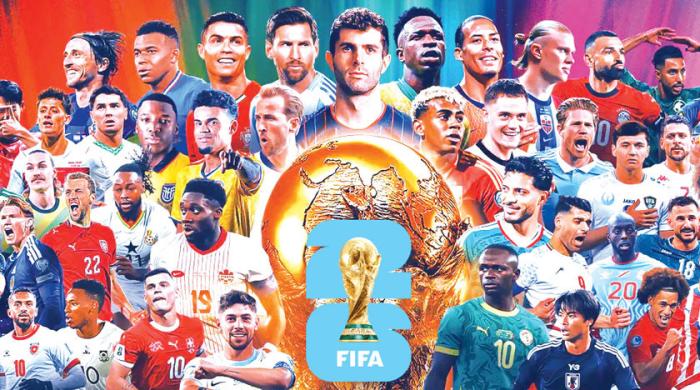
The 23rd edition of the FIFA World Cup began on June 11, 2026. It is the first-ever World Cup to be hosted jointly by three countries: the United States, Mexico and Canada. It is also the first edition to feature 48 teams instead of the 32 that participated in tournaments from 1998 to 2022.
The 2026 edition began on a high note for co-hosts Mexico, who defeated South Africa 2-0 on the opening day. On the same day, South Korea secured a 2-1 victory over the Czech Republic. With more teams, more matches and more cities involved than ever before, FIFA 2026 is shaping up to be one of the most exciting sporting spectacles in history.
The vision behind the FIFA World Cup
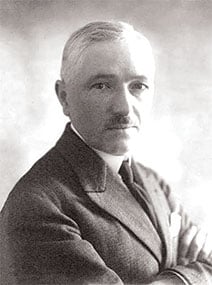
The man who conceived the idea of organising the football World Cup was Jules Rimet. He was the third and longest-serving president of FIFA, serving from 1921 to 1954. Rimet proposed a tournament in which football teams from around the world would compete for the ultimate prize.
Prior to the World Cup, football was largely played in regional competitions and at the Olympic Games. Rimet believed that football could unite nations, particularly in the aftermath of the First World War (1914-1918). During that era, football was mainly popular in Europe and South America. However, the sport lacked a truly global tournament that welcomed teams from all continents. Under his leadership, FIFA worked to transform football into a worldwide phenomenon. Rimet envisioned taking the sport beyond geographical and political boundaries. The ideals of unity, cultural exchange and goodwill became the foundation of the FIFA World Cup. His vision ultimately became reality when the first FIFA World Cup was held in Uruguay in 1930.
FIFA 2026: host selection
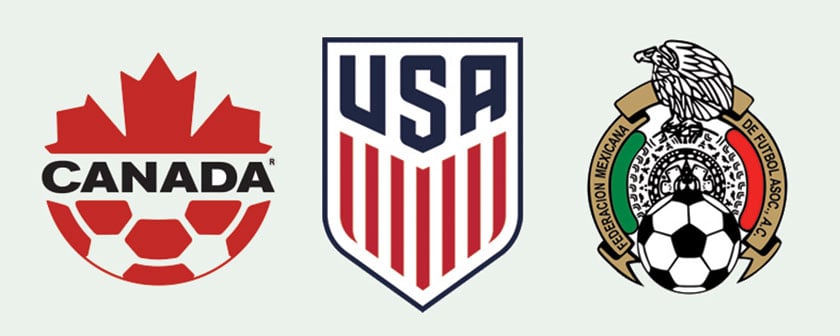
The football federations of the United States, Canada and Mexico jointly submitted the United 2026 bid to host the 23rd FIFA World Cup in 2016. Prior to this, the three countries had considered launching separate bids. Matches are being played in eleven cities in the United States, three cities in Mexico and two cities in Canada. The United 2026 bid was approved by 134 votes at the 68th FIFA Congress in Russia in 2018. Morocco also submitted a bid and received 65 votes.
Canada became the fifth country to host both the men’s and women’s FIFA World Cups, while Mexico became the first nation to host three men’s World Cups. The United States also became the first country to host two men’s and two women’s World Cups. This is the first World Cup since 2002 to be hosted by multiple countries.
The decision to spread the tournament across North America reflects FIFA’s ambition to expand the sport’s global reach. Millions of fans are expected to travel across the continent during the tournament, creating a unique cultural and sporting experience.
Expansion
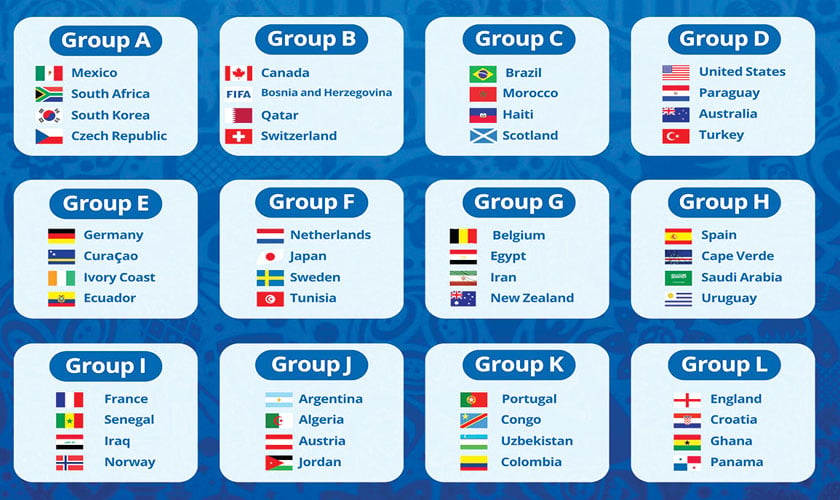
The FIFA World Cup has grown steadily from its humble beginnings into a truly global tournament. From 1930 to 1978, the number of participating teams ranged between 13 and 16. In the 1982 World Cup, the competition expanded to 24 teams and remained at that number until 1994. From the 1998 tournament through to the 2022 edition, 32 teams participated. The 2026 World Cup marks another historic expansion with 48 teams competing for football’s most prestigious trophy. The increase means that more nations have the opportunity to qualify and showcase their talent on the world stage. Countries that previously struggled to secure a place at the tournament now have a greater chance of participating, making the World Cup more inclusive and representative of football’s global popularity.
Most titles and goals
When it comes to World Cup triumphs, Brazil leads the way with five titles, won in 1958, 1962, 1970, 1994 and 2002. Brazil is also one of only two nations to have won consecutive World Cups, lifting the trophy in 1958 and 1962. Italy achieved the same feat in 1934 and 1938. The Brazilian national team has appeared in every FIFA World Cup tournament, a record unmatched by any other nation. Germany holds the record for the most appearances in World Cup finals, reaching the final eight times. Brazil also holds the record for the highest number of goals scored in World Cup history. Across its many appearances, the Seleção has thrilled fans with its attacking style, producing legendary players such as Pelé, Garrincha, Romário, Ronaldo and Ronaldinho.
Memorable matches
The quarter-final between Austria and Switzerland at the 1954 World Cup was a goal-scoring extravaganza. Austria won the match 7-5. With twelve goals scored, it remains one of the highest-scoring matches in World Cup history. The game featured hat-tricks by Austria’s Theodor Wagner and Switzerland’s Josef Hügi. For England, the 1966 World Cup remains unforgettable. England defeated West Germany 4-2 in the final, with Sir Geoff Hurst scoring a famous hat-trick to secure victory.
Another thrilling encounter took place between Brazil and Poland at the 1938 World Cup, with Brazil emerging victorious by 6-5. Hungary’s 8-3 victory over West Germany in 1954 was another remarkable attacking display. When it comes to dominance, Hungary’s 10-1 victory over El Salvador at the 1982 World Cup remains one of the most one-sided results in tournament history. France’s 7-3 win over Paraguay in 1958, Argentina’s 6-3 victory over Mexico in 1930 and Hungary’s 9-0 triumph over South Korea in 1954 are further examples of unforgettable World Cup scorelines.
Shocks and upsets
One of the reasons the World Cup captivates audiences is its unpredictability. Time and again, underdogs have stunned football’s giants. At the 1950 World Cup, the United States defeated England 1-0 despite England being regarded as one of the tournament favourites. In the 1954 final, West Germany produced one of football’s greatest upsets by defeating the highly fancied Hungarian side 3-2. Another famous shock occurred in 1966 when North Korea defeated Italy 1-0. By then, Italy had already won two World Cups.
In 1990, Cameroon stunned defending champions Argentina with a 1-0 victory in the tournament’s opening match. France suffered a similar setback in 2002 when they lost 1-0 to debutants Senegal. Perhaps the most astonishing result in modern football came in 2014 when Germany defeated hosts Brazil 7-1 in the semi-final. The result shocked millions and remains one of the most talked-about matches in football history. In 2022, Saudi Arabia’s 2-1 victory over Argentina shocked the footballing world, ending Argentina’s 36-match unbeaten run.

Most appearances
Among footballers, Argentina’s Lionel Messi has played 26 World Cup matches across five tournaments, while Germany’s Lothar Matthäus played 25 matches across five World Cups.
Matthäus’ teammate, Miroslav Klose, appeared in 24 World Cup matches across four tournaments. Klose also holds the record for the most goals scored in World Cup history, with 16 goals.
These players have demonstrated remarkable consistency and longevity at the highest level of international football.
Top teams

As of the 2022 World Cup, the most successful teams in terms of participation and victories are Brazil (22 appearances, 76 wins), Germany (20 appearances, 68 wins), Argentina (18 appearances, 47 wins), Italy (18 appearances, 45 wins), France (16 appearances, 39 wins), England (16 appearances, 32 wins), Spain (16 appearances, 31 wins), the Netherlands (11 appearances, 30 wins) and Uruguay (14 appearances, 25 wins).
These teams have consistently performed at the highest level and have produced some of football’s greatest players and most memorable moments.
What to expect in 2026?
France, Argentina and Brazil are among the strongest contenders for the 2026 FIFA World Cup title.
France possesses a talented squad led by Kylian Mbappé, whose pace and dribbling ability make him one of the most dangerous attackers in world football. The team also includes accomplished players such as Lucas Digne, Jules Koundé, Ousmane Dembélé and Aurélien Tchouaméni. With quality across the pitch, France is expected to challenge strongly for the trophy.
Argentina will enter the tournament as the defending champions. Led by Lionel Messi, the squad also features players such as Emiliano Martínez, Nicolás Otamendi, Rodrigo De Paul and Lautaro Martínez. Argentina’s ability to retain possession through quick passing and maintain composure in high-pressure situations makes them one of the favourites.
Brazil, meanwhile, remains one of football’s traditional powerhouses. Known for its attacking flair and technical brilliance, Brazil has long been a favourite at World Cups. Although its last triumph came in 2002, analysts rarely rule them out of contention. With talented players such as Neymar, Marquinhos, Casemiro and Raphinha, Brazil possesses the quality needed to compete for another title.
As the tournament unfolds across North America, fans can expect unforgettable goals, dramatic upsets, passionate supporters and moments that will become part of football history. Whether a nation lifts the trophy for the first time or one of the traditional giants triumphs again, FIFA 2026 promises to be a celebration of the world’s most popular sport.
Fun facts
* The FIFA World Cup Trophy is made of 18-carat gold and weighs around 6.1 kilograms.
* Brazil is the only nation to have qualified for every FIFA World Cup.
* Mexico became the first country to host three men’s FIFA World Cups: 1970, 1986 and 2026.
* The 2026 World Cup is the largest in history, featuring 48 teams and 104 matches.
* Germany’s Miroslav Klose holds the record for the most World Cup goals with 16.
* The fastest goal in World Cup history was scored by Turkey’s Hakan Sükür after just 11 seconds against South Korea in 2002.
* The first FIFA World Cup was held in Uruguay in 1930 and featured only 13 teams.
* Pelé remains the youngest player ever to score in a World Cup final. He achieved the feat at just 17 years of age in 1958.