Have you ever imagined yourself as a princess or a prince?
COVER STORY
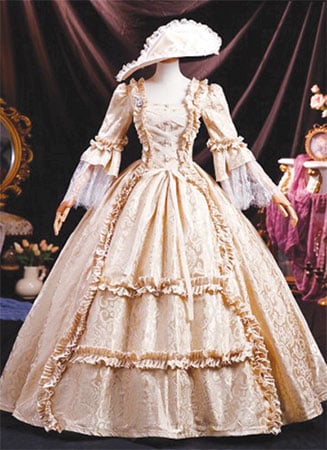
Have you ever imagined yourself as a princess or a prince? Perhaps you pictured yourself in a three-piece suit or a flowing ballgown with gloves up to your elbows, wearing a pretty tiara or a stylish hat. But why did you imagine yourself as someone from the royalty of colonial-era Europe rather than from our own rich royal past?
That instant association is based on the marks history has left on us, as well as what we continue to see around us today. While Regency England (1811-1820) is often regarded as the height of refinement and the Victorian era (1837-1901) is heavily romanticised in films and media, our admiration for these periods may also stem from the colonial influence left behind. If we reflect on it, many of the standards of elegance and class we admire today did not originate from us at all. To elaborate, why does your mind associate quiet ballroom dances and candlelit dinner tables with being “aesthetic”, while a mushaira in a Mughal court or a dastarkhan spread on the floor feels distant or uninteresting?
Regency England refers to a period in British history when the future King George IV ruled as Prince Regent on behalf of his father, King George III. Although it lasted only from 1811 to 1820, it became known for its distinctive fashion, literature, architecture and social etiquette. Today, books, television series and films often portray the period as one of glamour, grand estates, elegant dances and sophisticated lifestyles, shaping modern ideas of refinement and beauty.
This period, along with the nineteenth and early twentieth centuries, is also widely seen as the height of European colonial expansion. During this time, major European powers scrambled to divide and conquer much of the world. In an explanatory paper defending Russian expansion near Britain’s territory, Russia, itself a major European power, justified such conquests. As quoted in The Great Game by Peter Hopkirk: “The position of Russia in Central Asia is that of all civilised states which are brought into contact with half-savage, nomad populations… the more civilised state is forced… to exercise a certain ascendency over those whose turbulent and unsettled characters make them undesirable neighbours.” This statement clearly reflects how Eastern ways of life were looked down upon by Europe.
In the subcontinent, the British were in power and the ways of the powerful often dictate social standards. In his Minute Upon Indian Education (1835), Thomas Babington Macaulay wrote: “We must at present do our best to form a class who may be interpreters between us and the millions whom we govern; a class of persons, Indian in blood and colour, but English in taste, in opinions, in morals and in intellect.” They succeeded, and these Western-educated Indians gradually began to view indigenous knowledge as “backward” while adopting British habits, dress and lifestyles. Progress came to mean wearing trousers and coats, speaking the language of the colonisers and, in many ways, becoming like them. This explains how our minds have been conditioned to see our own ways as barbaric or uncivilised. We may have gained independence now, but do you not think we are still enslaved by these inherited ideas of culture and lifestyle?
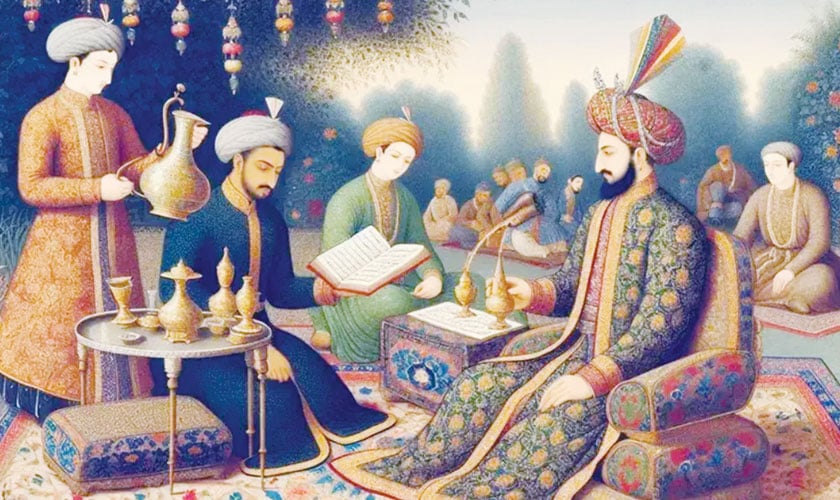
Before British colonisation, the subcontinent was ruled by many Muslim dynasties, though the Mughal Empire has perhaps the greatest overarching influence on our culture today. In 1526, Babur, a Timurid descendant of Timur and Genghis Khan from the Fergana Valley, now in modern-day Uzbekistan, swept across the Khyber Pass and founded the Mughal Empire, which covered parts of present-day Afghanistan, Pakistan, India and Bangladesh. The Mughals were descended from Central Asian Turks with significant Mongol ancestry. Yet these great Muslim dynasties of the subcontinent should not be restricted to dry history lectures or textbook paragraphs. They can still be experienced in the rich aroma of zaafrani pulao or seen in modern adaptations of the farshi shalwar. Staples like biryani, nehari, korma and haleem all trace their culinary roots to Royal Mughal kitchens.
The influence of these dynasties can also be seen in architecture, poetry and art. From the grandeur of Lahore Fort and Badshahi Mosque to the intricate frescoes of old havelis, our cities still carry traces of a refined civilisation. Urdu poetry itself was nurtured in royal courts and literary gatherings where language, wit and manners were highly valued. The ghazals of Mir and Ghalib continue to shape our cultural imagination even today. Yet while European castles and palaces are celebrated endlessly online, many people living beside centuries-old Mughal architecture barely stop to appreciate it. We admire stained-glass cathedrals in Europe but overlook the geometric beauty of Islamic calligraphy, marble inlay work and Persian-inspired gardens in our own region.
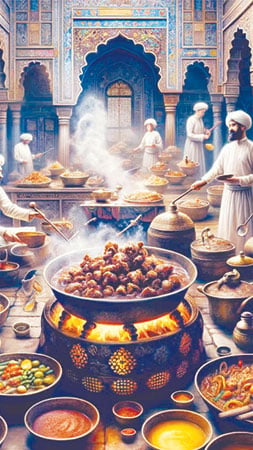
Now imagine such a Mughal court, lined with hand-embroidered cushions on three sides, where a silk dastarkhan with gleaming metalware is spread across the floor. It is laid with a variety of juicy kebabs and slow-cooked aromatic nehari, korma and perfectly layered biryani made from separate long grains of rice, all washed down with cold rosewater-scented falooda or nutty kulfi served in bronze and gold dishes. I personally believe such rich royal foods are no match for a variety of breads, bland meat with potatoes or dry toast layered with butter.
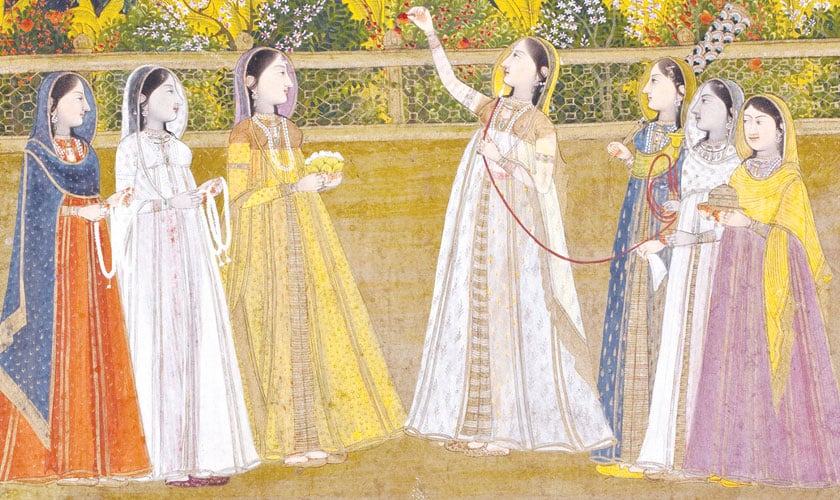
Similarly, in clothing, while corsets and ballgowns may be dazzling, they are not half as extravagant as the intricately hand-embroidered peshwaz or lehngas adorned with pearls and worn by the royalty of the subcontinent. According to The Mughal Harem by K. Lal, garments worn by the Mughals were made of muslin so fine that they were almost transparent, weighing less than an ounce and often decorated with gold lace. One style, worn by elite Mughal women as wide-legged trailing trousers requiring yards of silk, evolved directly into the farshi shalwar that became fashionable again recently.
Unfortunately, despite our layered culture and refined courtly manners, we were labelled by the West as “half-savage” and “uncivilised”. Ironically, instead of rebutting those labels, we quietly accepted them. One of the biggest examples of this is the strange pride associated with speaking English instead of Urdu today. With the rise in popularity of Romanised Urdu script, khat-e-nastaleeq is becoming a lost art. From those in private and government offices to those in educational institutions, many use English to assert a certain “superiority”.
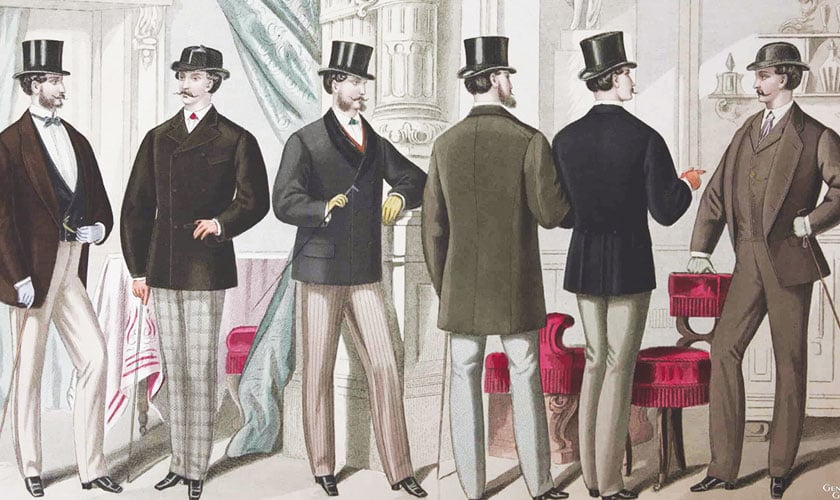
Great nations take pride in who they are rather than feeling shame about where they come from. Food, clothing and language form the foundation of any culture. Damaging these is one of the first ways a nation is stripped of its identity. The same has happened to many nations throughout history where colonisers attempted to impose their way of life wherever they went. Strong nations eventually shake off the occupier along with many foreign customs, while for others the effects last much longer. In the end, a morally strong nation or individual possesses an even stronger sense of identity that does not dim, stutter or apologise in the face of Western self-created “superior” standards.
So why are we failing to romanticise and celebrate our own heritage when we possess cuisines involving night-long cooking traditions such as shab daig and clothing that resembles wearable art? In this age, where algorithms dictate trends and standards, this should not be difficult at all. The next time you see a “how women dressed in the 1800s” reel, create one of your own showing how women dressed in your part of the world. Let people learn the proper way to scoop rice with the hand in exchange for lessons on using a fork and knife. Let them marvel at the complexity of our spices just as we admire the subtlety of their pastries. But to do that, you must first know your own heritage.
So this month, step out of the Eurocentric shadow and take time to learn about your history, visit the architectural landmarks in your area, wear traditional clothing to an event and, most importantly, take pride in who you are. Adopting modern standards to succeed is understandable, but losing yourself along the way is not.