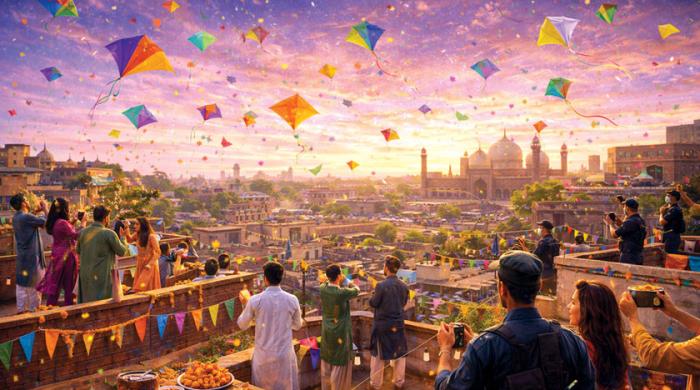
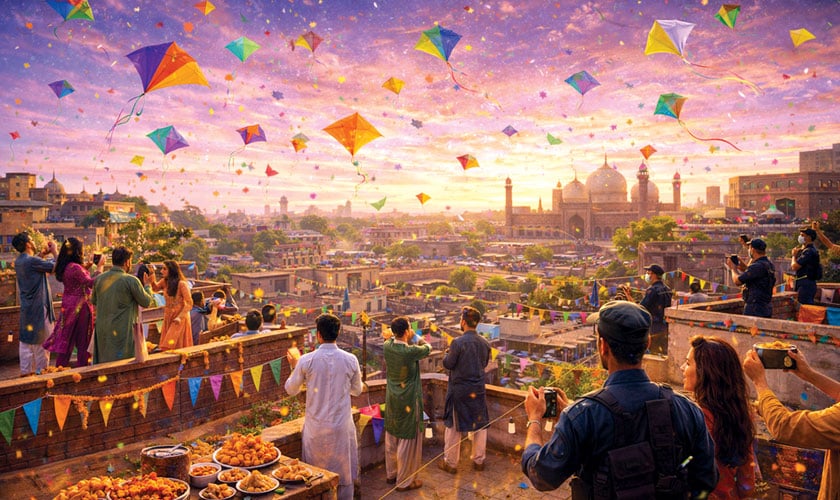
Basant filled the skies with colour, while mushairas brought poetry to life in crowded halls and open courtyards....
COVER STORY
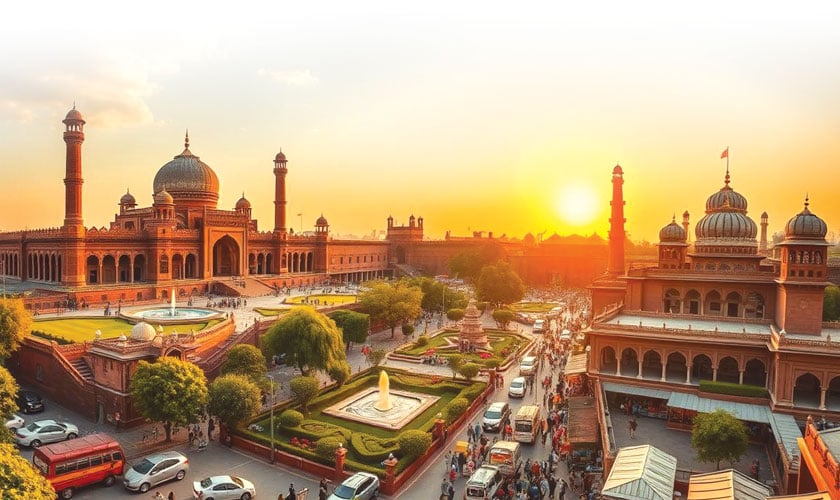
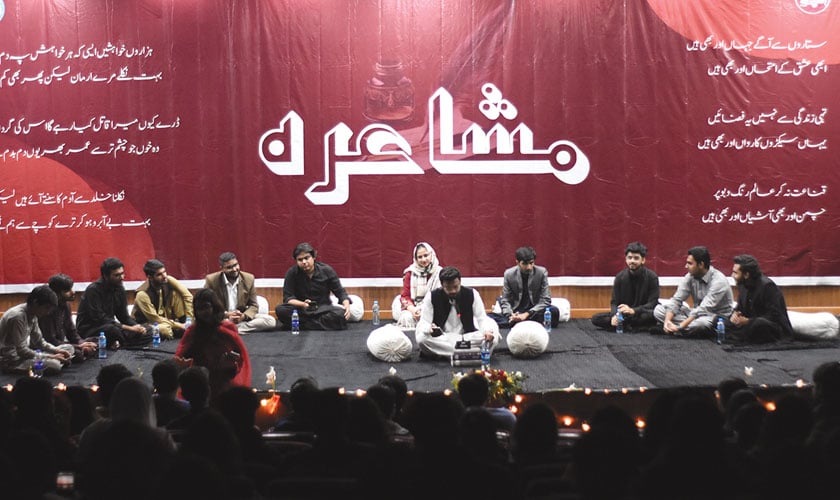
The song ‘Lahore, Lahore aye’ (Lahore is Lahore) and the Punjabi saying ‘Jine Lahore nai dekhya o jamyai nai’ (One who has not seen Lahore has not truly been born) once captured the city’s pride, vibrancy and cultural richness. They reflected the spirit of Lahore as it was known in the 1990s and even the early 2020s - a city alive with colour, warmth and an unmistakable charm. Lahore was once the heart of vibrant festivals and literary traditions. Basant filled the skies with colour, while mushairas brought poetry to life in crowded halls and open courtyards. Today, these cultural expressions have either faded away or survive in diluted forms, overshadowed by restrictions, commercialisation and a population too burdened to celebrate.
Yet it is heart-wrenching to witness the Lahore I inhabit in 2050. I do not know who bears the greater responsibility for its decline - whether it is the Lahoris themselves, with their neglect and indifference, or the irreversible force of climate change. Perhaps it is the tragic result of both, intertwined in a way that can no longer be undone. Fresh air is now a luxury; I wake up coughing most mornings, my lungs struggling against the invisible poison that has become our atmosphere, as if each breath is a quiet battle for survival.
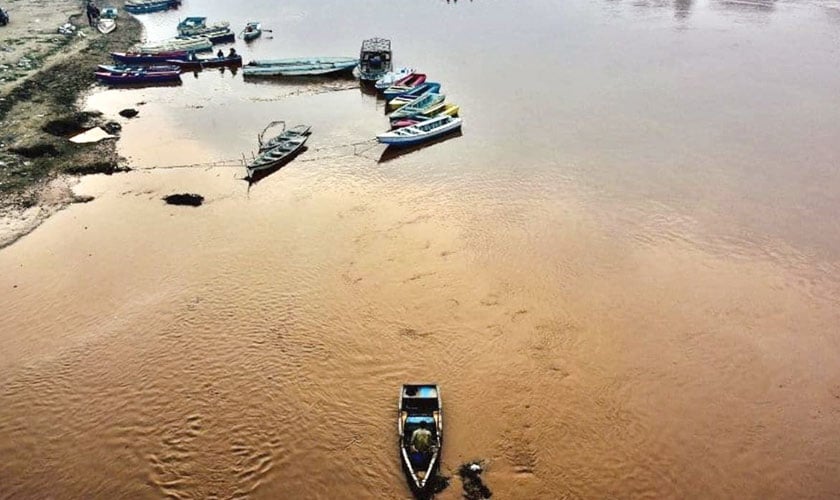
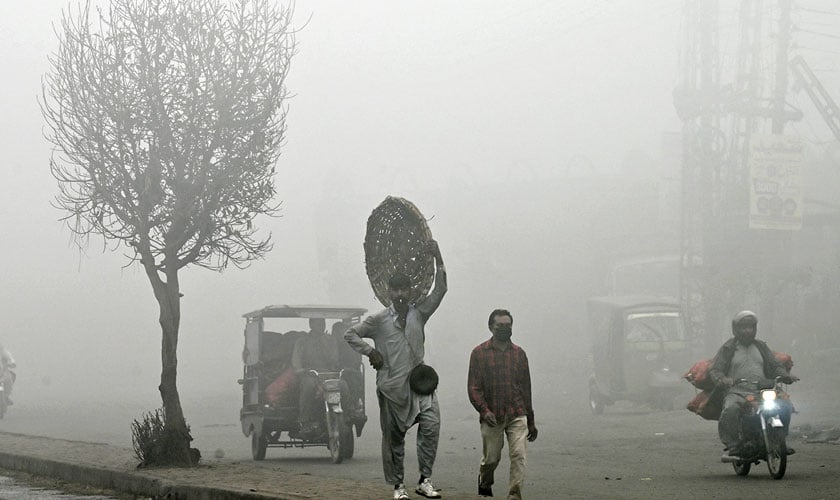
Winter makes survival even harder. Thick smog smothers the city, settling like a heavy blanket over everything, and the sun appears only as a dim blur behind layers of pollution. Masks are no longer a precaution but a necessity, worn by every passer-by as naturally as clothing. The worsening environment has taken a severe toll on public health. Respiratory illnesses, skin conditions and waterborne diseases have become alarmingly common, while hospitals remain overcrowded and medical facilities stretched beyond capacity. Each monsoon brings devastating floods that engulf the lives of thousands, especially those living in overcrowded settlements along the River Ravi, where homes are fragile and hope even more so.
Summers are equally unforgiving, with relentless heatwaves pushing temperatures beyond human tolerance and turning daily life into a test of endurance, especially for those who must commute or work outdoors. The elderly and children suffer the most, many dying quietly in homes without proper electricity or ventilation, their deaths often unnoticed beyond their immediate surroundings. My grandfather still tells stories of open skies, blooming gardens and lively streets filled with laughter, and I feel a deep, almost unbearable sorrow for what Lahore has become.
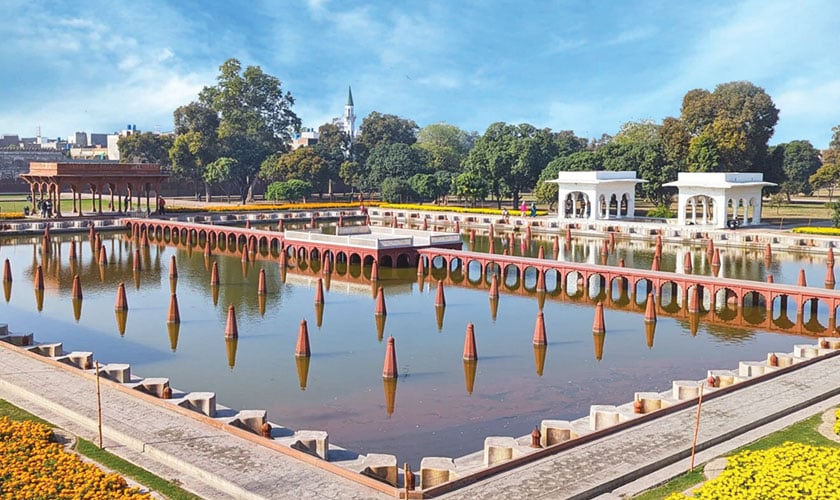
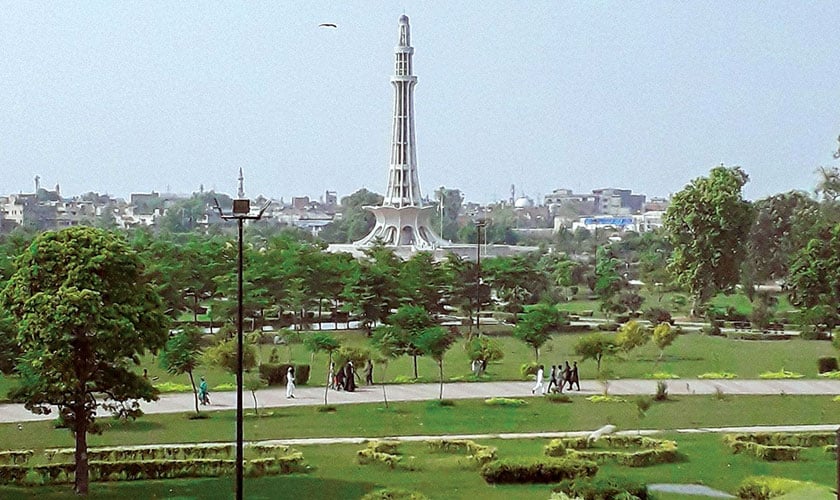
Here in 2050, it is difficult to believe that Lahore was once called Baghon ka Shehar - the City of Gardens because of its beautiful landscapes and lush green parks. Those gardens now survive only in photographs and fading memories, their beauty reduced to stories told by an ageing generation. Historic landmarks that once defined Lahore’s identity now stand neglected or overshadowed by modern development. The Walled City, Anarkali Bazaar and Shalimar Gardens, once alive with history and character, struggle to retain their charm beneath layers of pollution and unchecked urban expansion.
Today, I live in a devastated Lahore where the River Ravi, once a symbol of life and pride, flowing with dignity through the heart of the city, has been reduced to a polluted, stagnant drain carrying waste and neglect. Sajjad Ali’s line, ‘Je Ravi wich paani koi nai, te apni kahani koi nai, (If there is no water in Ravi, we don’t have a story) is no longer poetry but a painful truth, echoing through a city that has lost one of its defining elements.
Overpopulation has further suffocated Lahore. Once, it was a place of opportunity that drew people from across the country to build their futures, grow their businesses and pursue education. As a result, Lahore’s population increased uncontrollably over the years, and it now struggles to sustain its ever-growing population. In 2050, the city can no longer support its people. Roads remain perpetually congested, public transport is inadequate and unreliable, and millions live in cramped conditions without access to basic facilities. Towering buildings have replaced historic neighbourhoods, erasing centuries of heritage beneath concrete and glass, as if the city has traded its soul for unchecked development. Ancient neighbourhoods have been demolished to make space for commercial plazas, wiping away generations of collective memory.
We no longer have access to clean drinking water. While the world acknowledges a growing global water crisis, Lahore has already succumbed to its harsh reality. Those with high incomes can afford expensive filtration systems and imported water, while the poor wait in long queues for contaminated supplies. What was once a shared blessing, equally available to the rich and the poor, has now become a privilege. Today, people die daily because they cannot afford clean water or sufficient food, both of which have become scarce commodities in my city.
I am graduating from Kinnaird College with a degree in Urdu. Yes, I know Urdu is fading under the weight of globalisation and shifting priorities. It is almost extinct, much like Lahore’s cultural heritage, yet I am trying to revive both through words and memory. Our national language, like the city itself, is disappearing under the pressure of neglect and the demands of survival. Poetry no longer fills the air as it once did; instead, the city echoes with traffic, construction and quiet suffering, drowning out the voices that once gave it life.
One cannot help but wonder whether this fate could have been avoided. Were the warning signs always there, quietly ignored in the race for progress and convenience? The guilt of collective inaction lingers, making the present reality even more difficult to accept. Those who witnessed the beauty of Lahore decades ago would not believe that their beloved city is no longer attractive to tourists due to the devastating consequences of climate change and unchecked population growth.
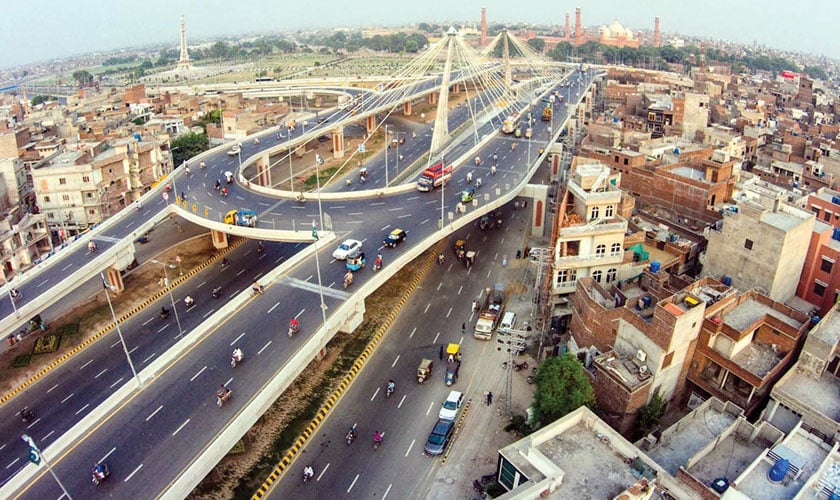
I often wish I could return to 2020 to fix things I can no longer change today. I wish I could warn Lahoris that their Lahore was slowly dying, urging them to protect what they once took for granted - clean air, flowing water and a shared cultural identity. In 2050, the city stands almost dead: marked by deserted landscapes, overcrowded roads and buildings, extreme weather conditions, toxic air and a population struggling to survive in a place that once promised life, beauty and growth.
In this hour of agony, my heart and mind align, finding expression through the poetic words of Faiz Ahmad Faiz.
My heart says:
اس وقت تو یوں لگتا ہے اب کچھ بھی نہیں ہے
مہتاب نہ سورج، نہ اندھیرا نہ سویرا
(At this moment, it feels as though nothing exists anymore—
no moon, no sun, no darkness, no dawn.)
مانا کہ یہ سنسان گھڑی سخت کڑی ہے
لیکن مرے دل یہ تو فقط ایک گھڑی ہے
ہمت کرو، جینے کو تو اک عمر پڑی ہے
(Granted, this desolate moment is harsh and difficult,
but my heart, it is only a moment.
Take courage—there is still a whole lifetime left to live.)