Eid is a joyous festival gifted by Allah (SWT) to Muslims after they observe fasts during the holy month of Ramazan....

COVER STORY
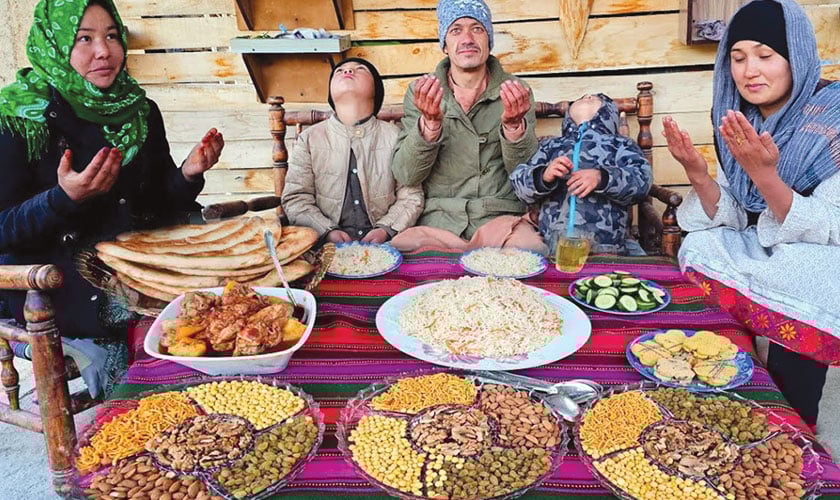
Eid is a joyous festival gifted by Allah (SWT) to Muslims after they observe fasts during the holy month of Ramazan. It is a day of gratitude and celebration and it brings families together. People dress in their finest clothes, give eidi to children and distribute alms generously to the less fortunate. Homes are filled with delicious food and sweet dishes as families prepare to celebrate Eid. Eid is also a time for strengthening social bonds. People visit relatives, neighbours and friends to exchange greetings and share in the happiness of the festival. The atmosphere is usually lively and colourful, with markets crowded with shoppers and homes bustling with preparations.
In fact, preparations for Eid often begin well before Ramazan starts. Many people buy new clothes, shoes and accessories in advance so they are ready for the festival. Markets and shopping centres become especially busy as families search for the perfect outfits for the occasion. However, the excitement of Eid shopping rarely ends early. Even after Ramazan begins, many people continue shopping, and bazaars remain crowded right until the very last days of the month.
Unfortunately, this year Muslims will be celebrating Eid primarily as a religious obligation, and the usual festive spirit may be more subdued than usual. While the prayers and traditions of Eid will continue, the atmosphere of celebration is likely to be muted.
The Islamic world is facing a crisis due to the American–Israel war with Iran. There already has been a great loss of life and destruction of assets. With the Middle East and Saudi Arabia involved and under missile attacks, flights have been disturbed and all of a sudden the area that has been at peace for a very long while is in turmoil. The war threatens to spread further and deepen instability in a region that holds great religious and historical importance for Muslims around the world.
History bears witness to the fact that Muslims have often observed their religious festivals even in times of great turmoil. In fact, the very birth of Pakistan took place under such circumstances. Pakistan came into existence in August 1947 during the holy month of Ramazan. At that time, the subcontinent was passing through the chaos of the partition of India. Millions of people were migrating across the newly drawn borders amid violence, fear and deep uncertainty. Despite the turmoil, displacement and suffering of that tragic period, Muslims observed Ramazan in its true spirit. Eidul Fitr that year was therefore a bittersweet occasion, as many people had lost their loved ones in the riots and upheaval associated with the partition of India. Even so, people still gathered to offer Eid prayers, though they did so with heavy hearts and deep sorrow for those who were no longer with them.

When a major war breaks out, it does not pause for festivals. Throughout history, Muslims have often found themselves observing Eid during difficult and uncertain times. While Eid is meant to be a celebration of the observance of fasts and charity, there have been many years when the festival arrived in the shadow of large international conflicts involving several Muslim-majority regions. Even in difficult times, Muslims continued their tradition of observing the two eid festivals.
One of the most striking examples occurred during World War I (1914–1918). At that time, the Ottoman Empire was one of the largest Muslim powers in the world and ruled vast territories across the Middle East, North Africa and parts of Europe. When the war began, the Ottoman leadership declared a call for Muslims under its rule to support the empire. Soldiers from modern-day Turkey, Syria, Iraq, Palestine and the Arabian Peninsula were drawn into the fighting.
Eid celebrations during those years were sombre. Many families had fathers, sons or brothers serving on distant battlefields such as Gallipoli or the Caucasus front. In cities like Istanbul, Damascus and Baghdad, people still attended Eid prayers and shared food with neighbours, but the mood was subdued. Charity during Eid took on deeper meaning as communities tried to support widows, refugees and wounded soldiers.

Another global conflict that coincided with several Eids was World War II (1939–1945). Although the war was primarily fought between European and Asian powers, many Muslim lands were directly involved. North African regions such as Libya, Egypt and Tunisia became major battlegrounds, while millions of Muslim soldiers from British India, North Africa and the Middle East served in different armies.
For Muslims living under colonial rule at the time, Eid during the war years carried a mixture of emotions. Soldiers stationed far from home sometimes organised small Eid prayers in military camps. Letters from the period describe improvised celebrations with whatever food was available. In North Africa, where fierce battles such as the Second Battle of El Alamein took place, civilians sometimes celebrated Eid while hearing distant artillery. Yet even then, mosques filled with worshippers who prayed for peace and the safe return of loved ones.
A more recent example occurred during the Gulf War of 1990–1991. When Iraq invaded Kuwait, an international coalition formed to push Iraqi forces out. Several Muslim-majority countries were involved on different sides or as part of the coalition, including Saudi Arabia, Egypt and Pakistan. Eid during that time was overshadowed by uncertainty throughout the region. In Kuwait, many families had fled their homes, while coalition soldiers were stationed across Saudi Arabia and the Gulf. Mosques still held Eid prayers, but sermons often focused on peace, justice and the suffering caused by war. Charitable giving increased as people sought to help refugees and displaced civilians.
The early years of the War in Afghanistan (2001–2021) also saw several Eids observed during conflict that involved many Muslim countries in different ways. Afghanistan itself is overwhelmingly Muslim, and neighbouring countries such as Pakistan hosted millions of refugees. Troops and humanitarian workers from numerous nations were present in the region.

For Afghan families, Eid often came during periods of insecurity. In some towns, markets reopened briefly before the festival so that people could buy sweets and clothes for children. Despite fear and hardship, the sight of children receiving Eidi (small gifts of money) and families gathering for prayers showed how deeply rooted the tradition remained.
For many Palestinians, celebrating Eidul Fitr or Eidul Azha often takes place under the shadow of the long-running Israeli–Palestinian conflict. Despite airstrikes, restrictions and uncertainty, families try to keep the spirit of Eid alive. On the morning of Eid, people gather for prayers in mosques or open grounds whenever circumstances allow. In places like Gaza Strip and West Bank, many worshippers pray for peace and for the safety of their loved ones. Children still look forward to wearing new clothes and receiving small gifts of money, known as eidi, although celebrations are often modest.
Families prepare whatever food they can manage and share meals with neighbours and relatives. Many also visit graves of loved ones who have lost their lives in the conflict. Even in the midst of hardship, Palestinians observe Eid with dignity and strong faith, determined not to let war erase their traditions.
History shows that Eid has often arrived during turbulent times. Yet these moments also reveal something powerful about the festival itself. Even when wars involve many countries and bring suffering to millions, Muslims continue to gather in mosques, exchange greetings and share food with those in need.
In many ways, Eid during wartime highlights the core values of the celebration more clearly than ever. Compassion, generosity and prayer for peace become central themes. Communities rally to support those who have lost homes or loved ones. The joy may be quieter, but the spirit of Eid endures.
May all our Eids be truly blessed occasions, when people everywhere can celebrate with light hearts and genuine joy. It is our hope that all future Eids will be celebrated without the looming shadows of war and chaos, allowing people everywhere to rejoice in peace and happiness.
Eid Mubarak, one and all.