The Prophet (S.A.W) said Allah will not look, on the Day of Resurrection at the person who drags his garment (behind him) out of conceit....
BITS ‘N’ PIECES
Narrated Abdullah bin Umar (R.A):
The Prophet (S.A.W) said Allah will not look, on the Day of Resurrection at the person who drags his garment (behind him) out of conceit. On that Abu Bakr said, “O Allah’s Apostle! One side of my izar hangs low if I do not take care of it.” The Prophet said, ‘You are not one of those who do that out of conceit.”
Sahih Bukhari, Volume 7, Book 72, Number 675
Around one quarter of the world’s seaborne oil and nearly 20% of its liquefied natural gas passes through the Strait of Hormuz each year.
The Strait of Hormuz is one of the most vital maritime passages in the world. Stretching roughly 167 kilometres in length and narrowing at points to just 39 kilometres, it forms the only sea route connecting the Persian Gulf to the open ocean via the Gulf of Oman. Bordered by Iran to the north and the Musandam Peninsula to the south, this narrow corridor plays an outsized role in global trade and energy security.
Its importance lies primarily in the immense volume of energy resources that pass through it each day. Around a quarter of the world’s seaborne oil and roughly one-fifth of liquefied natural gas shipments move through this single route. For many Gulf nations, including Qatar, Kuwait and Bahrain, it is the only viable maritime outlet for exporting hydrocarbons. As a result, the strait serves as a lifeline not only for regional economies but also for energy-hungry markets in Europe and Asia. Any disruption to its flow would have immediate and far-reaching consequences, from rising fuel prices to potential shortages across continents.
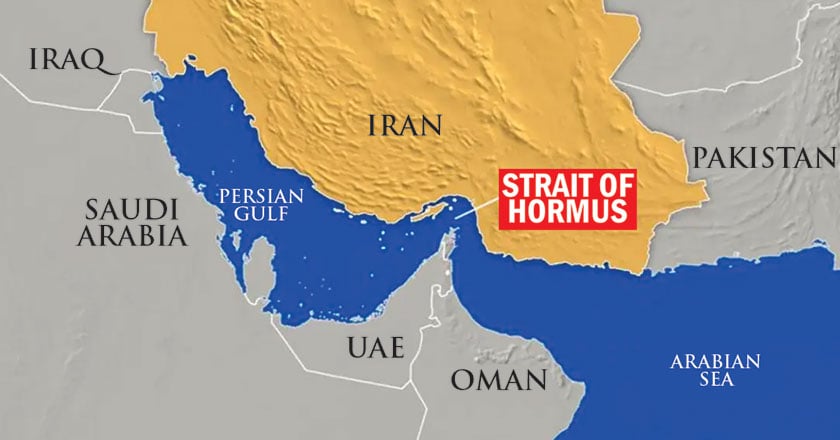
Despite its narrowness, the Strait of Hormuz accommodates heavy maritime traffic through a carefully managed navigation system. Ships travel along designated lanes, ensuring safe passage in one of the busiest shipping corridors in the world. This constant movement of oil tankers and cargo vessels underscores the strait’s role as a critical artery of international commerce.
Historically, the region has attracted attention from major powers due to its strategic location. From early maritime traders to colonial-era forces, control over this passage has long been associated with economic and political influence. Even today, its geographic position continues to shape regional and global dynamics, reinforcing its status as a key maritime chokepoint.
Beyond economics and geopolitics, the strait also reflects the interconnected nature of the modern world. A narrow stretch of water in one region has the power to influence industries, livelihoods and markets thousands of miles away. This interdependence highlights why the uninterrupted flow of goods through the Strait of Hormuz remains a matter of global concern.