The tremors were strong enough that residents woke up and rushed outdoors, feeling the earth vibrate beneath their feet....
FAULTLINES
On the night of 16 December 2025, many people across Karachi and parts of southern Pakistan felt the ground shake as a notable earthquake passed through the region. The tremors were strong enough that residents woke up and rushed outdoors, feeling the earth vibrate beneath their feet.
What happened on 16 December?
According to earthquake monitoring agencies, a magnitude 4.8 quake struck near 45 km south of Uthal in Balochistan - in the early hours around midnight. Local tremors were felt in Karachi and surrounding areas as a result.
Earthquake measurements tell us two important things:
• Magnitude (Richter scale): how much energy was released.
• Depth: how far below the surface the quake occurred.
This quake had a magnitude around 4.8 and a shallow depth of about 10–12 km beneath the Earth’s crust. Shallow quakes like this are often felt more strongly at the surface than deeper ones, even if they are not extremely powerful by global standards.
Although shakes were widely felt, there are no confirmed large-scale damages or casualties reported in official scientific updates as of now.
Why do earthquakes happen here?
To understand why the ground shakes, we must look deep beneath our feet - into the tectonic plates that form the outer shell of the Earth.
The puzzle of tectonic plates
The Earth’s outer layer (the lithosphere) is not a single solid shell. Instead, it’s made up of giant pieces called tectonic plates that slowly move over geological time.
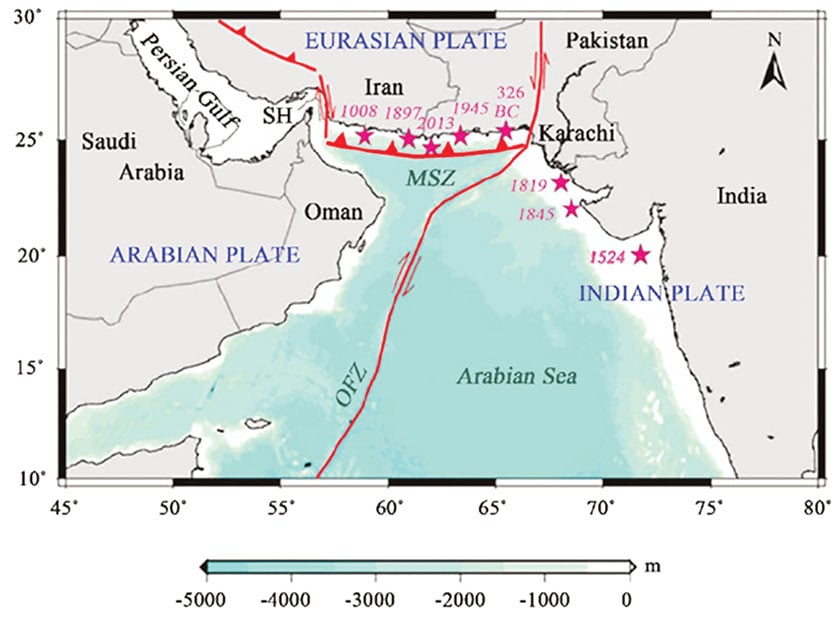
In Pakistan’s region, three major plates interact:
• Indian Plate — moving northward.
• Eurasian Plate — forming the massive Asian landmass.
• Arabian Plate — contributing to the complex tectonics of the west and south.
Where these plates meet, great forces build up as they push, pull, or slide past one another. When stress accumulates along cracks or fractures (called faults), the rocks suddenly snap back into a new position. This releases energy in the form of seismic waves — and that is what we feel as an earthquake.
How earthquake waves travel
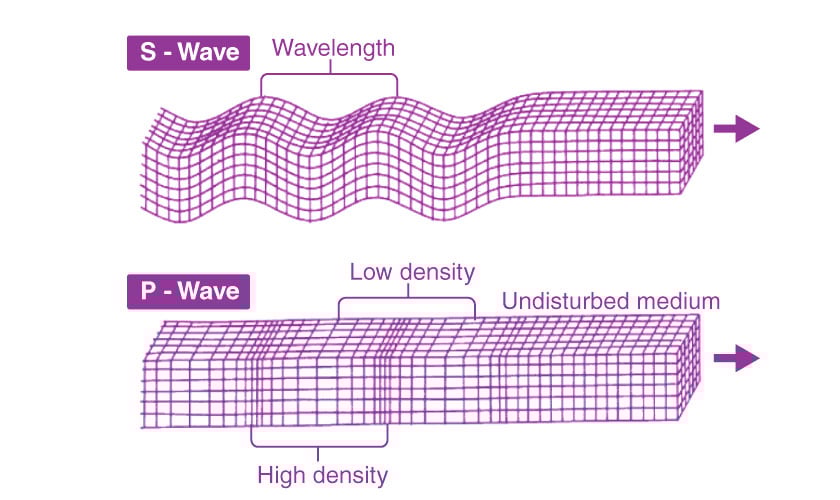
When an earthquake starts below the ground, it sends out waves in all directions. There are two main types:
P-waves (Primary waves)
• The fastest type.
• They compress and expand the ground.
• Usually arrive first at a location.
• Humans may feel a quick jolt.
S-waves (Secondary waves)
• Slower than P-waves.
• They shake the ground side-to-side or up-and-down.
• Often cause more of the shaking that people notice.
There is also a set of surface waves that travel along the Earth’s outer layer and can cause more noticeable shaking over wide areas. Shallow quakes - like the one on 16 December - send stronger waves to the surface because the energy has less distance to travel. This is why even moderate magnitude quakes can feel strong in cities and towns several tens of kilometres away.
The local fault lines and risk
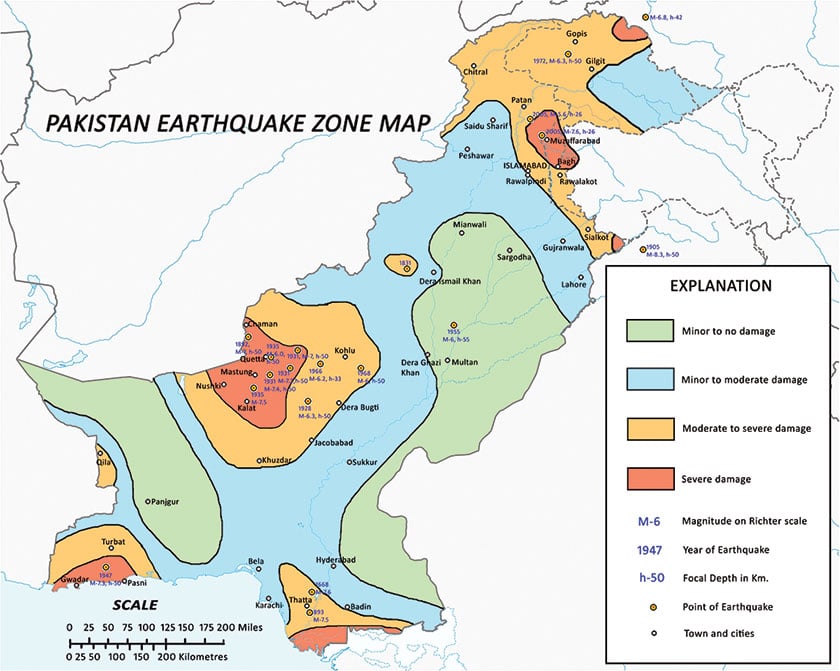
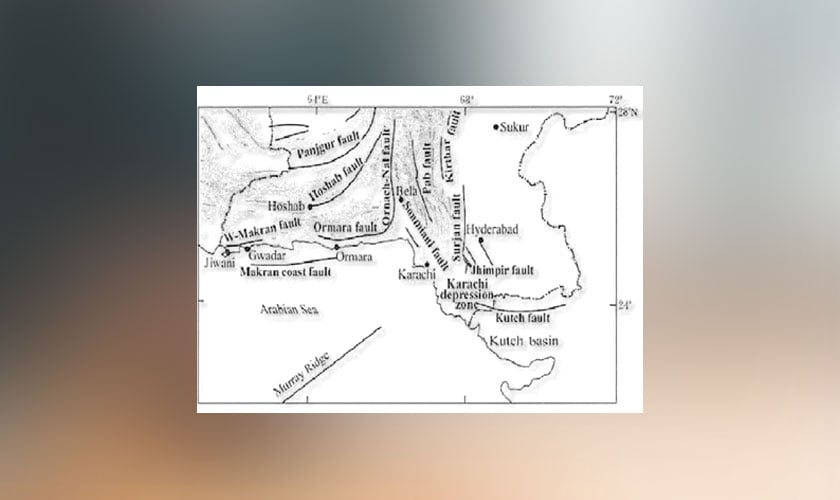
Pakistan lies near one of the most tectonically active regions on Earth. The Himalayan Front and various fault systems through Balochistan and southern Pakistan mark zones where the plates interact. Movement along these faults builds up strain that eventually releases as earthquakes.
Earthquake records from 2025 show several quakes near Pakistan - nearby quakes with magnitudes above 4 have occurred within the region around mid-December. These are reminders that the Earth’s crust is constantly in motion.
What science says about effects
Even earthquakes that are not extremely large can be noticeable if:
• They are shallow (like this one).
• They occur near populated areas.
• The local ground conditions amplify shaking (e.g., soft soils).
The 16 December quake’s shallow depth played a key role in making the shakes felt across Karachi and nearby districts.
Earthquakes like the one felt on 16 December 2025 remind us that the Earth beneath Pakistan is alive and constantly changing. The slow movement of tectonic plates creates fault lines, stores energy, and releases it as seismic waves that travel through the ground. While earthquakes cannot be prevented, science helps us understand where and why they happen, allowing engineers, planners, and communities to prepare better and build safer cities. By learning how our planet works, young people can turn fear into knowledge - and knowledge into readiness.