“It was the best of times, it was the worst of times", wrote Charles Dickens, a line that aptly captures Pakistan’s present energy predicament. Recent disruptions in global oil and gas supply chains, triggered by tensions involving the US/Israel and Iran, have once again exposed the country’s vulnerability to external shocks. These developments reinforce the urgency of sustained, focused efforts to explore, develop and harness indigenous hydrocarbon resources optimally as a cornerstone of national energy security.
OIL & GAS
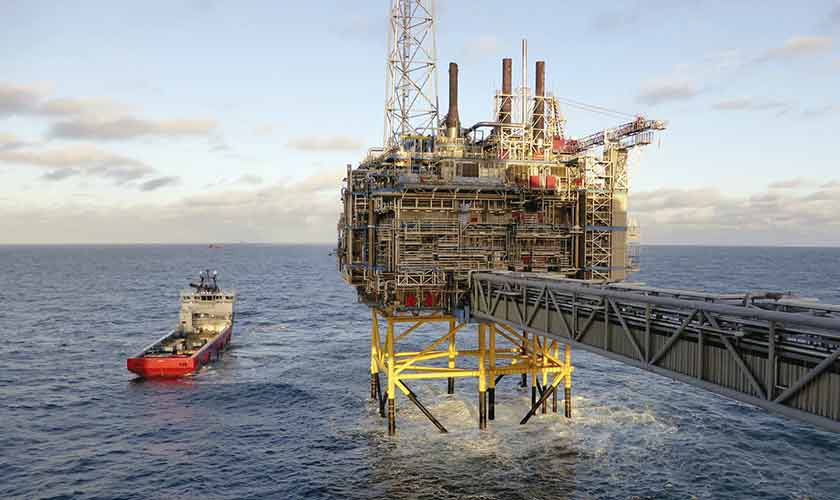
“It was the best of times, it was the worst of times", wrote Charles Dickens, a line that aptly captures Pakistan’s present energy predicament. Recent disruptions in global oil and gas supply chains, triggered by tensions involving the US/Israel and Iran, have once again exposed the country’s vulnerability to external shocks. These developments reinforce the urgency of sustained, focused efforts to explore, develop and harness indigenous hydrocarbon resources optimally as a cornerstone of national energy security.
Despite this pressing need, the Petroleum Exploration & Production Policy 2012 has yet to deliver on its central objective of significantly boosting domestic exploration and production. Pakistan, therefore, continues to rely heavily on expensive imports. During the first quarter of FY2024-25 (July–September), crude oil imports totalled approximately 2.57 million tons, while natural gas imports -- primarily in the form of LNG -- remained significant, highlighting the structural dependence on external energy supplies.
The policy’s implementation record remains uneven. While there has been some progress in refining capacity and limited investor interest, upstream exploration remains constrained by procedural delays and structural bottlenecks. Financial pressures, regulatory inconsistencies and security concerns have collectively discouraged large-scale investment. As of early 2026, indigenous crude production meets only about 20 per cent -- roughly 70,000 barrels per day -- of total refinery feedstock demand, leaving nearly 80 per cent to be met through imports. Although domestic refineries supply around 55-60 per cent of the country’s fuel requirements, their reliance on imported crude remains overwhelming.
Parallel to upstream challenges, Pakistan has also been pursuing plans to upgrade and expand its refining capacity to better align with evolving fuel demand and improve product quality. Existing refineries -- such as Pakistan Refinery Limited, National Refinery Limited, Attock Refinery Limited and Cnergyico -- have announced brownfield upgrade projects aimed at producing Euro-V-compliant fuels, improving distillation yields and reducing furnace oil output. These upgrades are being incentivised under the government’s refinery policy framework, which offers fiscal support and tariff protections to attract investment.
In addition, proposals for new (greenfield) refineries, particularly in coastal areas, have been under consideration to expand overall capacity and enhance energy security. However, progress has been slower than anticipated due to financing constraints, policy uncertainties, and delays in formal approvals.
While these initiatives are essential for modernising the downstream sector, their impact will remain limited unless accompanied by a corresponding increase in indigenous crude supply, without which refineries will continue to rely heavily on imported feedstock. This dependence carries significant economic and strategic implications. Pakistan’s proven oil reserves have steadily declined -- from an estimated original resource base of about 1,245 million barrels to 243 million barrels by early 2026, globally ranking 52nd. At the same time, daily consumption ranges between 420,000 and 480,000 barrels, implying a narrow reserve cushion that could be exhausted within a relatively short period in the absence of new discoveries. While domestic production has shown a modest uptick, reaching about 82,000 barrels per day in 2026, official projections continue to point towards a gradual decline to nearly 50,000 barrels per day by the end of the decade.
Pakistan’s reliance on oil imports is unlikely to diminish in the near term. Even with periodic slowdowns in economic activity, underlying demand continues to grow, driven by population expansion, urbanisation and industrial needs
This situation is particularly striking given Pakistan’s considerable untapped potential. Hydrocarbon prospects are widely distributed across Balochistan, Sindh and Khyber Pakhtunkhwa, as well as offshore basins. A study by the United States Agency for International Development suggests that the Indus Basin alone may hold up to 14 billion barrels of technically recoverable crude oil. However, exploration activity has not kept pace with this potential. The number of exploratory wells drilled annually has declined, and progress in prospective areas has remained limited, revealing a persistent disconnect between resource endowment and actual development.
In an attempt to reinvigorate the sector, Pakistan relaunched an exploration initiative in August 2023, offering 40 offshore and 31 onshore blocks to attract foreign investment. This effort has produced some encouraging, though modest, results. Discoveries in the Nashpa block (Kohat), Spin Wam-1 (North Waziristan) and Bitrism East-1 (Khairpur) have contributed incremental volumes of oil and gas. While these finds demonstrate that exploration opportunities remain viable, they are not yet of sufficient scale to materially reduce import dependence.
Parallel efforts to exploit unconventional resources such as shale and tight gas have also faced constraints. Estimates point to substantial in-place resources, including around 3,700 trillion cubic feet of gas and over 2,000 billion barrels of oil. Yet, commercial development remains elusive due to high extraction costs, complex geology, water scarcity, environmental considerations and security challenges. In the absence of technological readiness and enabling infrastructure, these resources remain largely notional.
Meanwhile, Pakistan’s reliance on oil imports is unlikely to diminish in the near term. Even with periodic slowdowns in economic activity, underlying demand continues to grow, driven by population expansion, urbanisation and industrial needs. Annual growth in oil demand is generally estimated to fluctuate between five and eight per cent. Combined with persistent volatility in international oil prices, this trend will continue to exert pressure on the country’s balance of payments and broader macroeconomic stability.
Breaking out of this pattern calls for more than routine policy revisions. It requires a decisive shift in how the upstream sector is governed and incentivised. A credible pathway forward would involve simplifying licensing and approval processes, ensuring contractual predictability, and offering competitive fiscal terms that can attract both domestic and foreign risk capital.
Strengthening geological data systems, expanding seismic surveys and deploying modern exploration technologies will also be critical. Equally important is addressing security concerns in prospective regions and easing financial distortions within the energy sector that deter long-term investments. Without such a coordinated and sustained effort, Pakistan risks continuing to underutilise its indigenous resource base while remaining exposed to external supply disruptions.
The writer is a retired chairman of the State Engineering Corporation.