Something quiet is happening in Pakistan. A generation is entering the workforce through a phone, a platform account and an overseas client, often before the local job market offers them a path at all.
DIGITAL PAKISTAN
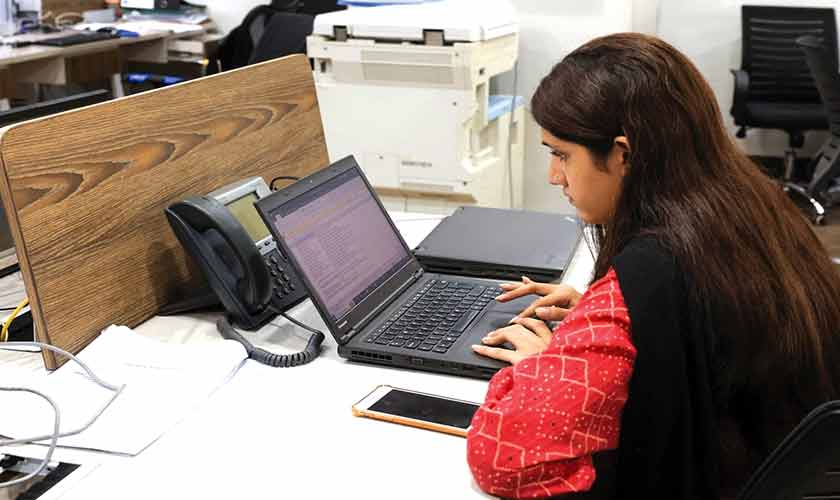
Something quiet is happening in Pakistan. A generation is entering the workforce through a phone, a platform account and an overseas client, often before the local job market offers them a path at all.
Pakistan’s digital payment transactions have reached Rs10 trillion, and the country ranks fourth globally in freelancing. Those two figures say more about the direction of the economy than any formal employment plan. The numbers trail the shift. Digital payments have crossed Rs10 trillion. The country ranks fourth globally in freelancing. But those figures describe what is already underway, not what is yet to come.
The old ladder is losing force. Degree, job, career – that sequence no longer sets the pace for a large share of the workforce. Pakistan's next growth story will be written by people who already earn, save and transact across borders, before any institution formally recognises them.
The local ladder is weakening
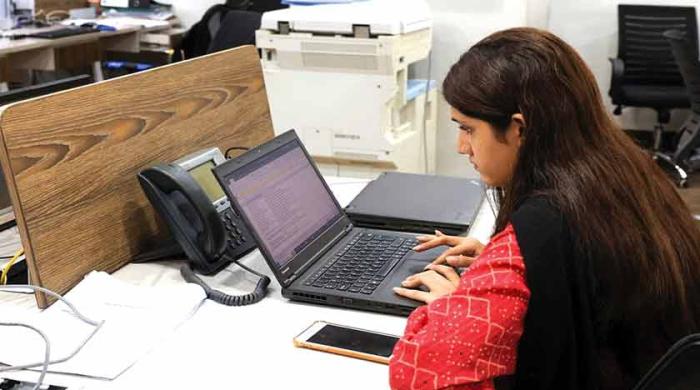
More than 140 million Pakistanis are online – and 64 per cent of them are under 30. Broadband access has expanded, mobile use is widespread and digital work begins earlier. For many young people, the first serious income no longer comes from a domestic employer. It comes from a remote contract, a digital service, a trading account or an overseas payment.
Formal job creation has struggled to absorb that pressure. Young workers have responded with speed. They have built a practical route into the economy through freelancing, online commerce, digital services and small-scale international trade. Geography matters less when a worker in Pakistan can reach a customer anywhere.
A person who serves clients abroad quickly stops thinking like a local wage earner. Income arrives in dollars. Work is priced against global rates. Financial decisions revolve around exchange rates and settlement times. The mindset shifts long before the paperwork catches up.
The export economy of one
Freelancing is the entry point, not the final form. Users begin with design, code or writing. Many move on into content businesses, niche services, trading, small digital tools. Some stay solo. Others build tiny teams around a client base that sits entirely outside the country. Cheap software and AI have collapsed the cost of operating. One person can now do what a small firm once needed.
Pakistan’s digital economy reflects that momentum. E-commerce is expanding. IT exports have risen sharply. The service sector still has room to absorb far more digital output. Not every freelancer becomes a founder. But most learn to operate as independent economic units – pricing their work, managing cash flow, reading foreign demand. That is a different kind of literacy than anything taught in a classroom.
Why crypto fits the moment
Earning abroad creates a payment problem at home. A freelancer who invoices in dollars cares about settlement speed, transfer costs and currency stability. So does a small trader or creator. Traditional rails still break down at predictable points: payout delays and transfer costs that bite hardest when money needs to move quickly.
The deeper story is this: Pakistan is not waiting to be included in the global economy. It is already there – one phone, one contract, one wallet at a time. The only remaining question is whether the systems around these earners will catch up to what they are already doing
Crypto has found traction in Pakistan because it answers those constraints. Faster settlement. Another way to store value during periods of currency pressure. A bridge between local earners and global markets. For many users, it now functions as a working financial infrastructure, not a speculative side channel.
Exchanges are adjusting to the same demand. MEXC’s recent repositioning reflects where the market is moving: one account that reaches crypto, US stocks, ETFs, commodities and prediction markets, backed by a zero-fee model that has already returned more than $1 billion to users. This sits on infrastructure that already spans more than 40 million users, 170-plus markets and over 3,000 assets. Retail users want fewer steps, lower friction, and access to multiple markets without rebuilding their financial lives on a new platform each time.
Where the risk sits
Rapid access comes at a cost when first-time users enter systems that punish confusion. Many people still learn about markets through chat groups, short videos, and screenshots before they see a clear explanation of fees, leverage, custody, or settlement risk. That is where preventable damage begins.
Scams, misinformation and poor trading decisions do not come from curiosity alone. They come from weak design, unclear disclosures and product flows that assume too much. The burden now falls on platforms to treat onboarding as a risk-control measure. A platform that cannot explain its basic rules and fees on a single screen has already lost the user. Clearer interfaces, better in-product education and stronger safeguards for first-time users should be standard.
Trust will shape the pace and quality of this shift. Without it, users drift toward informal channels and learn through losses. They stay in the system when platforms make risk visible at the moment of action, explain costs in plain language and respond quickly when something goes wrong.
What policy should protect
Public policy has a parallel role. Reliable internet access is still uneven, rural connectivity remains weaker than urban coverage, cybersecurity capacity needs improvement and research spending remains low. Internet shutdowns also entail direct economic costs in a country that increasingly relies on online work.
Pakistan cannot build a durable digital workforce on fragile access. The user base is growing, but patchy connectivity, shutdowns, weak dispute resolution and unclear rules still interrupt how people earn and move money. Infrastructure, legal clarity and consumer protection will shape adoption far more than headline projections do.
What comes next
Pakistan has the raw material to become one of the world's largest digitally native economies. A young population online. A deep freelancing base. Rising payments. IT exports climbing. Workers who already know how to find demand abroad.
The next phase will be slower and messier than the projections suggest. It will be decided by trust, by design, by rules that protect without choking. Get those right, and millions of Pakistanis move out of workaround mode and into durable economic participation. A trillion-dollar digital economy by 2035 becomes a floor, not a ceiling.
The deeper story is this: Pakistan is not waiting to be included in the global economy. It is already there – one phone, one contract, one wallet at a time. The only remaining question is whether the systems around these earners will catch up to what they are already doing.
The writer is the CEO of MEXC.