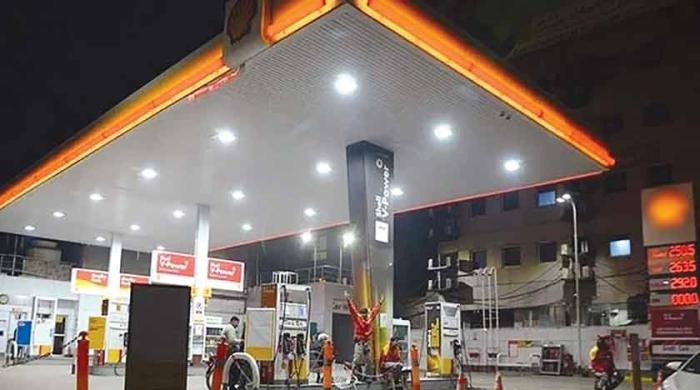
The ongoing conflict in the Persian Gulf has reestablished the importance of the oil and gas sector in the global economy. While fossil fuel investments were once dismissed as 'sunk costs', the transition towards a multipolar world and the emergence of distinct economic blocs have renewed the need for a balanced energy mix and sustained investment in the sector.
BUDGETING CHALLENGE
The ongoing conflict in the Persian Gulf has reestablished the importance of the oil and gas sector in the global economy. While fossil fuel investments were once dismissed as 'sunk costs', the transition towards a multipolar world and the emergence of distinct economic blocs have renewed the need for a balanced energy mix and sustained investment in the sector.
Pakistan, positioned at a strategic geopolitical crossroads, has asserted itself diplomatically. However, to complement this with economic strength, the country needs forward-looking budgetary planning that addresses structural challenges within its oil and gas sector.
The upcoming budget offers a crucial opportunity to lay the foundations for economic prosperity. To achieve this, the government must tackle key fiscal hurdles currently affecting both downstream and upstream segments of the oil and gas sector. Similar concerns have also been highlighted by the Overseas Investors Chamber of Commerce and Industry, which has repeatedly emphasised the importance of tax rationalisation and a stable policy environment to encourage long-term investment in Pakistan’s key sectors.
Pakistan’s effective corporate tax rate, including a 10 per cent super tax, stands at around 39 per cent, significantly higher than regional averages of 17-25 per cent. This discourages foreign investment and limits domestic growth. The government should abolish the super tax and introduce a clear plan to reduce the corporate tax rate to a competitive 25 per cent, improving investor confidence and economic activity.
The oil and gas sector operates on low, regulated margins, making turnover-based taxation inequitable. Price volatility causes turnover fluctuations that do not reflect actual profitability. It is recommended that the Minimum Tax be reduced to 0.25 per cent, with a long-term goal of elimination. Companies should also be allowed to carry forward minimum tax credits for at least five years to ease financial pressure.
The Finance Act 2024 introduced sales tax exemptions on major petroleum products. While seemingly beneficial, this change rendered input tax on related supplies and services 'inadmissible', significantly increasing operational costs for the downstream sector. It has also added approximately $750 million to upgrade project costs under the Brownfield Refining Policy, threatening the viability of those projects. To address this, petroleum products should be brought back into the taxable regime at a uniform rate. Additionally, the processes for input tax adjustments between the Federal Board of Revenue and provincial authorities must be harmonised to enable seamless cross-adjustments.
The Finance Act 2025 imposed a drastic petroleum levy of over Rs82,000 per ton on furnace oil. This has drastically reduced local demand, forcing refineries to export at a loss and undermining financial stability. The continued losses hinder refinery modernisation efforts. Abolishing this levy is essential to ensure that Furnace Oil remains a viable back-up energy resource during times of scarcity.
The brunt of Pakistan’s tax burden is borne by a narrow segment: the corporate sector and the salaried class. Increasing taxes on these groups is counterproductive. The government must focus on broadening the tax base rather than repeatedly squeezing already-taxed segments
Several recent legislative changes have increased the burden on energy companies. The withdrawal of tax exemptions on government subsidies incorrectly treats policy instruments as business profits. Reinstituting these exemptions is necessary. Similarly, the petroleum supply chain is affected by multiple withholding taxes. A simplified
withholding regime would improve efficiency in this high-volume environment.
Entities having statutory exemptions should not be forced to repeatedly apply for exemption certificates. The requirement should be abolished or automated through the IRIS system to ensure issuance within 15 days, reducing administrative delays.
The professional workforce remains central to the energy sector’s stability. High taxation on salaried individuals, including a 9.0 per cent surcharge, is driving talent away and making it difficult for regulated companies to maintain sustainable compensation structures. Reducing income tax rates for individuals, removing the surcharge and restoring reasonable tax credits are vital for talent retention.
Currently, the brunt of Pakistan’s tax burden is borne by a narrow segment: the corporate sector and the salaried class. Increasing taxes on these groups is counterproductive. The government must focus on broadening the tax base rather than repeatedly squeezing already-taxed segments. By implementing these budgetary reforms, Pakistan can turn wartime economic challenges into opportunities for energy security and industrial growth.
The writer is a member of the OICCI’s managing committee and the CEO of Attock Refinery Limited.