Inoticed it a couple of months ago during a policy workshop in a seven-star hotel building where the agenda was full of the usual suspects. Solar expansion targets. Wind corridors. Gas infrastructure security. LNG/RLNG roadmaps. Someone mentioned battery storage. No one mentioned the heat beneath our feet.
GEOTHERMAL ENERGY
Inoticed it a couple of months ago during a policy workshop in a seven-star hotel building where the agenda was full of the usual suspects. Solar expansion targets. Wind corridors. Gas infrastructure security. LNG/RLNG roadmaps. Someone mentioned battery storage. No one mentioned the heat beneath our feet.
In Eurasia, geothermal energy exists in the margins of policy until a funding agency walks into the room. Only then do people suddenly remember it.
I have spent the better part of the last five years studying geothermal resources across the Eurasian landmass. Not the famous places everyone knows about, like Iceland, where geothermal heating warms more than 90 per cent of homes. I work in the quieter landscapes. Sedimentary basins. Old oil provinces. Places where the earth holds heat, but the political imagination rarely digs deep enough to reach it.
The paradox is simple. Eurasia may hold some of the world's most underused geothermal resources, yet the technology is still treated like an academic curiosity.
This is beginning to change -- slowly. New research across Europe shows that advanced geothermal systems could supply large amounts of stable electricity and heat. One recent assessment found that around 43 gigawatts of geothermal capacity could be developed in the EU at costs below €100 per megawatt-hour, enough to produce roughly 301 terawatt-hours of electricity each year. That alone could replace about 42 per cent of fossil fuel electricity currently generated in the EU. Those numbers rarely appear in public policy debates. When they do, they are treated as technical curiosities rather than strategic possibilities. That is the silence I keep encountering. And it matters more now than ever.
Most people associate geothermal energy with volcanoes. Steam rising from Icelandic fields or Indonesian islands. In reality, the technology has moved far beyond that image.
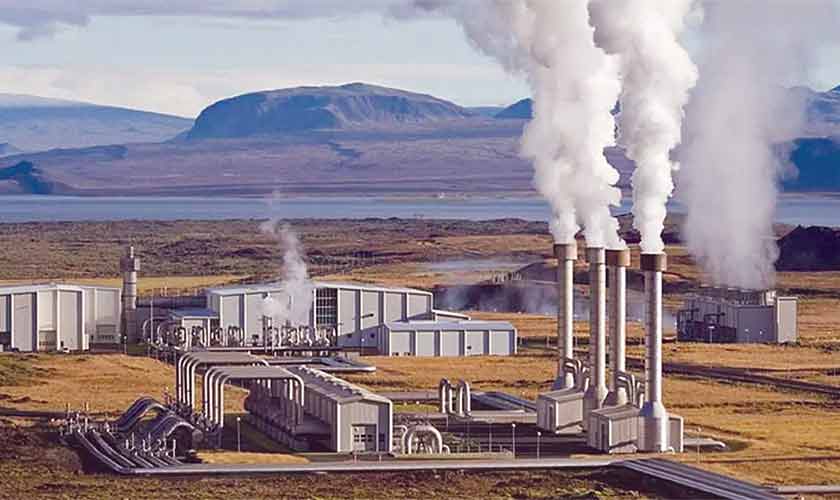
Enhanced geothermal systems can drill several kilometres into hot dry rock, fracture the reservoir, circulate water and bring heat back to the surface to generate electricity or supply district heating. This means geothermal energy is no longer limited to tectonic hotspots.
Large parts of Eurasia suddenly become viable. Take Hungary: beneath its plains lies one of the most promising geothermal gradients in Europe. Studies suggest more than 28 gigawatts of geothermal potential could be developed at competitive costs.
Turkiye tells a different story. Two decades ago, it had almost no geothermal electricity. Today, it operates more than 1.7 gigawatts of installed geothermal power capacity, placing it among the world’s leading geothermal producers. Yet even these examples barely scratch the surface of Eurasian potential.
The Pannonian Basin, the Anatolian fault system, the Caucasus region, Central Asian sedimentary basins and parts of northern China all contain promising geothermal gradients. Many overlap with old oil and gas provinces where drilling expertise already exists. Ironically, the same geological knowledge built during decades of fossil fuel exploration may now unlock a low carbon energy source hiding in plain sight. But basically, geology is rarely the limiting factor. Policy is.
If you want to see geothermal suddenly appear on the agenda, wait until international financing enters the conversation. I have watched it happen several times.
An MDB or Bretton Woods institution launches a feasibility programme. A climate finance facility opens a geothermal exploration fund. Suddenly, ministries request geothermal resource assessments. Workshops appear. Pilot projects are proposed. For a brief moment, the silence breaks. Then something familiar happens. Exploration wells reveal promising temperatures. Economic models show stable electricity prices. District heating networks become technically feasible.
But the political momentum fades. Why? Because geothermal energy does not fit neatly into the dominant narratives of energy policy. Solar panels are visible. Wind turbines dominate skylines. Gas pipelines shape geopolitical maps.
Technologies developed for the oil and gas industry are rapidly transforming geothermal exploration. Directional drilling, advanced seismic imaging and new reservoir engineering techniques allow developers to reach deeper
Geothermal is invisible. It operates underground, quietly producing constant power without the drama that attracts headlines. That invisibility is both its strength and its weakness.
From an energy security perspective, geothermal power has remarkable qualities. Once built, it requires no imported fuel. It operates day and night with capacity factors that often exceed 70 per cent, far higher than wind or solar. In other words, geothermal behaves more like a clean version of a conventional power plant.
For Eurasia, that stability has geopolitical significance. The continent’s energy history has been shaped by pipelines and fuel dependencies. The shockwaves that followed Russia’s invasion of Ukraine in 2022 exposed the fragility of that system. European energy markets suddenly rediscovered the value of domestic energy sources that cannot be disrupted by geopolitical tension.
That realisation has begun to reshape energy policy. Governments are now looking for reliable low-carbon energy that strengthens domestic resilience.
Geothermal fits that role almost perfectly. It produces steady electricity that can anchor grids dominated by wind and solar. It provides heat for district networks that currently depend on gas. It can even repurpose old oil wells and drilling expertise.
Yet despite these advantages, geothermal remains a minor player globally, supplying less than one per cent of electricity today. That statistic often discourages policymakers. For researchers like me, it does the opposite. It means the story has barely begun. The economics of geothermal energy have historically been constrained by drilling costs and exploration risk. You drill deep into the earth without complete certainty about what lies below.
That uncertainty is fading. Technologies developed for the oil and gas industry are rapidly transforming geothermal exploration. Directional drilling, advanced seismic imaging and new reservoir engineering techniques allow developers to reach deeper and hotter rock formations.
Some projections suggest these innovations could reduce geothermal costs dramatically in the coming decades.
If that happens, the geography of geothermal energy changes overnight.
Suddenly, the resource is not limited to volcanic islands or tectonic zones. It becomes available across large parts of Eurasia where subsurface heat exists but has never been economically accessible. That possibility is what keeps many of us working in this field. We are studying not just a renewable resource but the emergence of a new energy geography.
Imagine a Eurasian power system where geothermal plants anchor regional grids with constant clean electricity. Where district heating networks in Eastern Europe and Central Asia run on subsurface heat instead of imported gas. Where former oil provinces become geothermal hubs, reusing the expertise of the fossil fuel era.
This is not fantasy. The geology already exists. The technology is advancing. The economics is improving. What remains uncertain is whether policy will catch up. When that moment arrives, the silence in those policy meetings will finally break.
The writer works at the Alternate Development Services (ADS) and can be reached on LinkedIn @MashhoodUrfi