It is ironic that Azad Jammu and Kashmir (AJK), the hub of Pakistan’s hydropower generation, has been experiencing acute electricity loadshedding as of late 2025. Large parts of the region are subjected to prolonged power outages lasting eight to ten hours daily, particularly in the districts of Poonch and Bagh, Rawalakot and adjoining areas of Muzaffarabad.
ENERGY GENERATION
It is ironic that Azad Jammu and Kashmir (AJK), the hub of Pakistan’s hydropower generation, has been experiencing acute electricity loadshedding as of late 2025. Large parts of the region are subjected to prolonged power outages lasting eight to ten hours daily, particularly in the districts of Poonch and Bagh, Rawalakot and adjoining areas of Muzaffarabad.
The situation is further aggravated by an outdated, inadequate and poorly maintained transmission and distribution network across the valley. Persistent power cuts during the harsh winter months have triggered strong public protests, as electricity shortages severely disrupt daily life, business activity, education and healthcare, ultimately undermining economic growth.
With a population of approximately 4.8 million, AJK’s electricity demand ranges from around 350MW in summer to nearly 600MW in winter. Even this relatively modest demand cannot be met by the existing system, despite the availability of highly subsidised electricity tariffs for domestic and commercial consumers. Ironically, AJK has an installed hydropower capacity exceeding 2,642MW connected to the national grid, making it a major contributor to Pakistan’s energy mix and its renewable energy transition. Almost all electricity consumed in the state is supplied through Pakistan’s national grid.
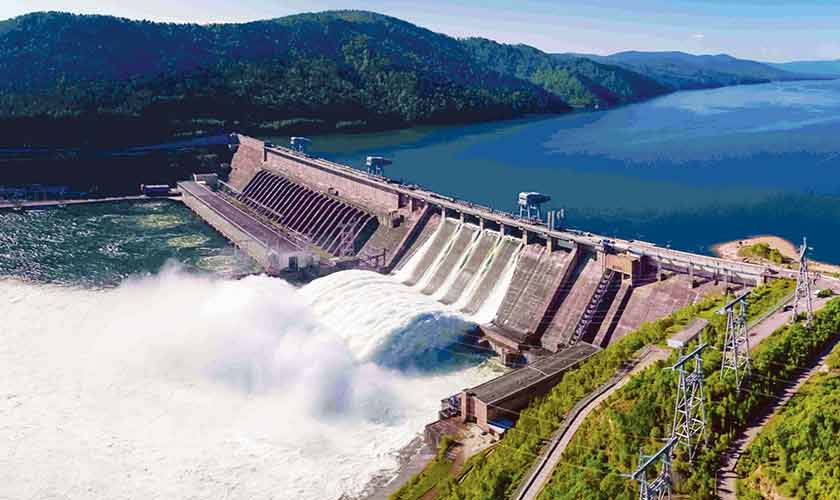
Some of Pakistan’s largest hydropower projects are located in AJK, including Wapda’s Mangla Dam, which has an installed capacity of 1,310 MW following refurbishment, and the 969MW Neelum–Jhelum project. AJK also has the distinction of hosting Pakistan’s first independent power producer (IPP), the 84-MW New Bong hydropower project. More recently commissioned IPPs include the 102MW Gulpur and 147MW Patrind projects. In addition, the AJK government itself developed the Jagran-I hydropower project, with a capacity of over 30MW, which has been supplying affordable electricity since October 2000.
Despite this concentration of power generation assets, AJK continues to face electricity shortages and remains underdeveloped and underprivileged. This is particularly striking given that the State is entitled to receive substantial net hydropower profits, or water-use charges, from Pakistan, estimated at Rs10–12 billion annually. Electricity shortages have persisted for over five years as demand in the valley continues to rise steadily. Industrial activity in AJK is largely limited to small-scale manufacturing, marble extraction, gemstone mining, mineral processing and tourism -- sectors that are all badly affected by an unreliable and unstable power supply.
The AJK economy is heavily dependent on foreign remittances, which account for more than 25 per cent of total income. An estimated two million Kashmiris reside in the UK, while many others work in Saudi Arabia and Gulf countries, regularly sending money back home. During FY2025, Pakistan received total overseas remittances of $38.3 billion, of which an estimated $5.9 billion originated from Kashmiris living or working abroad. The Bank of Azad Jammu and Kashmir alone received Rs3.5 billion in remittances during the year.
AJK’s abundant hydropower resources offer a unique opportunity not only to achieve self-sufficiency but also to become a model of sustainable, energy-led development. Realising this potential, however, will require coordinated planning, institutional capacity-building and political resolve to translate natural wealth into tangible benefits for the people of the valley
These figures clearly demonstrate that neither natural resources nor financial inflows are the core problem facing AJK. Rather, weak planning, poor utilisation of available resources, governance shortcomings and insufficient federal support have kept the region economically backward. Although the exemption of AJK from loadshedding has been discussed at the political level in the past, no concrete measures have been implemented, leaving the valley with little relief from persistent outages. At the same time, the AJK government has begun pursuing greater energy sustainability by reducing reliance on the national grid, particularly for remote and far-flung areas. Work is underway to develop supporting infrastructure and a Rs10 billion programme for upgrading the electricity transmission network is also in the pipeline.
Over the years, the AJK government has constructed several power stations. At present, 22 small hydropower stations, with capacities ranging from 0.25 MW to 3.5MW, are operational -- either connected to local grids or functioning as stand-alone systems -- along with several mini and minor power stations. A recently commissioned 3.2MW Chamfall hydropower project, costing Rs934 million, will supply electricity to around 56 villages. The 48MW Jagran-II project, whose construction had remained stalled for nearly seven years, has been revived and is now scheduled for completion by June 2026. These projects are included in Pakistan’s updated Indicative Generation Capacity Expansion Plan (IGCEP) 2025–2035.
In a major development, the Saudi Fund for Development has pledged nearly Rs22 billion to finance the 48MW Shauntar and 22MW Jagran-IV hydropower projects. Both projects will be connected to the Muzaffarabad grid once the required transmission lines are completed.
AJK’s mountainous terrain and extensive river systems provide vast hydropower potential, estimated at 8,295MW across about 60 identified sites, mainly on the Poonch, Jhelum and Neelum rivers. At present, seven projects are under implementation by the AJK government in the public sector and 19 in the private sector, with a combined capacity of 3,439MW. Large private-sector projects are being handled by Pakistan’s Private Power and Infrastructure Board (PPIB) and include the 701MW Azad Pattan and 640MW Mahl projects, scheduled for commissioning in 2033, and the 1,124MW Kohala project in 2034. Other long-term projects planned for 2030–2035 include Chakothi– Hattian (500MW), Athmuqam (450MW), Ashkot (300MW) and Rajdhani (132MW).
In addition, hydropower projects with a combined capacity of 762MW have been declared technically and economically feasible, while two raw sites with a cumulative capacity of 1,509MW -- including the 960MW Dudhnial project -- have also been identified. Planning is underway for the phased development of these projects to optimally exploit AJK’s hydropower potential, either in the public sector through the AJK Power Development Organisation or in the private sector via the AJK Private Power Cell.
AJK’s persistent electricity shortages, despite its pivotal role in Pakistan’s hydropower sector, represent a structural failure rather than a resource constraint. Without urgent reforms in power distribution, transparent utilisation of hydropower revenues and firm federal commitment to exempt the state from routine loadshedding, economic development will remain stunted and public discontent will deepen.
AJK’s abundant hydropower resources offer a unique opportunity not only to achieve self-sufficiency but also to become a model of sustainable, energy-led development. Realising this potential, however, will require coordinated planning, institutional capacity-building and political resolve to translate natural wealth into tangible benefits for the people of the valley.
The writer is a retired chairman of the State Engineering Corporation.