The first five-year National Action Plan on Business and Human Rights (2021–2026) was prepared by the Ministry of Human Rights during Dr Shireen Mazari’s tenure.
POLICIES/PLANS
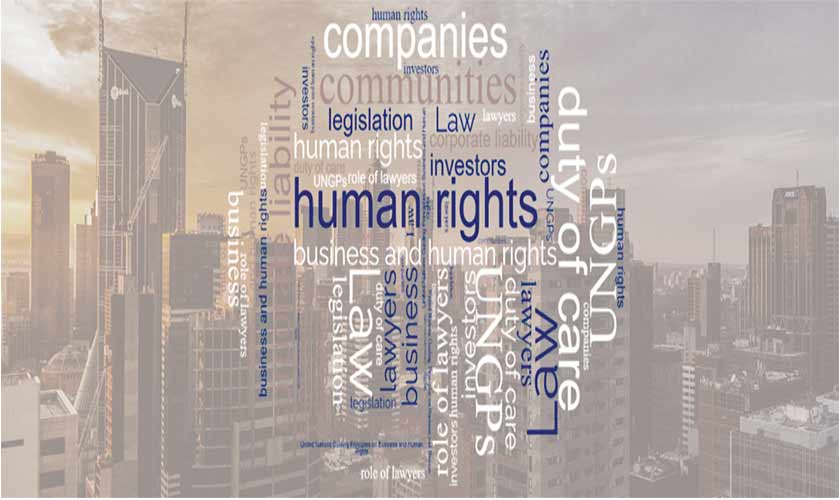
The first five-year National Action Plan on Business and Human Rights (2021–2026) was prepared by the Ministry of Human Rights during Dr Shireen Mazari’s tenure.
The comprehensive 90-page plan was developed in response to the strong recommendation of the UN Working Group on Business and Human Rights, which was established by the UN Human Rights Commission in 2011. Countries were asked to implement the UN Guiding Principles on Business and Human Rights. Pakistan was the first country in South Asia to develop a National Action Plan to prevent human rights violations arising from business activities.
The UNGP framework is anchored in three pillars: ‘Protect, Respect, and Remedy’. The first pillar highlights the state’s duty to safeguard human rights through laws, policies, and enforcement. The second pillar focuses on businesses’ responsibility to avoid harming people and to address impacts associated with their operations and supply chains. The third pillar stipulates the need to ensure access to justice and effective grievance mechanisms when rights are violated. These are noble and crucial pillars for all. The question is whether all three pillars have been addressed by those required to implement them in letter and in spirit.
The priority thematic areas of the NAP are labour rights and decent work, occupational safety and health, elimination of child labour and forced labour, non-discrimination and gender equality, human rights due diligence, responsible supply chains, environmental and social impacts and protection of vulnerable groups, etc.
As the apex body of employers, the Employers Federation of Pakistan is a signatory to the ILO Pakistan Decent Work Country Program, whose agenda covers four areas: rights at work, sustainable employment, social protection and social dialogue.
The EFP is a constituent of the ILO and is therefore at the forefront of and proactively engaged in promoting fundamental principles and rights at work to realise the objective of decent work for all and to achieve the targets of the Sustainable Development Agenda 2030. The EFP strongly emphasises that the existence of strong workers’ unions and employers’ associations serves the interests of both and is a prerequisite for sound industrial relations and the protection of human rights. The EFP is mandated to sensitise employers to comply with the NAP’s priority thematic areas.
A resolution adopted at the National Business and Human Rights Conference convened during my tenure as president of the (UN) Global Compact Network Pakistan, in association with the EFP, a couple of years ago stated that business enterprises in Pakistan commit themselves to adopting an explicit and public policy commitment to meet their responsibility to respect human rights, conduct risk assessments examining actual and potential human rights impacts and set up internal accountability mechanisms for the implementation of human rights policies within their enterprises and their supply chains, integrating these into their recruitment, procurement and other management policies.
The priority thematic areas of the NAP are labour rights and decent work, occupational safety and health, elimination of child labour and forced labour, non-discrimination and gender equality, human rights due diligence, responsible supply chains, environmental and social impacts and protection of vulnerable groups, etc
To further strengthen employers’ commitment, the EFP promotes responsible business practices, such as human rights due diligence and labour compliance and advises businesses that integrity begins at the top and must filter down to all tiers of the business.
A key area is the need for continuous, meaningful dialogue between workers and employers. Industrial peace, protection of workers’ rights, productivity and efficiency policies, compliance with ILO International Labour Standards and environmental requirements, ensuring non-violence and non-harassment in the workplace and linkages between stakeholders to advocate and lobby the government for mutually beneficial policies and laws are all critical.
The priority thematic areas of the NAP are labour rights and decent work, occupational safety and health, elimination of child labour and forced labour, non-discrimination and gender equality, human rights due diligence, responsible supply chains, environmental and social impacts and protection of vulnerable groups, etc
The global business ecosystem has undergone dramatic change, and the dynamics of labour relations have necessitated the imperatives of a new social contract. Pakistan’s image in the context of human resource management, gender equality, unionisation, environmental policies, inclusivity and social protection has largely been negative. The current economic situation has also had a deeply adverse impact on industrialisation, employment, investment and poverty.
Hence, there is an imperative to implement fundamental changes in industrial relations, employment laws, and the rights of both workers and employers. It is now incumbent upon the Workers Employers Bilateral Council of Pakistan (WEBCOP), a social dialogue forum, to meet, brainstorm and decide on a new social contract. By understanding each other’s interests, both sides can propose options that address their shared concerns and avoid intensifying conflict. They need to be sincere in a reciprocal relationship and must create an ambience of trust.
This is not a we-versus-they situation. This is the time for everyone to be aligned on their concerns. Workers must work with employers to advocate for the rationalisation of heavy taxation, vociferously condemn the blatant rise in extortion demands on businesses by extremists and criminals and influence the government to introduce policies that would spur industrialisation.
Today, many industries have closed down, reduced working hours or retrenched labor, primarily because of the high cost of production, competition from smuggled, mis-declared and under-invoiced imports and backbreaking taxation, corruption, extortion and security concerns. It is therefore no surprise that investment has been and continues to be diverted to the Pakistan Stock Exchange, real estate or overseas assets. It is the responsibility and obligation of the State to safeguard the human rights of businesses as well. It is the responsibility and obligation of the State to provide justice to businesses against arbitrary and irresponsible decisions by government functionaries. It is also the responsibility and obligation of the State to formulate and implement business-friendly policies in order to attract safe and secure investment.
The successful implementation of the NAP depends not only on what businesses must do. The question is what the state has done over the past five years to implement it. Pakistan has ratified several ILO conventions, including those on freedom of association, the right to organise and collective bargaining, forced labour, child labour and minimum wage. But what are the ground realities regarding the enforcement of these conventions? Has the government succeeded in eliminating child labour and forced labour, ensuring unionisation in the workplace or ensuring that minimum wages are paid honestly?
Child labour surveys are conducted periodically, but what concrete measures are taken by the government thereafter to address the issue? There is rarely child or forced labour in the formal sector, yet government functionaries lack either the initiative or the authority to monitor and inspect the informal sector. Has justice been fair and speedy, or does the system remain sluggish? What has the government done to ensure law and order and provide safe working environments? Has environmental degradation been pragmatically addressed through effective measures?
The government must realistically implement the NAP’s priority thematic areas and avoid superficial, merely on-paper measures. The onus for implementing the NAP rests not only on businesses but also on the government and workers. As the poet said, translated from Urdu, “I am a representative of that living tribe which burns itself to give light to others”. That is precisely what the private sector has been doing day in and day out.
The writer is a former president of the Employers Federation of Pakistan.