The Lahore Chamber of Commerce and Industry convened an unprecedented All Pakistan Chambers Convention. The event, held in collaboration with the Bank of Punjab and the Trade Development Authority of Pakistan, brought together the leadership of chambers from across the country.
ECONOMIC COLLABORATION
The Lahore Chamber of Commerce and Industry convened an unprecedented All Pakistan Chambers Convention. The event, held in collaboration with the Bank of Punjab and the Trade Development Authority of Pakistan, brought together the leadership of chambers from across the country.
The presence of Federal Finance Minister Senator Muhammad Aurangzeb as chief guest highlighted a vital truth that for our nation’s economic revival: the government and the private sector must engage in sustained, constructive and purposeful dialogue.
The conference, structured into two distinct sessions, was designed precisely for that purpose: to consolidate their vision and present it directly to the nation’s economic growth.
I represented the consolidated voice of Pakistan’s business community in my speech. I said that, for Pakistan’s economy, the private sector is as vital as oxygen to the human body. This is not mere rhetoric. The Pakistani private sector is fundamentally patriotic. We seek not to prosper in isolation but to be the primary drivers of our country’s growth and prosperity. Our request to the state is straightforward. Grant us dignity and respect, engage us in genuine consultation and provide a stable, predictable and enabling environment. The international best practice is clear. Chambers of commerce and industry are recognised as essential ‘think tanks’ for governments because their leadership possesses an intimate, ground-level understanding of business realities, investment climates and the practical impacts of policy.
The All Pakistan Chambers Convention presented a stark diagnosis. Pakistan’s Cost of Doing Business has escalated to unsustainable levels. The consequence is not just stagnation but active regression, manifesting in a worrying capital flight. Our appeal is direct and urgent: the State Bank of Pakistan must work to align the policy rate more closely with regional economies to restore competitiveness.
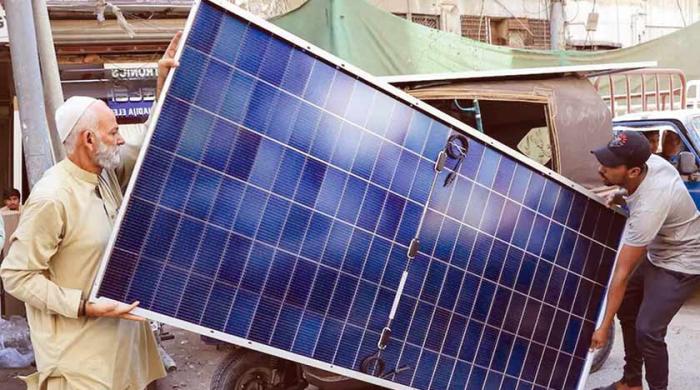
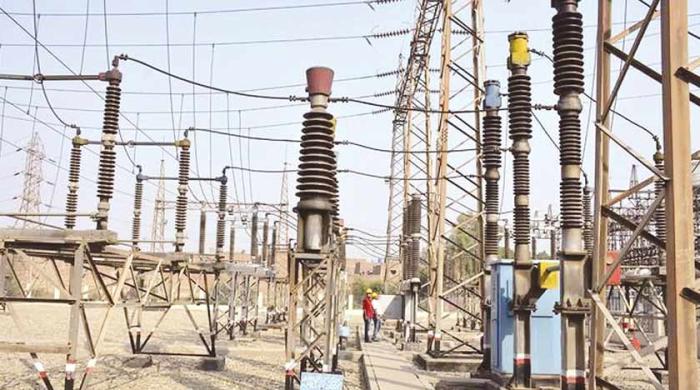
No issue weighs more heavily on industry than the high energy prices. The government must aggressively expand the renewable energy network and renegotiate the annual capacity payments to Independent Power Producers (IPPs). A critical step is to commission a forensic audit of IPP contracts, scrutinising fuel price assumptions, consumption patterns and capital expenditure. Globally, IPPs sell power between 7.0 and 8.0 cents per unit; in Pakistan, the rate stands at a debilitating 12.5 cents. We also advocate for sector-wise energy tariffs for exporters, the creation of a National Industrial Competitiveness Framework aligned with regional pricing and the immediate implementation of a Surplus Energy Utilization Plan. This plan should strategically deploy excess power capacity and surplus LNG cargoes to boost industrial output and fuel the digital economy, particularly by powering IT data centres.
The physical space for industry is becoming prohibitively expensive. Land prices in established industrial estates. We urgently need an easy-instalment leasing model to allow SMEs to acquire land. Development of new industrial estates through public-private partnerships is essential, underpinned by standardised land pricing rules across all jurisdictions to ensure transparency and fairness.
The current tax regime is a labyrinth that stifles rather than stimulates. With approximately six million taxpayers carrying the burden for a population nearing 250 million, the system is fundamentally skewed. The effective tax rate, when all levies are consolidated, exceeds 50 per cent and climbs to an astonishing 61 per cent when tax on dividends for limited companies is included. This is untenable. Our reform agenda is clear: broaden the base by educating non-filers on the benefits of documentation and offering facilities to existing taxpayers. Introduce a simple fixed tax scheme for small retailers through mutual consultation. Reform the agriculture taxation system with provincial consensus. Leverage the government’s extensive database, from property transactions and utility meters to bank accounts and travel history, to bring new taxpayers into the net.
Pakistan’s chronic trade deficit, which has already surpassed $15 billion in the first five months of the current fiscal year and threatens to reach $36 billion, demands a war-footing response. Exporters need a restored final tax regime, timely duty refunds and access to concessional financing for value addition and technology upgradation
We must simplify the system to reduce excessive withholding and advance taxes, and decisively curb the discretionary powers of tax officials (e.g., Section 40-B) and the misuse of SROs, such as sales tax concessions misapplied in (former) Fata/Pata. The misuse of schemes like the Export Facilitation Scheme (EFS) and the wide disparity in withholding tax rates on imports for manufacturers (1-2 per cent) versus commercial importers (up to 6.0 per cent) must also be addressed to ensure a level playing field. The completion of the Tax Policy Office (TPO), fully separated from the FBR and placed under the Finance Division, is a critical IMF-highlighted reform that must be finalised.
A modern economy requires a modern legal framework. Laws governing contracts and property rights must be updated to meet contemporary requirements. A dedicated programme is needed to reduce the backlog of commercial dispute cases in courts, with regular progress reports published. Contractual cases must have defined timelines and factors causing delays must be systematically eliminated, another priority highlighted in the IMF report.
The continued waste of resources by State-Owned Enterprises (SOEs), estimated at Rs850 billion annually, is a national issue. The long-promised privatisation of these loss-making entities must transition from rhetoric to reality with immediate, transparent action.
Pakistan’s chronic trade deficit, which has already surpassed $15 billion in the first five months of the current fiscal year and threatens to reach $36 billion, demands a war-footing response. Exporters need a restored final tax regime, timely duty refunds and access to concessional financing for value addition and technology upgradation. Import tariffs must be rationalised, especially for industrial raw materials and machinery. We suffer from a severe lack of product diversification, with 68 per cent of exports reliant on textiles, leather and rice, while immense potential lies in halal food, pharmaceuticals, IT, engineering and sporting goods.
Market diversification is equally critical; with 36 per cent of exports going to just four countries, we must aggressively expand into markets in Africa, ASEAN and the CIS. The closure of the Afghan transit trade route has severed our access to Central Asian markets, necessitating urgent development of alternative, secure trade corridors. Levies such as the Sindh Infrastructure Development Cess (SIDC), at 1.8 per cent, only make our exports more expensive and must be abolished. Finally, we must have the courage to renegotiate existing trade agreements (FTAs/PTAs) with countries such as Indonesia (deficit: $2.6 billion), China (deficit: $14 billion), and Malaysia (deficit: $500 million), ensuring chamber representatives are part of the negotiating team.
Agriculture, which accounts for 23.5 per cent of GDP, must be revitalised through modern technology, high-quality seeds, mechanisation and water management to boost per-acre yields. Foreign Direct Investment (FDI), which remains dismally low at $2.48 billion in 2024-25, requires a focused Domestic Investment Promotion Policy to attract both foreign and local capital into hydro, renewable energy, mining, IT, agro-processing, pharmaceuticals and engineering. Alarmingly, capital is being redirected into non-productive assets, as seen in the exodus to Dubai’s real estate market, a serious capital flight concern. The real estate sector bears a disproportionately low tax burden (less than 0.2 per cent of GDP) compared to industry and policy must redirect investment into productive sectors.
For SMEs, which contribute over 40 per cent to GDP but receive less than 6.0 per cent of private-sector financing, we need collateral-free, cash-flow-based lending, a Technology Upgradation Fund and the promotion of Islamic financing schemes. Dedicated Special Economic Zones for SMEs, with small plots and pre-built units, on favourable terms, are essential.
We also advocate for formal representation of Chambers on public-sector boards to ensure swift issue resolution. To improve environmental compliance, shift from punitive unit sealing to a cooperative model with warnings and support for adopting green technologies. For skill development, a portion of the substantial BISP funds could be redirected to promote cottage industries and vocational training aligned with GCC, ASEAN and European standards, including foreign-language courses. We must also address the excessive government departmental intervention in SEZs, which stifles investment by imposing impractical demands for detailed information at the initial project stages.
Finance Minister Muhammad Aurangzeb’s participation was a positive signal. He outlined the government’s efforts, shed light on macroeconomic improvements such as the receipt of the $1.2 billion IMF tranche, forex reserves exceeding $19.5 billion, a stock index above 169,000, remittances over $16 billion (a 9.0 per cent increase) and a dramatic reduction in average CPI inflation to 4.5 per cent from 23.4 per cent. These are commendable stabilisation achievements.
However, the monumental challenges that lie ahead require more. They demand that the private sector’s voice is not just heard but heeded. The All Pakistan Chambers Conference was our initiative to unite the business community under one roof and present a unified agenda to the government. Our one-point agenda remains clear: the public and private sectors must work in unison to steer Pakistan towards economic prosperity. We have presented a detailed, practical and consensus-based roadmap. It is now our collective hope that this dialogue translates into actionable policy, forging a true partnership that will unlock the immense potential of Pakistan and its people.
Here I would like to honour the spirit of collaboration that made this event possible. Our profound gratitude extends to our partners, the Bank of Punjab and the Trade Development Authority of Pakistan, whose institutional support was indispensable. I wish to personally commend Mr Zafar Masood, president of the Bank of Punjab and Ms Raffa Syed, director general of the Trade Development Authority, for their unwavering commitment and dynamic partnership.
I want to offer my deepest and most heartfelt tribute to the vice president of the Saarc Chamber of Commerce and Industry and former president of both LCCI/FPCCI, Mian Anjum Nisar. His vast and profound experience in trade, industry and the national economy stands as a beacon of wisdom and guidance for the entire business community. His invaluable insights, seasoned understanding of market dynamics and unwavering dedication to economic development have left an indelible mark on policymaking and continue to inspire a legacy of progressive, thoughtful leadership.
The monumental success of this national convention stands as a powerful testament to more than good planning; it reflects exceptional dedication and institutional excellence.
At the helm of this remarkable effort was our secretary general, Shahid Khalil, whose exemplary leadership provided the strategic direction and inspiring guidance necessary for an undertaking of this scale. Under his stewardship, the team, including Manzoor Elahi and others, embodied the very spirit of service, working late into the night, anticipating challenges before they arose and ensuring every detail, from the grand stage to the smallest logistical nuance, was executed flawlessly.
Their collective effort was not merely about organising a conference; it was about facilitating a crucial national dialogue and they performed this duty with a quiet dignity and profound commitment that commands our deepest respect and gratitude. We are immensely proud of their work, which has set a new benchmark for professional excellence.
The writer is the president of the Lahore Chamber of Commerce and Industry.