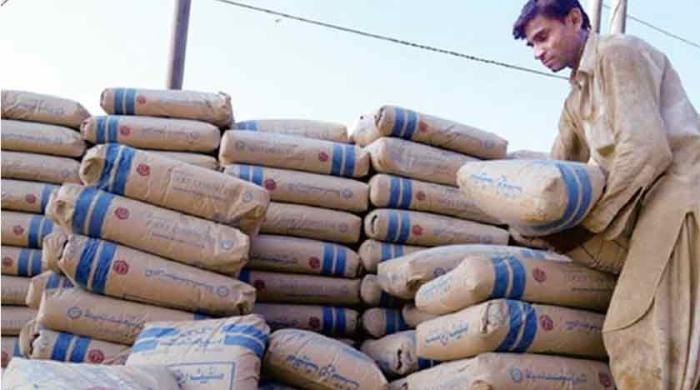
After a sluggish performance in recent years, Pakistan’s cement industry has begun to show signs of recovery. During the period July–November 2025, overall cement sales improved despite persistent challenges and earlier projections of continued decline.
INDUSTRIAL RECOVERY
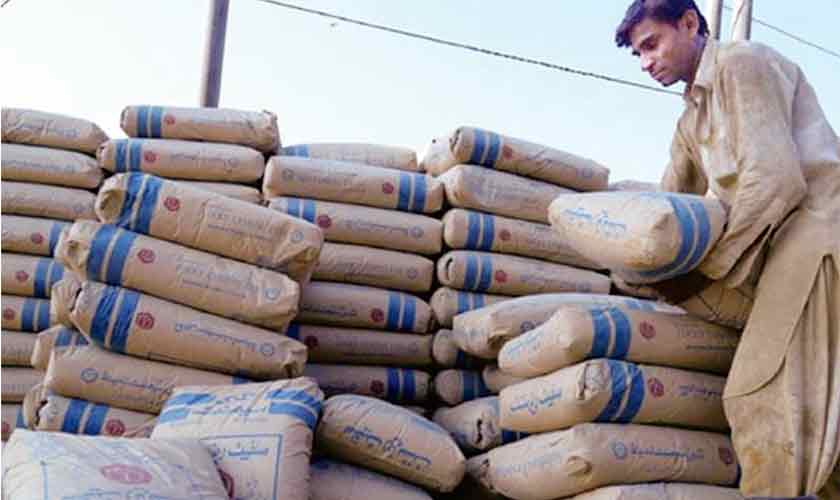
After a sluggish performance in recent years, Pakistan’s cement industry has begun to show signs of recovery. During the period July–November 2025, overall cement sales improved despite persistent challenges and earlier projections of continued decline.
Total cement despatches during this period stood at 21.445 million tons, around 14 per cent higher than 18.780 million tons recorded in the corresponding period last year. In fact, FY2025–26 began on a positive note for the cement industry and gathered further momentum in the following months. November alone recorded despatches of 4.139 million tons compared to 3.549 million tons in November 2024, reflecting an increase of over 16 per cent.
The cement industry's performance is driven primarily by the construction sector. Construction, formally declared an industry, accounts for about 12 per cent of Pakistan’s industrial economy. In recent years, however, the sector has experienced negative growth owing to high inflation, currency depreciation, record-high interest rates, rising material and energy costs, higher taxation, political instability, industrial slowdown and delays or rollbacks in major infrastructure and energy projects. Cement exports have also remained sluggish during this period.
With improved macroeconomic indicators, easing inflation, lower interest rates, and the release of Public Sector Development Programme (PSDP) funds for major infrastructure projects, government housing schemes, and rehabilitation of flood-affected areas, the construction industry is expected to rebound, potentially achieving annual growth of over four per cent, according to industry analysts. Given Pakistan’s fast-growing population, rapid urbanisation and the government’s commitment to development projects, the construction sector could experience accelerated growth and may even double by 2030. The Board of Investment projects the industry’s volume to exceed Rs 2.7 trillion by the end of 2029.
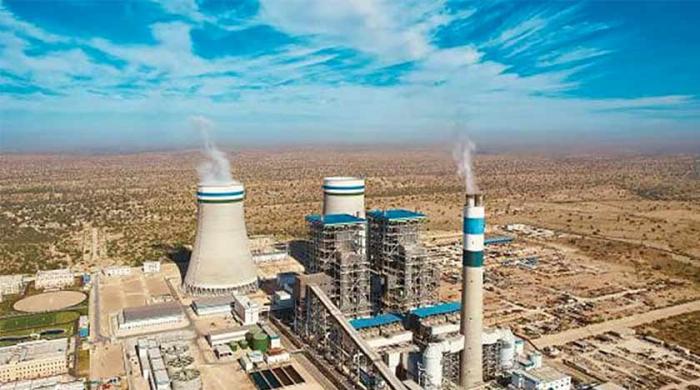
Pakistan’s cement industry contributes about one per cent to GDP and employs roughly 400,000 people directly and indirectly. With 29 operational cement plants, the industry has an installed annual capacity of around 85 million tons. However, actual output in recent years has remained between 45 and 60 million tons annually. As a result, capacity utilisation fell to about 53 per cent in 2024–25, one of the lowest levels in 17 years, and a sharp decline from peak utilisation of over 94 per cent in 2017–18 and around 86 per cent in 2016–17. This substantial idle capacity reflects the cyclical nature of the cement sector, particularly in the domestic market. In 2024, the industry recorded a year-on-year decline of 2.4 per cent.
Export performance was relatively strong during the first four months (July–October 2025) of the current fiscal year, with cement and clinker exports totalling 3.44 million tons, valued at $134.51 million. This represented an increase of over 20 per cent in volume and more than 28 per cent in value compared to the same period last year. However, exports declined sharply in November 2025 to 0.569 million tons. Consequently, cumulative exports for July–November 2025 stood at 4.009 million tons, valued at $142.16 million, compared with 3.373 million tons valued at $136 million in the corresponding period of 2024. Export performance continues to be influenced by economic, logistical, and global factors.
Pakistan, among the world’s top 15 cement producers, exports cement and clinker primarily to Afghanistan, Bangladesh, Sri Lanka, the US, the Middle East and African markets. The industry aims to export 1.5 million tons during the remaining months of 2025–26 and to increase exports to 12 million tons by 2027–28, a target considered achievable. Historically, cement exports peaked in 2008–09, rising from 7.72 million tons in 2007–08 to 11.38 million tons, making Pakistan the fifth-largest cement exporter globally. Exports declined in subsequent years and have since fluctuated annually.
Pakistan’s cement industry today stands burdened not by lack of capacity, but by policy inertia, high input costs, export bottlenecks and slow technological adaptation. With surplus capacity already in place, the challenge is no longer expansion but efficient utilisation
There is a pressing need for a medium- and long-term export strategy to address operational and technological challenges and to meet increasingly stringent quality standards, thereby ensuring sustainable growth. Several constraints lie beyond the industry’s control, including high business costs, closure of the Pak-Afghanistan border, and the global economic slowdown, all of which undermine international competitiveness.
Globally, the construction and engineering sectors faced persistent challenges in 2025, with growth expected to slow. Although markets such as Sri Lanka and Bangladesh have shown improvement, the global outlook remains mixed. Nevertheless, a medium-term recovery is projected as market sentiment improves.
Pakistan must position itself to capture a larger share of the global cement market, particularly given its surplus capacity. Global cement production stands at around four billion tons annually, with the market valued at approximately $475 billion. Demand remains steady, with rapid expansion underway in Asia-Pacific, the Middle East, Africa and the US, driven by large-scale infrastructure projects.
While Pakistan’s installed capacity has expanded significantly -- from 45.62 million tons in 2015–16 to 84.58 million tons in 2024–25 -- actual production remains well below capacity, indicating potential overcapacity. Despite this, few companies plan further capacity expansion. Instead, the industry must prioritise energy-efficient technologies to offset persistently high energy costs. Although some larger producers have adopted waste heat recovery systems and alternative fuels, many smaller units struggle to modernise due to high capital requirements.
Cement production is a major source of CO and other greenhouse gas emissions. National and global pressure to reduce carbon emissions has intensified, with demand for lower-carbon cement products now estimated at nearly 69 per cent. Technological upgrades are therefore essential to enhance competitiveness and efficiency. Investment in low-carbon cement will strengthen Pakistan’s position in international markets.
However, limited bulk cement handling facilities at seaports remain a major constraint. The Pakistan International Bulk Terminal at Port Qasim has a handling capacity of four million tons of cement and clinker annually, necessitating additional storage and handling infrastructure to meet the short-term export target of 12 million tons.
Pakistan can draw valuable lessons from peer countries with comparable production capacities that have achieved higher export volumes. Indonesia, producing around 64 million tons annually with about 53 per cent capacity utilisation, exports to Bangladesh, Australia, Taiwan, and other markets and is projected to become the world’s largest clinker exporter.
Turkiye, the second-largest cement exporter globally with a 12 per cent market share, produces about 85 million tons annually and has expanded exports despite weak domestic demand. Malaysia has also demonstrated strong growth, producing 79 million tons in 2025 and exporting around 27 million tons, mainly to Singapore and Australia, while also importing cement from Pakistan.
Pakistan’s cement industry today stands burdened not by lack of capacity, but by policy inertia, high input costs, export bottlenecks and slow technological adaptation. With surplus capacity already in place, the challenge is no longer expansion but efficient utilisation through competitive energy pricing, export facilitation, modern port infrastructure, and incentives for low-carbon production.
A stable and predictable policy framework can convert idle capacity into export earnings, revive construction activity, and generate employment across the value chain. If treated as a strategic industry rather than a cyclical afterthought, cement can play a pivotal role in Pakistan’s industrial recovery and long-term economic resilience.
The writer is a retired chairman of the State Engineering Corporation, and former member (PT) of the Pakistan Nuclear Regulatory Authority.