Pakistan is facing a human resource problem that is now too large to ignore. Industries that once absorbed workers with minimal training can no longer operate that way.
HUMAN RESOURCES
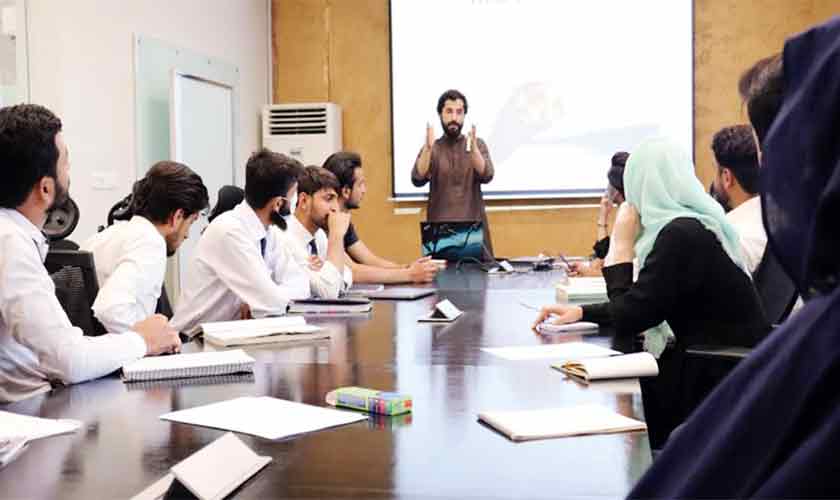
Pakistan is facing a human resource problem that is now too large to ignore. Industries that once absorbed workers with minimal training can no longer operate that way.
Construction firms report delays due to electricians and welders failing basic competency tests. Textile and manufacturing units struggle to meet export timelines because machine operators require retraining after hiring. Energy companies report shortages of technicians skilled in modern equipment. The pattern is the same across sectors. Employers cannot find job-ready workers, and workers cannot find jobs that match their abilities.
The scale of the issue is reflected in the numbers. Pakistan produces more than 1.8 million new entrants into the labour force each year, yet the majority do not have verifiable skills. According to NAVTTC estimates, only a fraction of vocational trainees receive practical assessments that match industry standards. Meanwhile, the Gulf region, Pakistan’s largest overseas employment destination, continues to expand its demand for skilled labour. Saudi Arabia alone announced more than 300,000 new skilled-worker openings between 2023 and 2025. Pakistan is not capturing this potential because its workforce cannot consistently prove competence through recognised certifications.
The problem starts with training. The country has thousands of vocational institutes, but only a limited number follow updated curricula or use modern equipment. Many programmes still rely on classroom theory rather than hands-on instruction. As a result, graduates receive certificates that do not reflect their actual capabilities. Employers invest time and resources to retrain them, adding cost without improving productivity. Workers lose earning potential because real-world skills determine wages, not paper qualifications.
Strong training institutions do exist, and they demonstrate what is possible. Institutes that work directly with sector specialists, update their tools and follow structured assessments produce workers who secure stable jobs at home and abroad. Their placement rates are higher and employers value the reliability of their testing systems. These models should guide national reform. Pakistan needs practical examinations, standardised assessment tools, and partnerships between institutes and employers. Workers must be evaluated on the machines and tools they will use in actual jobs.
The second challenge is the dominance of informal recruitment networks. A significant portion of Pakistan’s workforce relies on unregulated intermediaries to find opportunities, especially overseas. These channels operate without oversight. Workers pay illegal fees, often borrowing heavily or selling assets. Many receive incomplete information about job roles, working conditions or contract terms. Employers, meanwhile, receive workers with inconsistent documentation and unverified skills.
The consequences are visible. Fraud cases harm families. Employers face penalties when workers fail compliance checks. Destination countries increase scrutiny when documentation does not meet standards. In 2025, several GCC states tightened inspection requirements for foreign workers after repeated discrepancies in paperwork from multiple source countries, including Pakistan. When even a few cases fail to meet expectations, entire labor corridors come under pressure.
A trained, certified workforce will secure better jobs and higher wages. Local industries will reduce delays and improve productivity. Overseas partners will gain confidence in Pakistan’s reliability
These unregulated channels survive because they offer speed. They operate deep within communities where formal institutions have limited reach. However, their long-term costs are severe. Families lose savings. Workers face wage disputes and unsafe conditions. Pakistan loses credibility with international partners, who expect transparency and robust safeguards.
A national reset must shift recruitment toward regulated and documented pathways. Safe recruitment benefits both workers and employers. Workers gain protection from fraud, and employers gain confidence in skill verification and documentation. Destination countries prefer to work with countries that can provide trained, certified and documented labour. This is how nations like the Philippines built strong reputations in overseas labour markets.
The third issue is awareness. Many workers who pursue overseas jobs do not understand medical, legal, or contractual requirements. They rely entirely on intermediaries. Small errors in paperwork lead to delays, visa rejections or financial loss. A worker who understands the process is less vulnerable to fraud and more prepared for legal employment.
Awareness is improving due to ongoing enforcement. The FIA continues to identify and act against illegal recruitment operators, protect workers, and strengthen compliance. Their consistency has reduced several high-risk practices and has made it more difficult for fraudulent agents to operate unchecked. Continued enforcement, combined with a skills-based system, will guide more workers toward safe and legal pathways. This is essential for building Pakistan’s credibility in global labour markets.
A skills-first reset requires coordinated reforms across training, assessment and recruitment. The path forward is practical.
Training institutions must raise their standards. Curricula should be revised to match current industry requirements. Practical testing must become mandatory. Instructors should receive continuous upskilling. Institutes must share placement data to measure their performance. Workers should leave with digital, verifiable proof of skills so employers can quickly confirm training history.
Industries must participate in this transition. Employers need to define the competencies they require and help design assessments. This ensures that training programs produce workers who can contribute from day one. When employers engage with training institutions, the entire pipeline becomes more reliable.
Recruitment practices must become transparent. Documented processes, legal contracts, and verified skills protect workers and companies. Families should know how to identify legal recruitment services, how to verify job offers, and how to avoid illegal fees. More workers will choose legal channels when they see clear benefits.
If Pakistan can fix its human resource pipeline, the gains will be significant. A trained, certified workforce will secure better jobs and higher wages. Local industries will reduce delays and improve productivity. Overseas partners will gain confidence in Pakistan’s reliability. Remittances will grow because skilled workers earn more. The country will become competitive in the regional labour supply.
Pakistan does not lack talent. It lacks a system that organises this talent into a skilled, protected, and globally competitive workforce. A skills-first reset is the most direct route to growth. It improves lives, strengthens industries and positions Pakistan as a trusted labour partner for the future.
A workforce that can prove its skills will always find opportunity. A system that protects the workforce will always support national progress.
The writer is a communications expert and consults for a global think-tank focused on technology and development in Pakistan.