I was chatting with my nephew in the office, getting a briefing from him after he returned from a business trip to Shanghai. I casually mentioned that, although I have been to China a few times, I have never been to Shanghai. Lo and behold, two days later, I got a message that I had been invited to attend the 8th China International Import Expo 2025 from the 6th of November.
PAK-CHINA TRADE

I was chatting with my nephew in the office, getting a briefing from him after he returned from a business trip to Shanghai. I casually mentioned that, although I have been to China a few times, I have never been to Shanghai. Lo and behold, two days later, I got a message that I had been invited to attend the 8th China International Import Expo 2025 from the 6th of November.
Although I had planned not to travel this year, I did not want to waste this fabulous opportunity. The Chinese Consul General facilitated my visa, and I received my flight tickets and relevant information from Beijing.
The expo manifests a substantial part of China's major policy to push for high standards and provides a significant opportunity for China to take the initiative in opening its huge market to the world. This year, exhibitors displayed 461 new products, technologies and services in fields such as low-altitude economy, humanoid robots, artificial intelligence, and green and low-carbon. It also introduced new consumption trends in the silver economy, ice and snow economy, sports economy, and car-based cultural tourism.
At the Expo 2025, enterprises from 123 Belt and Road Initiative partner countries participated, up 23.1 per cent from last year. A total of 163 companies from the least developed countries made their presence felt, representing nearly a 24 per cent increase. The African products section was expanded, with the number of participating African enterprises up by 80 per cent year on year. There were reports that between 15 and 20 Pakistani companies participated with support from TDAP. Although there was no official TDAP Pakistan Pavilion, these companies exhibited a diverse range of products, including handicrafts, marble and onyx, carpets, apparel, furniture, jewellery and brass items. Nearly half a million visitors registered, and the four-day event attracted 992,000 visitors. More importantly for exhibitors, initial deals totalled more than $85 billion.
Hence, the burning question: What did the dozen or so Pakistani exhibitors achieve? The answer is simple. Marketing handicrafts, marble and onyx, carpets, apparel, furniture, jewellery and brass items are not going to create waves in today’s Chinese markets. Who are these exhibitors? The world has graduated from knick-knacks and trinkets. The world is becoming cigarette-free, but onyx enterprises are still making marble ashtrays. The world is moving away from run-of-the-mill carpets and there is a much smaller market for carpets. There was probably no one from agriculture, information technology or high-tech engineering sectors.
No wonder then that according to data from China Customs, the total bilateral trade in goods between China and Pakistan reached an unimpressive $23.1 billion in 2024, an increase of 11.1 per cent from the previous year. China’s exports surged 17 per cent year-on-year to $20.2 billion, while imports from Pakistan dipped by 18.2 per cent to $2.8 billion. These, of course, are official figures but it is common knowledge that undocumented, mis-declared, under-invoiced, and even smuggled goods are much more than the official figures.
This is the sad dilemma that Pakistan faces. Pakistani informal importers are more powerful than genuine exporters. There is a China-Pakistan Free Trade Agreement, but Pakistani exporters have a nonchalant attitude towards exporting to China. They usually get excited when there is a sudden demand from China, for example, in 2024, China was buying sesame seeds from whichever country offered, and for China, price was not the deciding factor. So, what is missing?
Pakistani exporters are novices when it comes to marketing globally. Their objective is to sell, which is a short-term affair, rather than building long-term relationships through deep-dive marketing of their products or commodities
Pakistani exporters are novices when it comes to marketing globally. Their objective is to sell, which is a short-term affair, rather than building long-term relationships through deep-dive marketing of their products or commodities, through maximum knowledge of what sells in China, and through understanding the various quality and custom standards and rules.
There are many opportunities for Pakistani businessmen and traders to export to China because Pakistani entrepreneurs offer certain comparative advantages to Chinese buyers, but they also need to improve and upgrade their businesses through training, innovation, and efficiency to meet Chinese standards. How many Pakistani companies and entrepreneurs take advisory services from Chinese companies and counterparts to learn how to improve their businesses, which could help them increase exports?
Some advice to Pakistani exporters: ask the Chinese businessmen what they want and not just what you have to sell. New business avenues will open in no time. Pakistan is well placed to increase exports and earn more revenue, but it is essential to make focused and comprehensive efforts to comply with the tough rules, regulations and compliance conditions in force in China.
It is important to know the quantum of items that Pakistan is exporting to China. Copper is the largest single item, alongwith fish and seafood, sesame seeds and other grains, rice, and even salt, slag and apparel, to name a few. Exporters must branch out into minerals, agricultural products, oilseeds, etc. How about donkey meat? There is actually one officially certified donkey meat and hides exporter and that too is a Chinese investment in Gwadar. China wants meat from at least 200,000 donkeys annually, and that is a mega-opportunity for even industrialists who have or plan to close down their textile units.
If the target is to fast-track doubling exports to China, then there is a pragmatic, China-specific roadmap, not generic export advice. It is high time to move towards value-added items such as refined minerals instead of raw minerals, processed seafood, oils and sesame seed paste, apparel instead of yarn, meat instead of hides -- and so on.
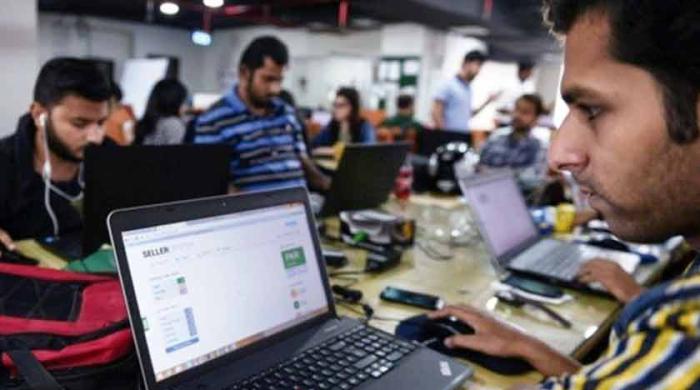
It is imperative to create China-focused value chains right from Pakistan to the desired customers or consumers. Another low point is that most exporters have not taken advantage of the CPFTA. Thoroughly study it and map the zero-tariff products. A new world will open in front of the exporters. Try to prepare documents and even labels in Chinese. Works wonders. Maximise use of Information Technology because China is shifting online all its import requirements. Are there Pakistani ‘pavilions’ on Alibaba, etc?
Are Pakistani exporters all armed to go online? Are there products in demand in China that, because they are rarely marketed by Pakistani exporters, are diverted to other countries? Have most of the exporters developed long-standing relationships with their customers, or do they prefer to sell and move on? These questions are relevant and warrant consideration.
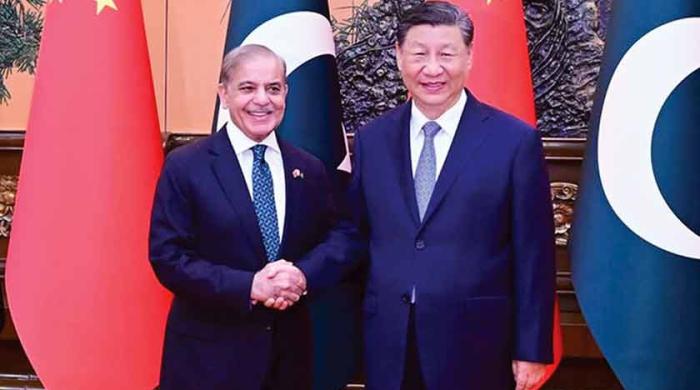
Unfortunately, the elephant in the room is the lethargy and silo-mentality of the exporters. The time to conquer it is now. Pakistani leaders have a penchant for terming the Pakistan-China relationship as "a friendship higher than the Himalayas, deeper than the ocean, sweeter than honey, and stronger than steel”. But where’s the beef? The yuan and the rupee?
The writer is a former president of the Employers Federation of Pakistan.