The end of the 20th century and the beginning of the 21st century is no doubt one of the most remarkable periods in human history. The development of personal computers, mobile phones and the internet has drastically reduced the distance between us.
EWASTE
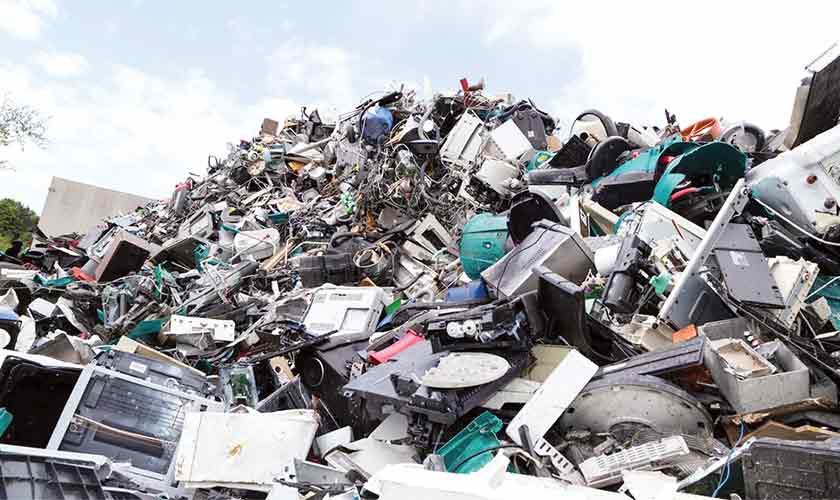
The end of the 20th century and the beginning of the 21st century is no doubt one of the most remarkable periods in human history. The development of personal computers, mobile phones and the internet has drastically reduced the distance between us.
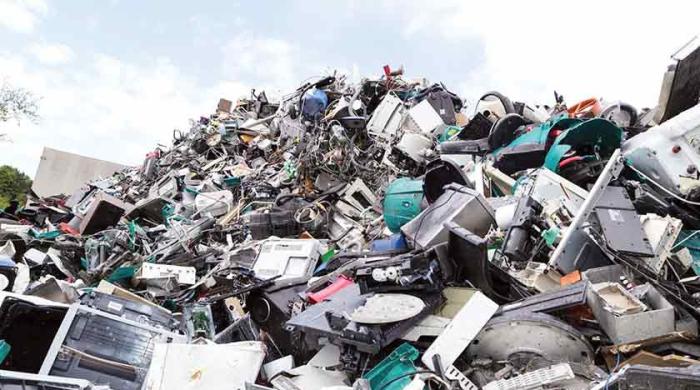
The world itself, despite being so vast, now seems to be a small home for everyone. Within a few seconds, we can easily get in touch with others sitting across the planet. No doubt, the remarkable invention of personal computers, mobile phones and the internet has brought us closer to each other; however, this has also negatively impacted our planet in terms of electronic waste.
A knowledge brief published in November 2022 by the Pakistan Institute of Development Economics (PIDE) points out that Pakistan imports all types of electrical and electronic equipment (EEE) and is considered a key location for electronic waste (e-waste) dumping. Unfortunately, most of this e-waste is neither legally nor formally managed in a sustainable manner. EEE refers to all types of products that are used in business, transportation, households, health, security and power generation systems. There is a dire need for us to develop mechanisms that would enable us to recover precious metals from e-waste.
Do you know that e-waste can contain up to 60 different kinds of metals, including copper, gold, silver, palladium, aluminium and iron? Most importantly, the expense of recycling metals from e-waste is far lower than mining crude ore. In simple words, recycling and recovering metals from e-waste minimizes the use of energy and thus helps us reduce greenhouse gas emissions.
Pakistan must develop much-needed skills and expertise to recover precious metals from e-waste. If we were to mature metals recovery technology from e-waste in Pakistan, it could help us become self-sufficient in terms of metal supply and demand. Most importantly, once metal recovery techniques from e-waste are matured, we can help other countries recycle metals from e-waste. This can certainly facilitate us in boosting our economic growth, adopting and implementing a circular approach and achieving a sustainable future for all in Pakistan.
It is extremely crucial for the government of Pakistan to design university programmes particularly dedicated to the recovery of precious metals from e-waste. Likewise, it is equally important to allocate funds to research and development in this field that would enhance our abilities and skills to recover precious metals in a sustainable manner. Imagine, if 20 years from now, Pakistan were categorised among the finest in the world when it comes to recycling and recovering precious metals from e-waste.
The United Nations Environment Programme (UNEP) highlights that the quantity of e-waste produced each year is comparable to the weight of 5,000 Eiffel Towers. Indeed, it is an enormous amount of e-waste, but it also offers a unique opportunity for Pakistan to recover and recycle precious metals by adopting a circular approach and implementing a sustainable business model that focuses on doing more with less. The discovery of oil in the Middle East in 1908 was a major turning point in human history.
10–20 years from now, the ability to recover and recycle precious metals from e-waste could hold the same geopolitical and financial significance as the discovery of oil in the Middle East at the beginning of the 20th century
Similarly, 10–20 years from now, the ability to recover and recycle precious metals from e-waste could hold the same geopolitical and financial significance as the discovery of oil in the Middle East at the beginning of the 20th century. Pakistan must take recycling and recovery of precious metals from e-waste more seriously. We have what is needed to develop and mature technological solutions to recover and recycle precious metals from e-waste.
The UNEP points out that the world generates around 50 million tonnes of e-waste each year. Barely one-fifth (20 per cent) of this e-waste is formally recycled. The remaining 80 per cent either ends up in landfill or is recycled informally. The latter refers to situations where recycling is carried out by hand and workers are subjected to dangerous and carcinogenic substances like mercury, lead and cadmium. If not already underway, there is a dire need for the national government to create a formal e-waste recycling facility in Pakistan. In fact, it would be a much-needed step in the right direction to create an industrial estate particularly dedicated to the formal recycling of e-waste in Pakistan.
Do you know that the financial worth of e-waste produced each year is over a whopping $62.5 billion? Here is another interesting fact: a tonne of e-waste has 100 times more gold than a tonne of gold ore. Finally, if we were to maintain the status quo, global e-waste generation would exponentially increase more than two-fold to roughly 120 million tonnes each year by mid-century. By maturing e-waste recycling operations, we can recover precious metals to commence sustainable industrial growth and establish a new industry to generate employment for the masses in Pakistan. If we accomplish this task, we will of course reduce the amount of e-waste in our ecosystem, which would be incredible for our planet and for us. In addition, we can put a serious dent in the existing poverty curve in Pakistan through employment creation.
Finally, metals recovery and recycling from e-waste will reduce our greenhouse gas emissions and will facilitate us in adopting and implementing a circular approach. We cannot take this opportunity for granted; however, we must also ensure that labour working in formal recycling units is not exposed to lead, mercury and cadmium. Neither should these substances be released into our environment. In fact, it would be an excellent idea to reuse these substances in industrial processes in Pakistan.
Another important point to remember is that neither children nor pregnant women should be allowed to work in these formal recycling units or in informal e-waste facilities either. It is our moral and ethical responsibility to prevent child labour and to offer the best to our children in Pakistan. We have what it takes to recover precious metals from e-waste without harming people or our environment. The choice is ours and always will be.
The writer is a Stockholm-based policy analyst and the founder / operations manager of Project Green Earth (www.projectge.org). He can be reached at: [email protected]