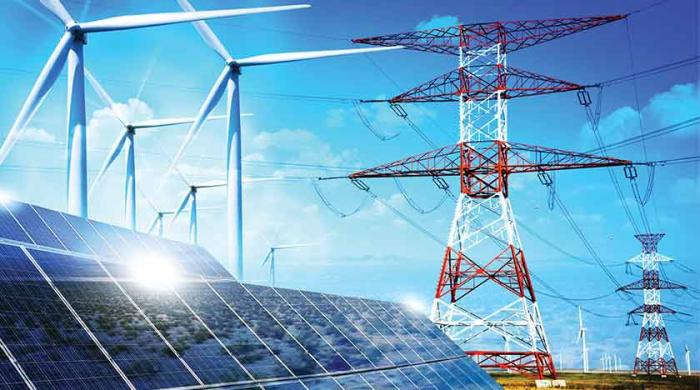
Pakistan has experienced nothing short of a solar energy explosion. In 2024 alone, the country imported a staggering 17 GW of solar capacity, one of the highest volumes globally.
SOLAR POWER

Pakistan has experienced nothing short of a solar energy explosion. In 2024 alone, the country imported a staggering 17 GW of solar capacity, one of the highest volumes globally.
Solar met at least 10 per cent of national electricity demand as panel prices plummeted and power costs soared. Rooftop solar has become particularly attractive to affluent homeowners and businesses, offering a fast return amidst skyrocketing grid tariffs. As a result, the share of solar in electricity production surged from just 4.0 per cent in 2021 to over 14 per cent in 2024. What appears at first as progress toward sustainability, however, conceals a deeper, more troubling contradiction.
The current net-metering framework allows households to export surplus solar energy to the grid and receive credits at the same retail rate they pay for consumption. This setup has created a form of regressive arbitrage. In FY2023-24, non-solar users, often lower- and middle-income households, shouldered an additional burden of over Rs200 billion, driving tariff increases of roughly Rs2 per unit. As solar adoption displaces grid demand by 8–10 per cent during daylight hours, utilities face shrinking revenue while fixed infrastructure costs remain. The result is a ‘death spiral’, with non-solar consumers paying more, while grid operators reel from underfunded maintenance and rising losses, as mentioned in the report, ‘The Distributed Divide’, by ARZACHEL.
The concentration of benefits among a wealthy minority further aggravates inequality. By December 2024, 283,000 net-metering consumers had installed 4,124MW of capacity, up from just 321MW in 2021. Around 80 per cent of these users are situated in urban, affluent enclaves of the major cities. Even more striking, these households comprise just 0.83 per cent of all grid-connected customers, yet they command disproportionate compensation and influence over policy.
Global analogies offer cautionary insight. California, once generous in its NEM (Net Energy Metering) incentives, shifted to a net-billing model in 2023 that calculates export credits based on wholesale or avoided cost, not the full retail rate. The consequence is that solar installation growth slowed, and more consumers began pairing solar with energy storage, in an increasingly balanced but more complex market.
Pakistan’s renewable ambitions remain critical amid climate pressures and volatile fuel imports. The problem lies in skewed design, not in green solutions
In Pakistan, policymakers have begun to act. The Economic Coordination Committee (ECC) proposed cutting the buyback rate from Rs27 to Rs10 per unit, closing the channel for easy arbitrage and aligning compensation with system costs, but curbing solar economics in the process. The proposed reforms also include shifting from net metering to net billing, reducing allowed capacity, shortening contract durations, and introducing import duties. These moves are expected to lengthen payback periods from 2-3 years to 4-5 years.
These shifts reflect a necessary reckoning with how incentives have been structured. When solar adoption is driven by expediency and returns, rather than equity and resilience, the transition risks reinforcing disparities. Thirty million poor consumers may now subsidise a system designed for the wealthy, while utilities lack the revenue to reinvest in grid modernisation, thus jeopardising long-term infrastructure reliability.
Yet it is equally clear that solar energy itself should not be vilified. Pakistan’s renewable ambitions remain critical amid climate pressures and volatile fuel imports. The problem lies in skewed design, not in green solutions. Solar can serve communities, but only when policies broaden access, protect utilities from collapse and deliver benefits to underserved populations. Measures such as community solar projects, targeted incentives for low-income consumers or structured support for multi-unit residences could better align solar growth with energy justice.
The ethical heart of the issue goes beyond kilowatt-hours and financial flows. It asks who gets to be part of the green transition and who pays to make it happen. If left unaddressed, the current trajectory risks undermining trust in climate policy. Especially in a country where affordability is already a struggle, the legitimacy of solar transformation depends on fairness, not just feasibility.
Pakistan now stands at a crossroads. Either it moves towards a solar future that deepens generational equity, or one that maintains inequality under a greener sheen. The emerging reforms may slow solar growth, but they also present an opportunity to recalibrate, to ensure that clean energy elevates all citizens, not just those with roofs and lines of credit.
The writer has served at the Energy Conservation Fund, NEECA. He can be reached at: [email protected]